Parents with school clothes needed in a hurry
If particular items are needed before the next school day, suitable quick programmes and their load limits are key.


For several separate loads on rainy days, a heat pump tumble dryer with suitable small-load programmes is an obvious choice, provided the programmes are right for the care labels. The German Consumer Advice Centre recommends choosing a suitable programme for each load. So check the permitted load and duration of the programmes you need, rather than focusing solely on drum size or Eco cycle time.
If particular items are needed before the next school day, suitable quick programmes and their load limits are key.
When you need to dry clothes repeatedly on rainy days, actual load sizes, programme duration and electricity consumption all matter.
If you dry different fabrics, check the care labels alongside the suitability of each programme.
First, check which items can go in a tumble dryer at all, then compare the programme load limit with your typical loads. If you’ll be running several cycles, also consider how full each load will be and compare energy consumption on a like-for-like basis.
| What matters | What to check before buying | Who should pay particular attention |
|---|---|---|
| Items needed in a hurry | Check the programme table for suitable fabrics, maximum load and cycle time. | If a particular item needs to be dry before the next school day, a suitable quick programme matters more than a general time estimate. Around 28% of consumers put urgent individual items first. |
| Several separate loads | Compare your typical laundry loads with the permitted load for the programmes you’ll use. | If you sort clothes by fabric type, you’ll want to know whether each load can be dried one after another without overfilling the drum. Around 22% of consumers prioritise handling several separate loads. |
| Electricity consumption | Compare kWh per 100 Eco cycles on the current label; work out your likely usage based on your own cycles and electricity tariff. | Running several cycles can make ongoing electricity costs a deciding factor. Around 22% of consumers prioritise this cost. |
| Delicate fabrics | Follow the care labels and check the manual for the suitable fabric type and programme load. | If you need to dry delicate school clothes separately, for example, care instructions should matter more than the shortest cycle time. Around 17% of consumers put this first. |
| Installation and noise | Check the appliance dimensions against the space available and access to it; check the stated noise level for the specific model. | If space or noise limits where you can put the appliance, it needs to suit your home. Around 11% of consumers prioritise these restrictions. |
The German Environment Agency points out that a large tumble dryer that is often only half full can use more energy per kilogram of laundry than an appliance loaded to suit its capacity. So a high stated capacity is not automatically an advantage if you usually have small loads.
Programme duration and permitted load depend on the programme; the care label also limits your options.
Before buying, check the programme table for the individual loads you regularly need to dry.
If your laundry isn’t suitable for the quick programme, you may need to run additional cycles and wait longer.
A high stated capacity doesn’t mean several small or separate loads will dry faster. If you often run partial loads, energy use per kilogram may be higher.
Choose a capacity that suits your typical dry laundry loads and the limits of the programmes you’ll actually use.
The current EU energy label for tumble dryers uses a scale from A to G. Since 1 July 2025, the European Commission has required this rescaled label to be displayed in shops and online.
Compare the current label for the specific model, paying particular attention to consumption in kWh per 100 Eco cycles.
According to the German Consumer Advice Centre, only part of a wash load can be dried straight away in a washer-dryer. It also uses more electricity and water than separate appliances.
Choose a washer-dryer only if space is a priority and its drying capacity suits your loads.
If you need to dry several loads one after another, the limited drying capacity may mean extra waiting time.
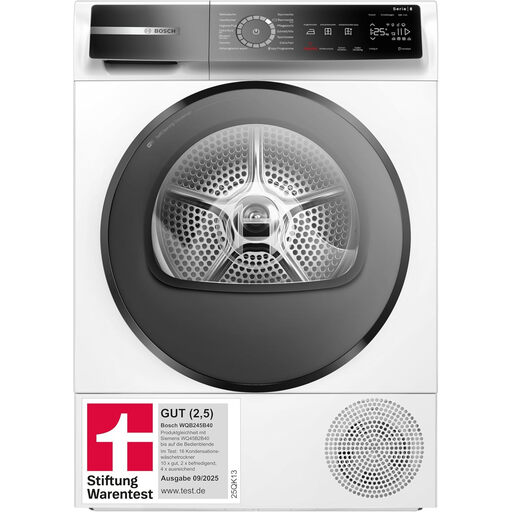
The Series 8 WQB245B40 combines a 9 kg stated capacity with Auto Dry, a quick programme and a ‘Half Load’ option, making it a model to consider for loads of different sizes.
The 8 kg heat pump tumble dryer TR8B75780 offers programmes for different fabrics and mixed loads.
The iQ700 WQ46B2D41 is a 9 kg model with stated noise levels, moisture control and a quick programme.
The B3T42249S is an 8 kg heat pump tumble dryer with OptiSense sensor drying and several programmes.
The TWC640WP is an 8 kg T1 heat pump tumble dryer with PerfectDry and a condensed-water drainage option.
These models are heat pump tumble dryers with features for different load sizes, sensor programmes or programmes for different fabrics.
 No image available
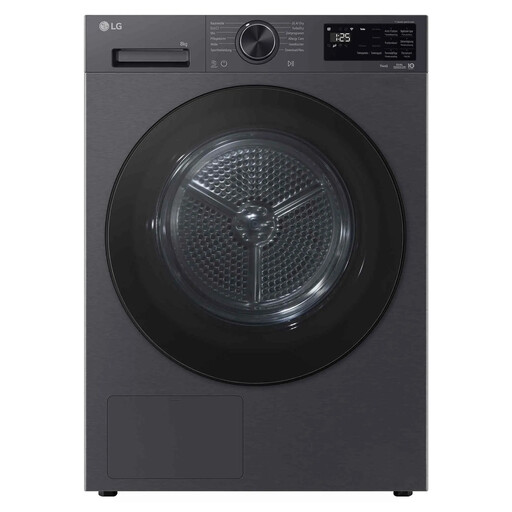
For separate loads of different fabrics, provided the programmes are suitable for the care labels.
8 kg; Dual Inverter Heat Pump; AI Dry, TurboDry and SensorDry; programmes include wool, sportswear and mixed fabrics.
 No image available
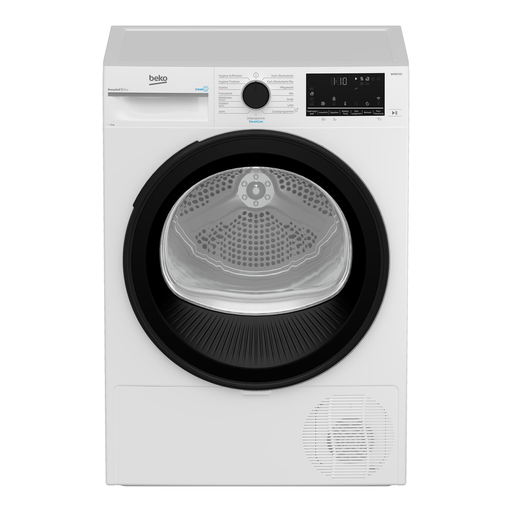
The listed fabric programmes may be useful for separate loads, provided they match the care labels.
8 kg; 15 programmes; sensor drying; programmes include wool and sportswear.
 No image available
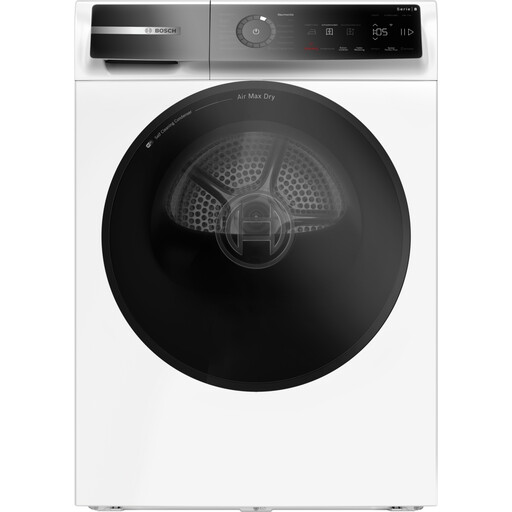
The higher stated capacity may suit larger loads that come up regularly; for smaller loads, bear the programme limits in mind.
9 kg; AutoDry and moisture sensor; half-load option; Quick/Mix programme; programmes include delicates, wool and sportswear.
 No image available
The half-load option and quick programme may be useful for smaller or urgent loads, provided the fabric type and load size are suitable.
9 kg; energy efficiency class C; AutoDry; ‘Half Load’ option; Quick 40. Bosch notes that Quick 40 isn’t specified for every fabric type or a full drum.
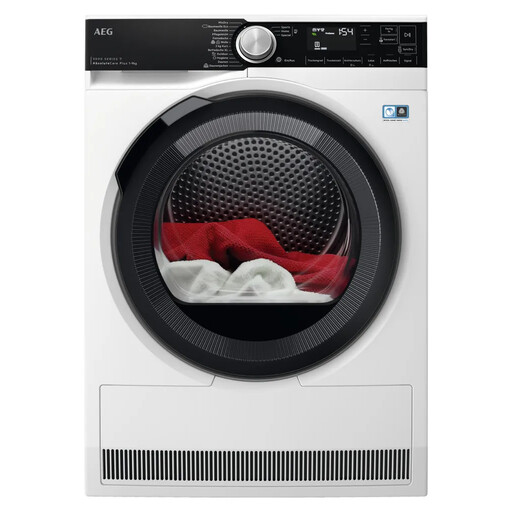 No image available
The listed programmes for different fabrics may be useful for separate loads; care labels and programme load limits remain key.
9 kg; 3 kg quick programme; MixDry; ProSense load detection; programmes include wool, delicates and outdoor fabrics.
Not necessarily. First check the tumble-drying symbol on each item, then check the manual to see which fabrics are suitable and what the maximum load is for the specific quick programme.
Follow your appliance’s instruction manual. For tumble dryers covered by its care guidance, AEG recommends emptying the condensate container before starting and cleaning the door filters after every cycle; a full container can stop the programme.
Compare the figure in kWh per 100 Eco cycles on the current label. To work out your own costs, you’ll also need to estimate how many cycles you’ll run and know your electricity tariff; quick or specialist programmes may not use the same amount of energy as the Eco programme.
Only tumble dry them if the care label allows it. Then match the fabric type to the programme and check the manual for its permitted load.
Don’t put electrical appliances in your household rubbish. The German Environment Agency recommends taking them to a recycling centre, or returning a large old appliance when you buy a new one of the same type, including when you shop online and have it delivered.