Who is a tumble dryer for school clothes suitable for?

Families with urgent school laundry

If individual items need to be dry by the next school day, compare small-load programmes, their duration and the care label. Verbraucherzentrale explains tumble dryer symbols, while Bosch lists a small-load option for the WQB245B40 model.

Families with lots of laundry

If you regularly have large loads, the drum should suit your usual laundry quantities rather than being chosen solely on the basis of its maximum capacity in kilograms. Umweltbundesamt points out that smaller drums aren’t automatically more energy-efficient if they need to be run more often.

Families with delicate fabrics

For sportswear and other school clothes that need special care, check the care label first; only choose a suitable programme for items that can be tumble dried. GINETEX GERMANY and Verbraucherzentrale explain care symbols.

What should you look for when buying?

First check the care label and how quickly you need the clothes to dry, then consider your usual laundry loads and energy use if you’ll be running the dryer regularly. The space available and access to the filters or condensate tank should also suit your day-to-day needs.

The percentages refer to the main priority when drying school clothes in family households.

PriorityWhat to check before buyingWho is this particularly important to?
Urgent small loadsDuration and maximum load for the relevant quick or small-load programme; care labels on the items.If I need individual suitable items ready by the next school day, a programme designed for that purpose matters. Around 33% of consumers prioritise urgent small loads like these.
Family capacityUsual laundry load, maximum capacity and the limits for the programmes you’ll actually use.With regular large family loads, I want to dry them as efficiently as possible without choosing a drum size based solely on its maximum capacity. Around 27% of consumers prioritise capacity for large loads.
Energy useCurrent A-to-G energy label and kWh per 100 Eco cycles; quick programmes may differ.If the dryer runs frequently, I want to compare Eco energy use with my needs and consider cycle duration separately. Around 20% of consumers prioritise low running costs.
Fabric careTumble dryer symbol on the clothes you want to dry and programmes designed for them.For delicate school or sportswear, I want to be sure each item can go in the tumble dryer at all. Around 13% of consumers prioritise suitability for their fabrics.
Where you’ll put itAppliance dimensions and space required according to the manual, condensate disposal and access to filters.If space is limited, I first need to work out which type of appliance and installation will fit. Around 7% of consumers prioritise finding a suitable space for the dryer.

What mistakes should you avoid?

  • Assuming the Eco programme time is how long it takes to dry a single item

    The energy label describes Eco operation under set conditions. Check the quick programmes and their load limits separately for the specific appliance.

    Before buying, read the programme table for the laundry you need to dry at short notice.

    Otherwise, you may need an extra drying cycle or more time for an urgent single item.

  • Comparing old and current energy labels directly

    Since 1 July 2025, the European Commission has required household tumble dryers sold in shops and online to display the A-to-G scale. An older rating such as A+++ isn’t directly comparable with a rating on this scale.

    Compare current product information sheets and energy use in kWh per 100 Eco cycles for the exact models you’re considering.

  • Choosing an appliance based only on its purchase price

    If you’ll use the dryer frequently, consider current energy use and how often you expect to use it as well as the purchase price. EU ecodesign requirements in force since 1 July 2025 apply to appliances newly placed on the market; these should be distinguished from stock that was already on sale before then.

    Check the current label for the specific appliance and factor in how often you expect to use it.

    Frequent use can mean higher electricity consumption and running costs; these depend on the appliance and how you use it.

  • Not checking drum size and available space together

    A large drum won’t necessarily suit your usual loads or fit the space available. Umweltbundesamt points out that smaller drums aren’t automatically more energy-efficient if they need to be run more often.

    Measure the space where you plan to put the dryer and compare your typical loads with the capacity of the programmes you intend to use.

Which brands are worth considering?

Bosch

The Serie 8 WQB245B40 heat pump tumble dryer offers a 9 kg capacity, AutoDry and a small-load option.

  • Bosch Hausgeräte Deutschland lists 61 dB(A), a self-cleaning condenser and Extra Kurz 40' for this model.
  • The programme name doesn’t confirm that every fabric is suitable or that the cycle takes the same time with a full load. Check the guidance for your load.

Siemens

The iQ700 WQ35B2B30 is an 8 kg heat pump tumble dryer with a quick programme and a half-load option.

  • Siemens Hausgeräte lists 61 dB(A), a 40-minute quick programme and a self-cleaning condenser for this model.
  • For an urgent load, the instructions for the specific programme are what matter; these details don’t automatically apply to other Siemens tumble dryers.

AEG

The 9000 AbsoluteCare Plus TR9T75680 is an 8 kg option for a range of tumble-dryer-suitable fabrics.

  • AEG Deutschland’s official product sheet lists energy efficiency class C and 98 kWh per 100 cycles.
  • AEG promotes 3DScan and AbsoluteCare for certain types of fabric, but this doesn’t prove an independently verified fabric-care benefit. Always follow the care label.

Beko

Beko offers the BM3T38249W, an 8 kg heat pump tumble dryer, and the DC 7130 N, a 7 kg condenser tumble dryer without a heat pump.

  • Beko Deutschland lists sensor drying, class C and 64 dB(A) for the BM3T38249W.
  • These differences apply to these two models and don’t support a general judgement about the brand.

Miele

The T1 TWC640WP heat pump tumble dryer is an 8 kg option with model-specific connectivity and fabric-care features.

  • Miele Deutschland lists DirectSensor, Miele@home and DryProtect for this model.
  • Whether these features are useful for your school laundry depends on the fabrics, programme and household; the manufacturer’s claims aren’t an independent comparison test.

Joybuy products for family laundry

This selection from Joybuy includes heat pump tumble dryers with a range of drum sizes and programmes for family laundry.

Haier I-Pro 1 HD80-E929E-DE heat pump tumble dryer, 8 kg

Haier I-Pro 1 HD80-E929E-DE, 8 kg

An 8 kg option for family laundry; for individual items you need in a hurry, check the duration and load limit of the relevant programme.

Heat pump tumble dryer; sensor drying; multiple programmes.

View at Joybuy
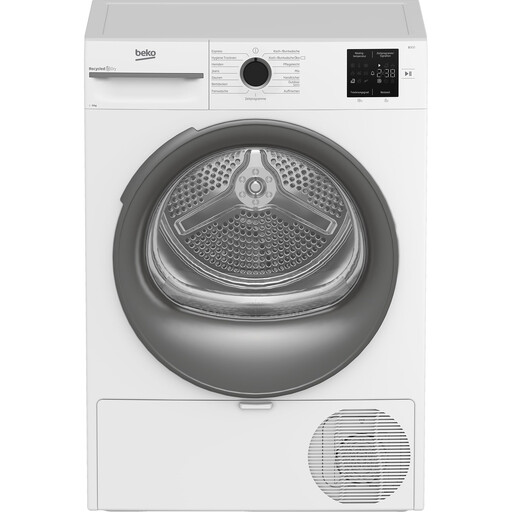
LG RT80X7B heat pump tumble dryer, 8 kg

LG RT80X7B, 8 kg

The stated capacity may suit family laundry; compare it with the size of your usual loads.

Heat pump tumble dryer; Dual Inverter Heat Pump; AI Dry; TurboDry; SensorDry; Dual Filter; ThinQ AI; Smart Pairing.
View at Joybuy
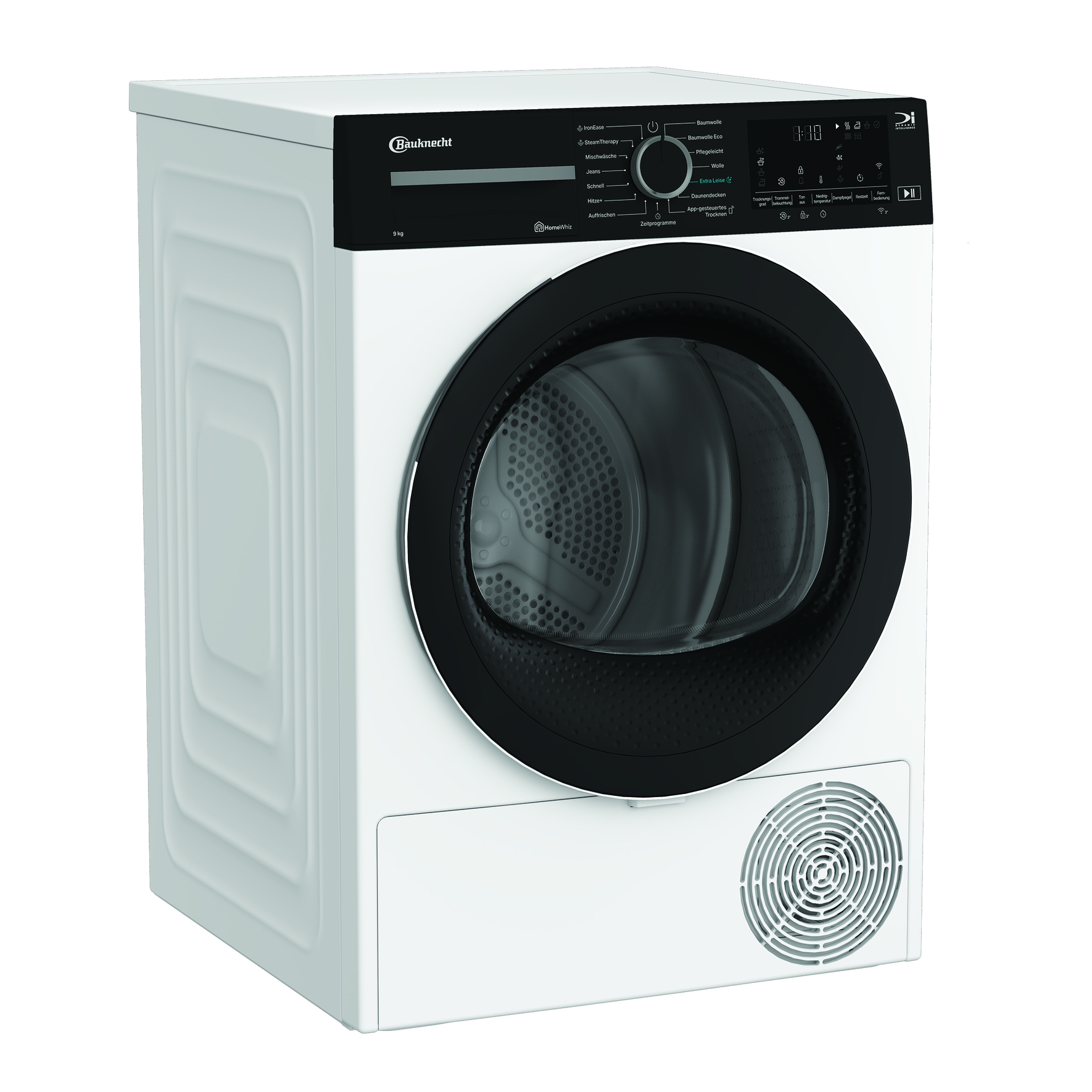
Beko BM3T39210W1 heat pump tumble dryer, 9 kg

Beko BM3T39210W1, 9 kg

The stated drum size may suit larger family loads; compare it with the amount of laundry you usually wash.

Heat pump tumble dryer; energy efficiency class E; 15 programmes; AquaWave drum.
View at Joybuy
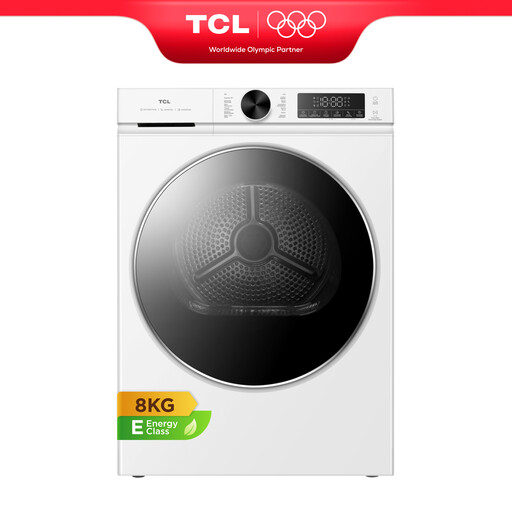
Bauknecht BD 9C WBS heat pump tumble dryer, 9 kg

Bauknecht BD 9C WBS, 9 kg

A 9 kg option for larger household loads; also check the load limit for the programme you expect to use most often.

Heat pump tumble dryer; energy efficiency class C; SteamCare; Wi-Fi Connectivity.
View at Joybuy
TCL DP4408WE1DE heat pump tumble dryer, 8 kg

TCL DP4408WE1DE, 8 kg

The stated capacity gives you an idea of its suitability for family laundry; for individual items you need in a hurry, check the actual programme duration and load limit.

Eco heat pump tumble dryer; 3-in-1 filter; energy efficiency class E.

View at Joybuy

Frequently asked questions

Can you tumble dry all school clothes and sportswear using a delicate programme?

No. Check the tumble dryer symbol first: it indicates, among other things, whether an item can be dried at a normal or low temperature, or whether it must not be tumble dried. Only choose a suitable appliance programme for items that can go in the tumble dryer.

How can I estimate a tumble dryer’s electricity costs?

Multiply the label value in kWh per 100 Eco cycles by the number of those cycles you expect to run, divided by 100, then multiply by your electricity price per kWh. This gives you an estimate for Eco operation; quick programmes and other load sizes may use different amounts. Verbraucherzentrale explains the energy-use figure per 100 Eco programme cycles.

Which energy label must be displayed when buying in Germany?

Since 1 July 2025, household tumble dryers sold in shops and online must display the EU A-to-G scale. The European Commission explains this labelling; if information differs, compare the current product sheet for the same model.

How should I care for a tumble dryer I use frequently?

Remove fluff in line with the instructions for your model. AEG Support Deutschland recommends cleaning the Quick-Clean filter after every programme on appliances with this filter; a clogged filter can increase cycle times. Follow the instructions for your appliance when caring for other components.