What should you look for when buying a dryer for school clothes and weekly laundry?
Since 1 July 2025, tumble dryers sold in shops and online must display an energy label on the A to G scale, as the European Commission explains. GINETEX Germany describes care labels as the guide to how a garment may be treated, while the German Environment Agency recommends choosing an appliance size to suit your actual loads.
| What matters |
What to look for when buying |
Who is this especially important for? |
| School clothes dried in time |
Check the programme duration and load limit for the programme you need. A general quick-programme claim won’t necessarily apply to every load. |
If a particular school garment needs to be ready the morning after a rainy day, I want to know how long the specific suitable programme takes. Around 33% of consumers put having school clothes dry in time first. |
| Mixed fabrics |
Check care labels, as well as the fabric types and load limit specified for the mixed-load programme. |
If a weekly load includes both cotton and easy-care items, I only want to dry them together if the labels and programme say it’s suitable. Around 27% of consumers prioritise how a dryer handles mixed fabrics. |
| Energy use with frequent drying |
Compare consumption figures on the same basis. Don’t compare older A+++ ratings and annual consumption figures directly with figures from the current label. |
If I dry clothes regularly, I want to compare the stated consumption figures without treating different labelling systems as equivalent. Around 20% of consumers put energy use first. |
| Load size and where the dryer will go |
Compare your usual laundry loads with programme limits, and check the appliance dimensions against the space available. |
If my laundry loads vary considerably or space is limited, I check the dimensions and programme load limits rather than just the maximum drum capacity. Around 20% of consumers prioritise load size and where the appliance will go. |
Which Joybuy tumble dryers meet these needs?
This selection from Joybuy includes heat pump tumble dryers with stated mixed-load and/or quick-programme options for changing weekly loads. Check the programme conditions and load limit for each model. A quick programme doesn’t guarantee a particular drying time for every load.
 No image available
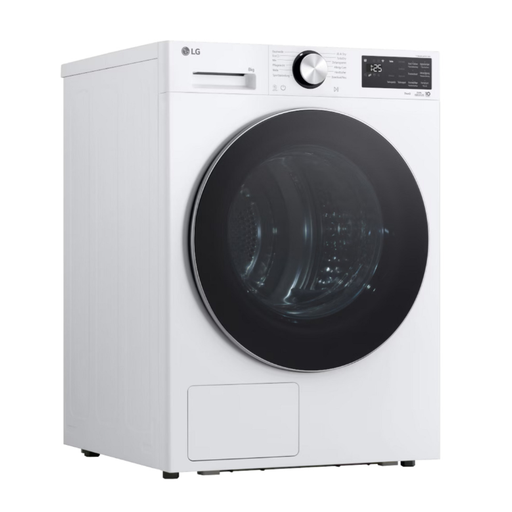
LG RT80X72W heat pump tumble dryer, 8 kg
The listed Mixed Fabrics and TurboDry options may suit suitable mixed loads or times when you need clothes in a hurry. Check the running time and load limit for the relevant programme.
The product name specifies an 8 kg capacity, energy rating B, AI Dry and a self-cleaning condenser.
The care labels on individual items remain the deciding factor.
View at Joybuy
 No image available
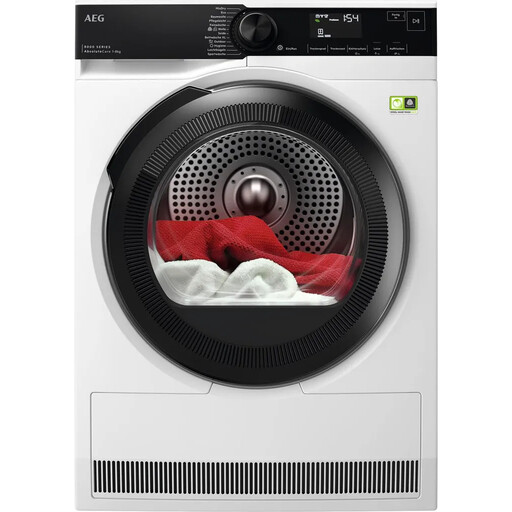
AEG TR8T75780 heat pump tumble dryer, 8 kg
MixDry may suit mixed loads of cottons and synthetics, but care labels and programme conditions remain key.
The product name specifies an 8 kg capacity, energy rating B, MixDry and ProSense.
The rated capacity alone doesn’t tell you the load limit for a particular programme.
View at Joybuy
 No image available
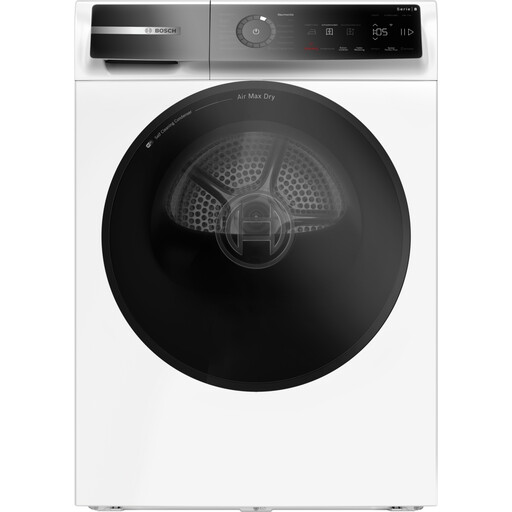
Bosch WRB247C40 heat pump tumble dryer, 9 kg
The listed Quick/Mix and half-load options may be useful for suitable mixed fabrics and loads of different sizes. Check the conditions for each programme.
The product name specifies a 9 kg capacity, energy rating A and a self-cleaning condenser.
Quick/Mix doesn’t replace the care labels on individual items.
View at Joybuy
 No image available
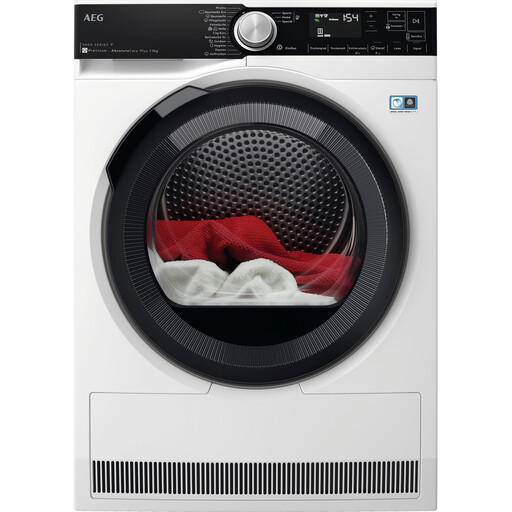
AEG TR9DW80690 heat pump tumble dryer, 9 kg
MixDry is designed for the suitable fabrics specified for the programme. A separate quick programme for smaller loads may be handy when you need clothes in a hurry.
The product name specifies a 9 kg capacity and energy rating C. The quick programme has a stated load capacity of 3 kg.
Don’t assume the stated load capacity and programme duration apply to other programmes or loads.
View at Joybuy
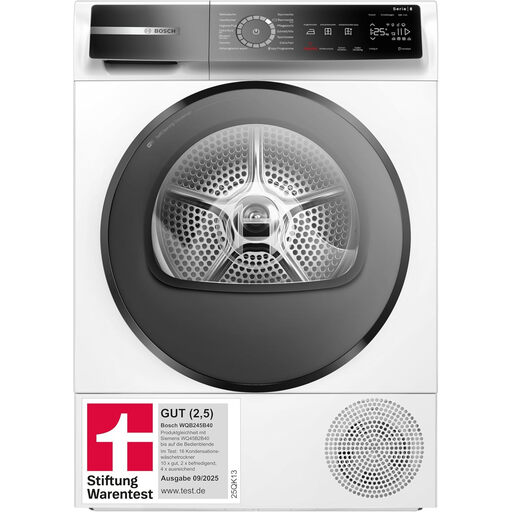 No image available
Bosch WQB245B40 Series 8 heat pump tumble dryer, 9 kg
Quick 40 may be useful when you need clothes in a hurry, but it doesn’t promise to dry any type of school clothing or every load size in 40 minutes.
The product name specifies a 9 kg capacity, energy rating C and AutoDry. A half-load option is also listed.
Only tumble dry fabrics whose care labels say they can be tumble dried.
View at Joybuy
Frequently asked questions about tumble dryers for school clothes and weekly laundry
Can every school garment go in a mixed-load programme?
No. First check the care label on each item, then check which fabrics and load sizes the specific programme is designed for. An appliance programme doesn’t override the garment’s care instructions.
Does every tumble dryer need an outside vent hose?
No. A vented dryer needs a vent to the outside. A condenser dryer collects water in a tank or, depending on the appliance and connection, drains it away. It doesn’t need a vent to the outside.
How can I maintain drying performance in everyday use?
Clean the filters regularly, following the instructions for your specific appliance. The German Environment Agency notes that dirty filters can increase drying times and energy use.
How do I compare the electricity consumption of different tumble dryers?
Only compare stated consumption figures when they use the same basis, and take into account how often you’ll use the appliance. Since 1 July 2025, tumble dryers sold in shops and online in Germany have used the A to G scale, as the European Commission explains. An older A+++ rating isn’t part of the same scale.
What should I do with my old dryer, and who can help if there’s a fault?
Electrical waste take-back rules also apply to online retailers. The return option available to you depends on the relevant legal requirements. If the appliance is faulty, your statutory consumer rights are against the seller. An additional guarantee is separate from these rights, as the German Consumer Advice Centre explains.


