Choose a tumble dryer based on the fabrics you actually want to dry and the load limits for each programme. If you often dry small loads, look for options specifically designed for smaller or half loads. For bedding, you’ll also need enough room for it to move around, plus a suitable programme – ideally one with a reversing drum. If you use your dryer frequently, compare the figures on the current EU label and consider how much maintenance it needs.
Who is this type of use relevant to?
Households with small everyday loads
If you usually dry just a few suitable items at a time, look for a specific small-load or half-load option on the model you’re considering. Bosch and Siemens list these options for the WQG233D40 and WQ33G2D41 models.
Households that dry bedding occasionally
For duvet covers and sheets, make sure the care label, space in the drum and load limit for the chosen programme are all compatible. AEG recommends loading laundry in line with its care labels.
Households that use a tumble dryer frequently
If you dry clothes regularly, you may want to give more weight to the energy use shown on the current EU label and the maintenance involved than to the rated capacity alone. The Verbraucherzentrale explains that the label value is given in kWh per 100 drying cycles on the Eco programme.
What should you look for when buying?
First, check that the care labels and programme load limits suit your laundry. Then compare energy use, installation requirements and maintenance using the specifications for each appliance.
| What matters to you |
What to check when buying |
Who is it most relevant to? |
| Small loads |
Look for a specifically listed half-load or small-load option and check the permitted load for the relevant programme. |
If I often dry just a few suitable items, I want a programme to match and don’t want to rely on drum size alone. Around 36% of consumers prioritise small everyday loads. |
| Bedding and bulky items |
Check the care label, the room for items to move around in the drum and the programme load limit. A stated reversing function or bedding programme may also help you choose. |
If I regularly dry bedding, I want to avoid overloading the drum or choosing an unsuitable programme. Around 29% of consumers prioritise bulky fabrics. |
| Electricity use |
Compare the current EU label and kWh per 100 Eco drying cycles; the Verbraucherzentrale cites this as the reference figure for comparing labels. |
If I dry clothes frequently, I want to compare energy figures using the same label basis, without treating them as the energy use for an individual special load. Around 21% of consumers prioritise running costs. |
| Installation and maintenance |
Check the appliance dimensions, the label figures for noise and condensation, and the cleaning instructions for the filter and condenser. |
If space, humidity in the room or regular cleaning are important to me, I want to check these requirements against the appliance specifications before buying. Around 14% of consumers prioritise installation and maintenance. |
Common buying misconceptions
-
The biggest drum is automatically the most energy-efficient choice
A high rated capacity doesn’t tell you how well an appliance suits your usual small loads. The Umweltbundesamt points out that smaller drums aren’t automatically more efficient if they have to run more often.
Compare the rated capacity with your typical loads and the limits for the programmes you want to use.
-
A quick programme takes the same time for thick fabrics
The 40-minute programme duration stated by Bosch for the WQG233D40 is for small loads of lightweight synthetics – it isn’t a general estimate for heavy bedding.
Check the programme purpose and permitted load in the manual before planning a cycle time for bulky items.
Thick fabrics may need another drying cycle or extra time.
-
Older energy labels can be compared directly with current ones
The EU rescaled the energy labels for household tumble dryers on 1 July 2025. An older A+++ rating is therefore not directly comparable with a current class.
Compare the current label for the specific model and its energy use in kWh per 100 Eco drying cycles. The Verbraucherzentrale explains this reference figure.
-
A convenient feature means no maintenance is needed
Features such as a special filter don’t replace the maintenance specified by the manufacturer for that appliance.
Compare the cleaning instructions for the lint filter and condenser, as well as the recommended cleaning intervals.
Key brands at a glance
Bosch
For the WQG233D40, Bosch lists a half-load option and a bedding programme with a reversing drum.
- This model has a rated capacity of 8 kg and an EasyClean filter.
- The 40-minute duration applies to small loads of lightweight synthetics. According to Bosch, the model does not have a self-cleaning condenser.
Siemens
For the WQ33G2D41, Siemens lists a half-load option and a reversing drum.
- The model has a rated capacity of 9 kg and a noise level of 63 dB(A).
- Descriptions of drum movement and small-load adjustment are manufacturer claims, not independent measurements of drying performance. A self-cleaning condenser is not listed for this model.
Midea
For the MD110H80B-E, Midea lists a bedding programme and sensor drying.
- The model also has a double lint filter.
- Check the bedding programme’s load limit on the specific appliance. Use the current EU label when comparing it with other models.
Beko
For the B3T42249S, Beko lists a rated capacity of 8 kg and OptiSense sensor drying.
- Beko gives this model an energy rating of C and a noise level of 63 dBA.
- The manufacturer’s information about drum movement doesn’t prove that bulky items will dry evenly in every programme. Check that the programme you choose is suitable.
LG
For the RT80X7, LG lists AI Dry, which the manufacturer says takes fabric type and load size into account.
- LG gives this model an energy rating of B and lists an automatically rinsed condenser.
- The manufacturer’s information doesn’t show which programme is suitable for a particular small, bulky load. Check the documentation for the model.
Joybuy products for small loads and bedding
The Joybuy products below are heat pump tumble dryers. For small loads and bedding, also check the programme options and permitted load for the specific model.
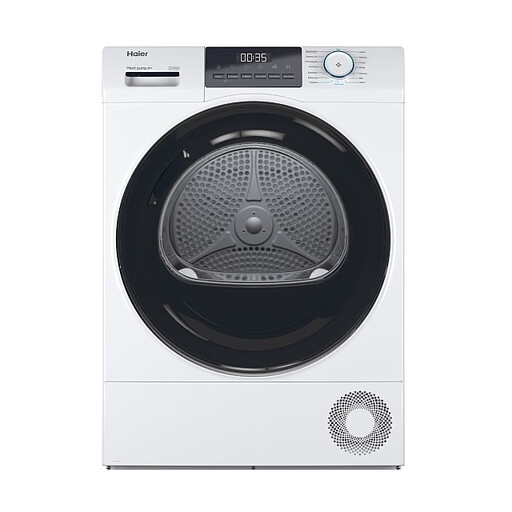 Image unavailable
Haier I-Pro 1 HD80-E929E-DE, 8 kg
If automatic adjustment for different loads matters to you, the listed sensor drying may be worth considering. Check separately whether there’s a suitable bedding programme.
Listed features: 8 kg, heat pump technology and sensor drying.
Joybuy
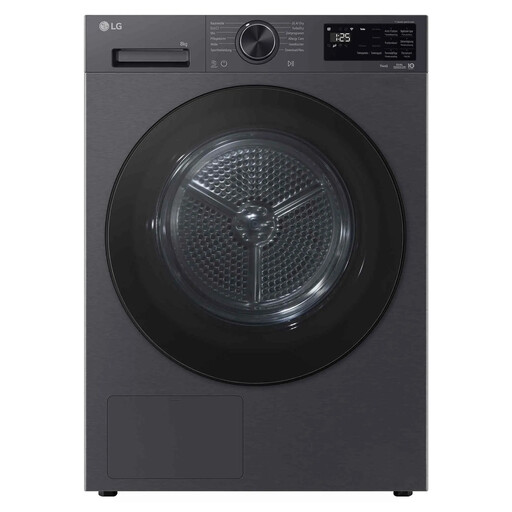 Image unavailable
LG RT80X7B, 8 kg
If you’re considering sensor-controlled features for different loads, compare the listed controls with the programmes for your fabrics.
Listed features: 8 kg, heat pump technology, AI Dry and SensorDry.
Joybuy
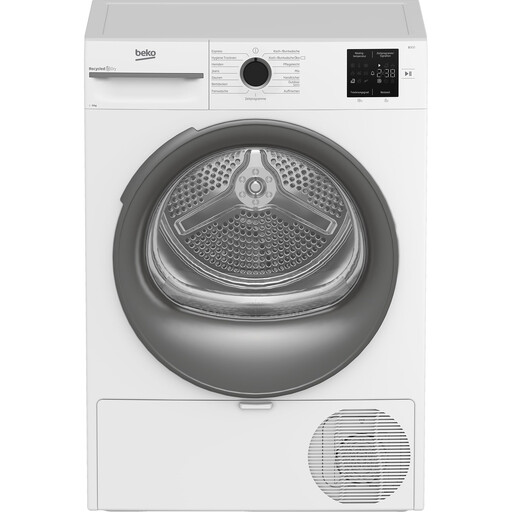 Image unavailable
Beko BM3T39210W1, 9 kg
If you dry bedding occasionally, the rated capacity can be a useful first point of comparison. Also check the bedding programme’s permitted load and the care label.
Listed features: 9 kg, heat pump technology and 15 programmes.
Joybuy
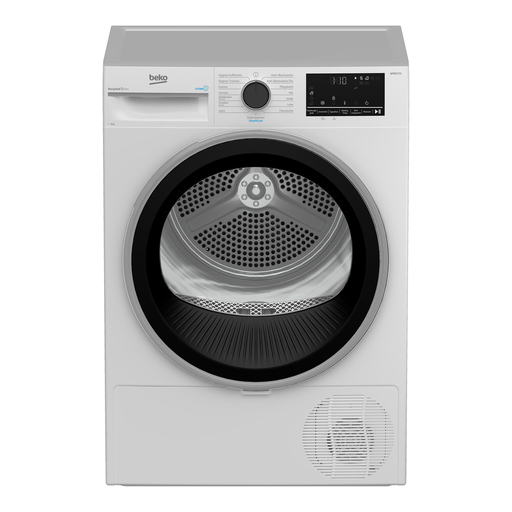 Image unavailable
Beko B5TD6821B, 8 kg
If dedicated programmes for bedding or duvets matter to you, check the programme list for the specific model variant before buying.
Listed features: 8 kg, heat pump technology, 15 programmes and sensor drying.
Joybuy
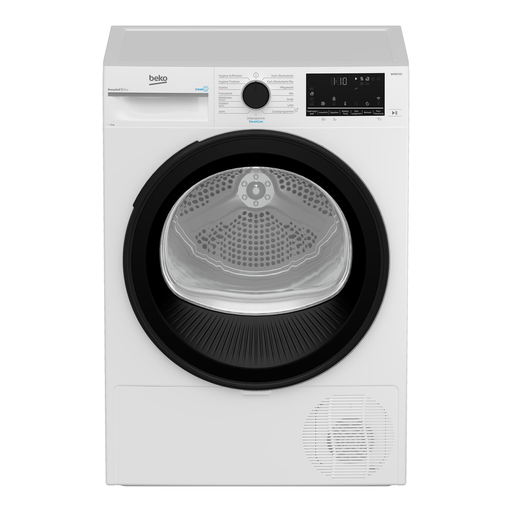 Image unavailable
Beko B7TDT8820A, 8 kg
If you dry thicker fabrics, check that the specific programmes are designed for them and what load limits apply.
Listed features: 8 kg, heat pump technology, 15 programmes and sensor drying.
Joybuy
Frequently asked questions
Does “8 kg” or “9 kg” mean that much laundry will fit in every programme?
No. The kilogram figure is the appliance’s maximum rated capacity; the permitted load may vary by programme. Check the manual and care label, and leave bulky items enough room to move around.
Can I use a quick programme for thick towels or bedding?
Not based on the stated cycle time alone. Bosch describes the WQG233D40’s 40-minute programme as suitable for small loads of lightweight synthetics. For heavier fabrics, check the programme purpose and permitted load.
How do I compare the electricity use of different tumble dryers?
Compare the kWh per 100 Eco drying cycles on the current EU label, using the same basis for each model. The Verbraucherzentrale explains this figure. It doesn’t predict the energy use for an individual small load on the bedding programme.
What should I bear in mind when using and maintaining a tumble dryer?
Follow the care labels and the cleaning instructions for the specific appliance. The Verbraucherzentrale recommends cleaning the lint filter and condenser regularly; the exact steps depend on the model.
Which energy label applies to household tumble dryers?
The rescaled EU label, rated from A to G, has applied since 1 July 2025, as explained by the European Commission. An older A+++ rating is therefore not directly comparable with a current energy class.


