If you often dry small loads separately in a house share, look for moisture sensors or a setting specifically designed for smaller loads. A large drum won’t automatically save energy when it’s only partly full. For the model you’re considering, compare energy use in kWh per 100 Eco cycles, and check the noise level, condensation efficiency, space requirements and the upkeep you’ll need to share. The German Consumer Advice Centre and the German Environment Agency recommend comparing energy use on a consistent energy-label basis.
Who is a tumble dryer for small house-share loads suitable for?
People who dry their laundry separately
If you dry your laundry separately from your housemates’, look for suitable settings for smaller loads rather than focusing on drum capacity alone. The German Environment Agency points out that a smaller drum won’t necessarily use less energy if it has to run more often.
Housemates who plan energy use together
If you share an appliance, comparable energy-use figures and clear agreements about how to use and care for it can help. The German Consumer Advice Centre recommends checking energy use in kWh per 100 Eco cycles.
Housemates short on space
If space is limited, first check whether there’s actually room for a separate appliance, with enough space to access and operate it. The German Consumer Advice Centre describes washer-dryers as a space-saving alternative, but notes that they use more electricity and water than separate appliances.
What matters for small loads?
Separate tumble dryer for individual loads
A good fit if: individual housemates often dry their laundry separately and there’s space for a dedicated appliance.
Bear in mind: A half-load setting can adjust the programme settings and duration, but it doesn’t prove a specific energy saving per kilogram. Bosch home appliances lists this setting for the WQG233D40.
Shared heat pump tumble dryer
A good fit if: you can combine suitable fabrics into a load and everyone in the house share agrees on how to use and clean the appliance.
Bear in mind: Different fabrics, schedules and responsibilities can make shared loads impractical. The German Environment Agency points out that using the dryer more fully can reduce energy use per kilogram.
Clothes airer or washing line
A good fit if: you have a suitable place to dry your clothes and don’t need them ready quickly.
Bear in mind: A drying area takes up space, and air-drying takes time.
Washer-dryer
A good fit if: there’s no room for either a separate tumble dryer or a clothes airer in the intended spot.
Bear in mind: The German Consumer Advice Centre says washer-dryers use more electricity and water than separate appliances. Washing capacity and drying capacity are not the same.
For frequent small loads, check how well a model handles part loads as well as its stated capacity. The figures below show how priorities might differ in a house share where everyone dries their laundry separately.
| Priority |
What to look for |
Who it matters most to |
| Small loads |
Check for a moisture sensor and a setting specifically designed for smaller loads; check the permitted load for the programme you choose. |
If I often dry my laundry on my own, I want suitable programmes without relying on the drum’s kilogram capacity. Small loads are the top priority for around 33 % of consumers. |
| Energy use |
Compare kWh per 100 Eco cycles on the same energy-label basis, and take the number of loads in your house share into account. |
If we share the appliance regularly, I want to be able to compare energy use using clear, comparable figures. Energy use is the main priority for around 27 % of consumers. |
| Noise and room humidity |
Check dB(A) and condensation efficiency on a comparable basis, and agree on when to use the dryer. |
If the appliance is near shared rooms, I look at its noise rating and condensation efficiency. Quietness and room humidity are the main priorities for around 20 % of consumers. |
| Space and upkeep |
Check the appliance dimensions and allow enough room to operate it; agree who will clean it and empty the water container. |
If space is tight, the appliance needs to fit and be easy to look after day to day. Ease of installation and upkeep are the main priorities for around 20 % of consumers. |
Avoid common buying mistakes
-
Assuming the smallest or largest drum will automatically be the most energy-efficient
A small drum may need to run more often, while a large drum won’t necessarily use less energy if it’s often only partly full. The German Environment Agency highlights both of these points.
Compare the capacity and part-load settings with the individual and shared loads you usually dry.
-
Comparing old A+++ ratings directly with current energy classes
Since 1 July 2025, tumble dryers have used the rescaled A to G energy label. Ratings from different scales aren’t directly comparable; the European Commission explains the new label.
Check the current label for the exact model and compare energy use in kWh per 100 Eco cycles on the same basis.
-
Choosing a washer-dryer just because it takes up less space
The German Consumer Advice Centre says washer-dryers use more electricity and water than separate appliances. The amount of laundry that can be dried in one go may also be less than the wash load.
Compare washing and drying capacities separately, and consider a washer-dryer mainly when there’s no room for other ways to dry your laundry.
-
Not assigning responsibility for cleaning a shared appliance
A shared appliance needs someone to take responsibility for regular upkeep.
Agree who will clean the lint filter after every drying cycle, and follow the instructions for your specific model for any other maintenance. AEG recommends cleaning the filter after every drying cycle.
Brands and model ranges to consider
Beko
The BM3T37210W1 is a heat pump tumble dryer with a stated capacity of 7 kg and sensor drying.
- Beko gives this model an E energy efficiency rating on the current scale, a noise level of 64 dBA and a depth of 54,5 cm.
- Its capacity and sensor alone don’t prove a specific energy saving on small loads. Also check that its depth will fit your space.
Bosch
The Series 6 heat pump tumble dryer WQG233D40 combines a stated capacity of 8 kg with Auto Dry and a dedicated half-load setting.
- Bosch home appliances says the half-load setting adjusts the programme settings and duration for smaller loads.
- Bosch gives the model’s noise level as 64 dB(A) and its dimensions as 842 × 598 × 613 mm. Its condenser is not self-cleaning. The setting alone doesn’t prove a specific energy saving.
AEG
The 8-kg heat pump tumble dryer TR9W75780 is a specific model you can compare for energy use, noise and fabric-care programmes.
- AEG gives this model’s energy use as 85 kWh per 100 cycles, its condensation efficiency as 91 % and its noise level as 63 dB(A).
- Claims about particularly gentle fabric care apply to this specific model and don’t prove that all AEG appliances offer the same benefits.
Siemens
The iQ500 WQ35G2D00 is an 8-kg heat pump tumble dryer. Check its specific controls and features before buying.
- Siemens home appliances confirms that this model uses heat pump technology and has a capacity of 8 kg.
- Capacity alone doesn’t prove an advantage for small loads compared with other models.
Miele
The T1 TEC645WP is an 8-kg heat pump tumble dryer with features listed by the manufacturer, including DirectSensor and DryProtect.
- You can check the named features and stated capacity as specifications of this particular model.
- Miele lists optional delivery and installation services; check their terms before ordering.
Joybuy products for everyday life in a house share
This selection includes heat pump tumble dryers for shared use in a house share, with a range of capacities and features. When comparing them, check which features suit the individual and shared loads you typically dry.
 No image available
Haier I-Pro 1 HD80-E929E-DE, 8 kg
Sensor drying with an automatic stop when the laundry reaches the selected dryness level may be useful for loads of different sizes.
Stated capacity of 8 kg; several drying programmes; sensor-based drying.
View at Joybuy
 No image available
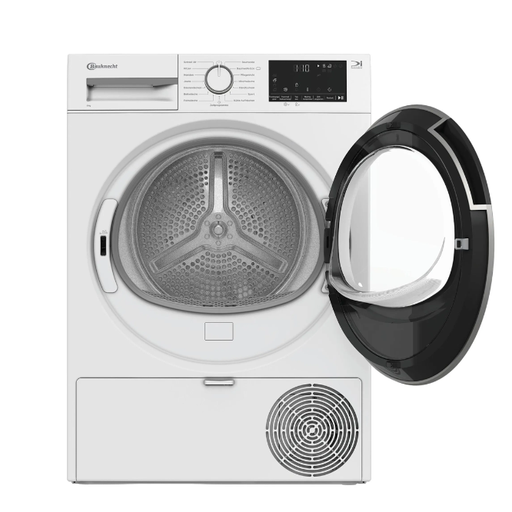
Bauknecht BT 84D WWS, 8 kg
The stated appliance depth can help you check whether it will fit in a limited space.
Energy efficiency class D; condensation efficiency class B; appliance depth 54,5 cm; Precision-Dry function.
View at Joybuy
 No image available
LG RT80X7B, 8 kg
The stated sensor features take moisture, load size and fabric type into account. Check whether they suit the programmes you use.
85 kWh per 100 cycles; 62 dB; 91 % condensation efficiency; self-cleaning condenser and Dual-Filter. Maintain the Dual-Filter and empty the water container as instructed for the appliance.
View at Joybuy
 No image available
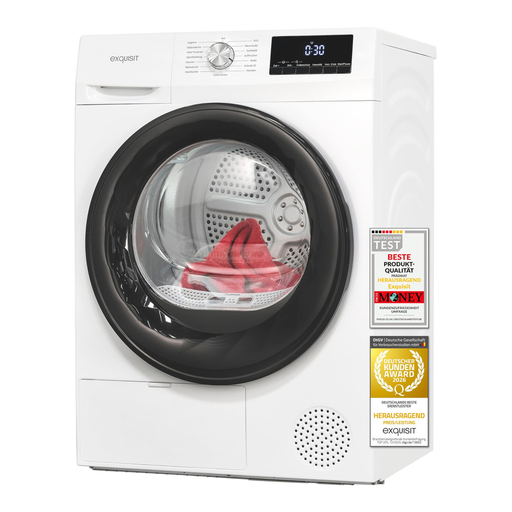
Exquisit heat pump tumble dryer, 7 kg
The stated capacity of 7 kg and Quick-30' programme are features you can compare with the loads you usually dry.
15 programmes; delay start from 4 to 24 hours; time remaining display. Clean the lint filter after every drying cycle and empty the water container regularly.
View at Joybuy
 No image available
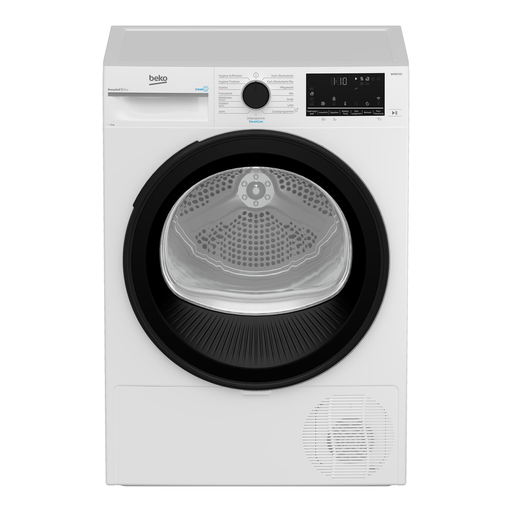
Beko B7TDT8820A, 8 kg
Compare the stated sensor drying and delay start with the way you handle separate loads and agree on when to use the appliance.
Energy efficiency class A; 15 programmes; sensor drying; delay start up to 24 hours. Clean the lint filter after every cycle and empty the water container regularly, or use the drain hose as described.
View at Joybuy
Frequently asked questions
How can I tell if an 8-kg tumble dryer is suitable for small loads?
Check the programmes and see whether the specific model has a setting described as being for smaller loads or half loads. Also compare its current energy label: a stated capacity of 8 kg alone doesn’t mean it will be efficient with part loads.
What should everyone in the house share do after each drying cycle?
Agree who will clean the lint filter and, if necessary, empty the water container. AEG recommends cleaning the filter after every drying cycle; follow the instructions for your chosen model for any other steps.
How do I compare the energy use of different tumble dryers?
Compare the figures in kWh per 100 Eco cycles on the same energy-label basis, and consider how many cycles you’ll actually run. The German Consumer Advice Centre recommends checking energy use when buying.
Is the old A+++ label still used in Germany, and what should I do with an old tumble dryer?
Since 1 July 2025, tumble dryers have used the new A to G label, as explained by the European Commission. Don’t put an old appliance in household waste. Retailers’ take-back obligations are set out in § 17 ElektroG and apply under the conditions specified there, including to certain retailers and when you buy a similar new appliance.


