People with a compact laundry space
When space is limited, width and depth matter, as do the door swing, access for maintenance and, where relevant, a safe installation or stacking solution.


First, measure the available space, including the door swing and access to the lint filter and water tank. Then choose a model with programmes to suit the small loads you usually dry. If you use it regularly, a heat pump tumble dryer could be a good choice for its efficiency. However, a shallower built-in model or a washer-dryer will only solve your space problems if its dimensions, installation requirements and drawbacks suit your situation.
When space is limited, width and depth matter, as do the door swing, access for maintenance and, where relevant, a safe installation or stacking solution.
If you usually dry just a few items, look for suitable programmes or an explicitly stated half-load option, rather than focusing solely on the maximum drum capacity.
Compare the energy label figures with your own usage. Consider energy consumption, condensation efficiency, the space available and the purchase price together.
A good fit if: you have a dedicated space and dry clothes regularly; compare the small-load option, dimensions and label figures for the specific model.
Trade-off: A half-load function won’t make the appliance any smaller, and the Eco label figures don’t guarantee the energy use for every small load.
A good fit if: depth is the key constraint and your space is suitable for a built-in appliance.
Trade-off: A shallow depth doesn’t mean a narrow width or automatically lower energy use. Check that the installation dimensions and instructions suit the space.
A good fit if: there’s no room for a separate tumble dryer or a suitable place to hang laundry.
Trade-off: According to Verbraucherzentrale, washer-dryers use more electricity and water than separate appliances. Their drying capacity is also lower than their washing capacity.
A good fit if: the required venting can be installed properly in the space you have.
Trade-off: Check the dimensions and actual energy-use figures for the model. The appliance type alone doesn’t make it a space-saving solution.
| What to consider | What to check before buying | Who should pay particular attention? |
|---|---|---|
| Fit in your chosen space | Check the specific model’s width, depth and height, door swing, delivery route and access to the lint filter and water tank. For stacking or built-in installation, check approval and compatibility. | If your laundry space is tight, you’ll want to know whether the appliance and maintenance access will actually fit; around 36% of consumers rank available space as their top buying priority. |
| Small loads | Check the exact model for a half-load option, moisture sensing and programmes for the fabrics you want to dry. Bosch lists this option for the WQG233D40; Beko features OptiSense on the B3T41230, while Siemens lists a half-load option for the WQ33G2D41. | If you usually dry just a few items, you need suitable programmes rather than a choice based only on rated capacity; around 29% of consumers rank small-load functionality as their top priority. |
| Energy use | Check the current A-to-G label and kWh per 100 Eco cycles at full and partial load on a comparable basis. The label figure doesn’t automatically represent the energy use for an individual small load. | If you use your dryer often, you’ll want to factor in its ongoing electricity use; around 21% of consumers prioritise running costs. |
| Noise and room humidity | Check the noise level in dB(A), condensation efficiency, and the installation and care instructions for the specific model. Bosch lists 64 dB(A) and 91% condensation efficiency for the WQG233D40. | If your tumble dryer is in a small room, you’ll want to take its noise and moisture figures into account; around 14% of consumers rank these factors as their top priority. |
A shallow depth doesn’t tell you whether the width, height, door opening and maintenance access will fit in your laundry space. The Candy BCTD H7A1TE-S is 596 mm wide according to the manufacturer; the Exquisit TAE 70-3, described as a vented tumble dryer, is 59,5 cm wide.
Check the full dimensions and permitted installation type for the specific model against your available space and delivery route.
Older and current tumble dryer labels use rating scales that aren’t directly comparable. Comparing models solely by their old class rating can therefore be misleading.
Compare current label figures and kWh per 100 Eco cycles on the same basis.
Verbraucherzentrale points out that washer-dryers can use more electricity and water than separate appliances, and have a lower drying capacity than washing capacity.
Consider a washer-dryer mainly if there really isn’t room for a separate appliance or a suitable place to hang laundry.
A stacking kit isn’t automatically compatible with every tumble dryer. A vented dryer also needs a suitable way to expel air in the intended location.
Before choosing an appliance, check the installation requirements, the stacking kit’s compatibility or the venting solution required.
Depending on how you plan to install it, you may need a compatible stacking kit or a suitable venting solution.
The BCTD H7A1TE-S is a built-in heat pump tumble dryer for a suitable space, particularly if appliance depth is a key consideration.
The freestanding WQG233D40 is worth comparing if you have 598 mm of width available and regularly dry small loads.
The B3T41230 is a 7 kg heat pump tumble dryer with sensor drying, for households that don’t need an especially narrow appliance.
The WQ33G2D41 is a freestanding heat pump tumble dryer with an explicitly stated half-load option.
The TAE 70-3 gives you a vented dryer to compare, provided the venting can be suitably installed in your chosen location.
These freestanding heat pump tumble dryers are options for households looking for a separate appliance. For small loads, check the programmes listed and make sure the external dimensions fit your available space.
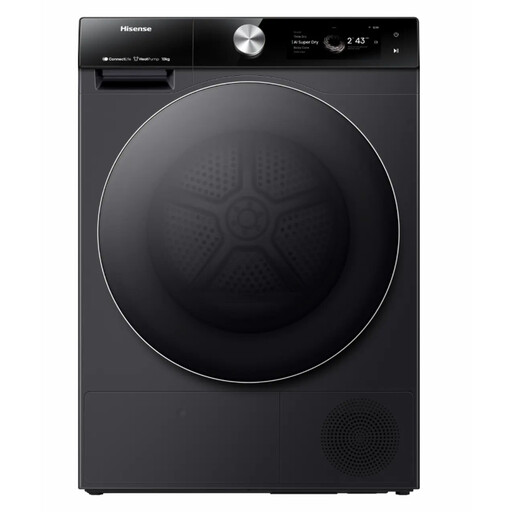 No image available
An option for households looking for a freestanding heat pump tumble dryer; for small loads, check which programmes are designed for them.
Rated capacity of 10 kg; AI Auto Dry and Wi-Fi control are listed. Stated external dimensions: 64 × 59,5 × 88,5 cm.
 No image available
A freestanding option for different load sizes; check that the programmes listed suit the fabrics you want to dry.
Rated capacity of 8 kg, Dual-Inverter heat pump technology and AI Dry. The description gives dimensions of 60 × 66 × 85 cm and says the door is reversible.
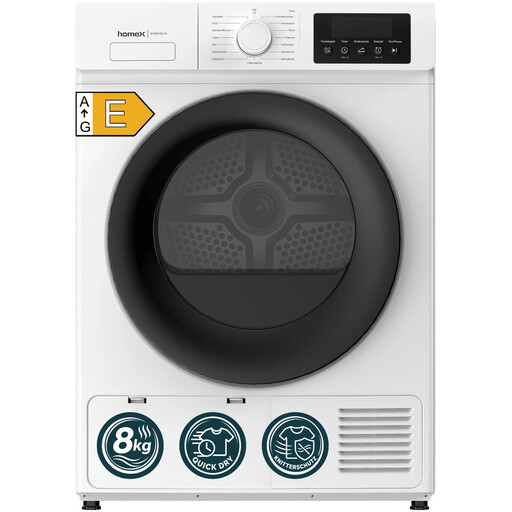 No image available
A freestanding option for different fabrics; check the available programmes against your laundry’s care requirements.
Rated capacity of 8 kg, 15 programmes and an adjustable drying level. Stated dimensions: 60 × 85 × 65 cm.
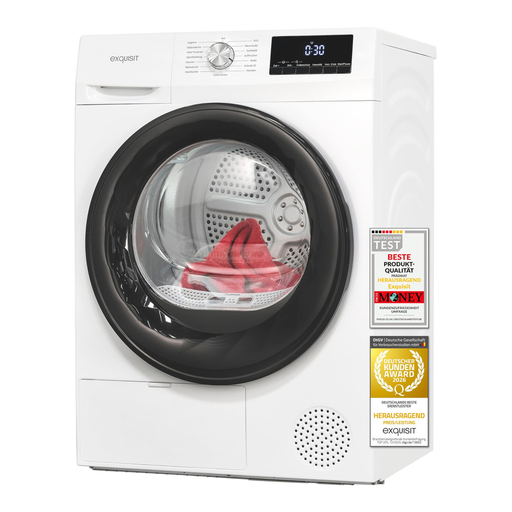 No image available
A freestanding option for different fabrics; check that the programmes on offer suit the small loads you usually dry.
Rated capacity of 7 kg and 15 programmes, including Quick 30, Wool and Delicates. Stated dimensions: 54 × 66 × 84,5 cm (D × W × H).
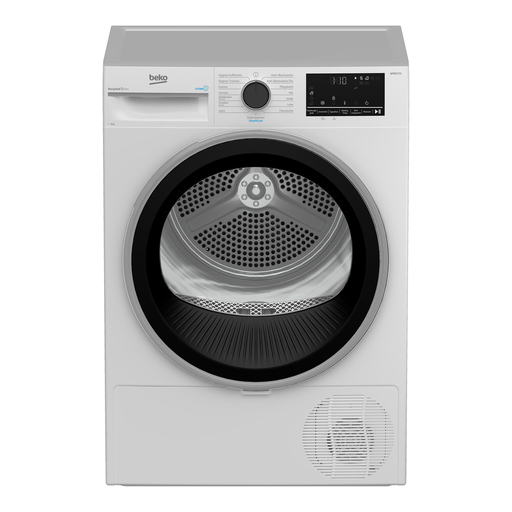 No image available
A freestanding option with sensor drying; check whether the programmes cover the loads you usually dry.
Rated capacity of 8 kg, 15 programmes and a Silent programme. Stated dimensions: 67,2 × 59,8 × 84,6 cm (D × W × H). A compatible appliance is required to stack it with a washing machine.
Check the approval and dimensions of both specific appliances, as well as the stacking kit’s compatibility. For the WTZ27400, Bosch specifies, among other things, a washing machine with a worktop depth of more than 55 cm and says you need to check compatibility with the tumble dryer; this doesn’t mean the kit is approved for stacking every model.
Clean the lint filter and condenser regularly, following the instructions for your specific model. Verbraucherzentrale warns that lint and dust can become a fire hazard over time.
Compare the kWh per 100 Eco cycles on the current labels of similar appliances, and consider your electricity tariff and actual usage separately. The label figure is based on a standardised programme using full and partial loads, so it won’t automatically reflect the energy use for your individual load.
Household tumble dryers in Germany use the EU energy label introduced on 1 July 2025, with ratings from A to G. According to the Federal Institute for Materials Research and Testing, a repairability index will only become mandatory on the label from 1 January 2027; earlier A+ ratings aren’t equivalent to the current scale.
In Germany, waste electrical appliances are collected separately. According to the Federal Environment Agency, municipal collection points generally accept them free of charge; check whether you can return yours through the retailer as part of your specific purchase.