If floor space is limited, a separate heat pump tumble dryer stacked on top of your washing machine could be a solution, provided the appliances, ceiling height and stacking kit are all compatible. If you only have room for one appliance, consider a washer-dryer, while a vented mini dryer needs a suitable route for the moist air to escape. If you often dry small loads, choose a capacity and part-load features that suit the amount of laundry you have: the German Environment Agency notes that a large dryer used half-full may consume more energy per kilogram. The consumer advice centre says washer-dryers use more electricity and water than two separate appliances.
Which dryer solutions are right for different households?
Households with small, frequent loads
If you often dry just a few suitable items, compare the drum size, moisture sensing and any explicitly stated part-load options. The German Environment Agency explains what to consider when choosing a capacity; Bosch describes a half-load option for the WQG233D40.
Households short on space
When space is limited, the appliance depth, door opening and required clearance are all important. If you plan to stack your appliances, also check that the two appliances and stacking kit are compatible, as Bosch and Beko advise in their product information.
Households without room for a second appliance
A washer-dryer combines both functions in one appliance footprint. LG lists an 8.5 kg washing capacity and a 5 kg drying capacity for the V5WD85SLIM; the consumer advice centre notes that washer-dryers use more electricity and water than two separate appliances.
Which buying criteria matter most?
| What to consider |
What to look for |
Who should pay particular attention? |
| Space and installation |
Check the installation dimensions, door opening and clearance; for a stacked setup, check that the appliances are approved for stacking and that the stacking kit is suitable. |
If I have limited floor space, the appliance needs to fit in the intended spot with the door open and the required clearance. Around 29% of consumers put available installation space first. |
| Small loads |
Compare your usual and largest loads with the permitted capacity; check for moisture sensing or an explicitly stated part-load option. |
If I usually only have a few items to dry, I don’t want to choose an unnecessarily large drum, but I also don’t want to keep running extra cycles. Around 29% of consumers prioritise a solution that suits small loads. |
| Energy use and moisture |
Compare energy figures using the same label basis; if you choose a vented dryer, make sure there is a suitable route for the air to escape outside. |
If I dry clothes regularly or install the appliance in a small room, I want to assess its energy use and how it handles moisture in the context of my home. Around 24% of consumers focus on running costs and moisture extraction. |
| Room for one appliance |
Check the separate washing and drying capacities, as well as the energy use for a combined wash-and-dry cycle. |
If there’s no room for a second appliance, I need to wash and dry in the same space and take the smaller drying capacity into account. Around 18% of consumers prioritise this space-saving option. |
The EU energy label for tumble dryers, in force since 1 July 2025, uses a scale from A to G. The European Commission gives energy consumption per 100 eco cycles; the consumer advice centre also lists condensation efficiency as a figure for comparison.
Which buying mistakes should you avoid?
-
Checking only the appliance dimensions against the alcove
An appliance may still be unsuitable despite fitting in depth if the width, door swing or required clearance is an issue. For a stacked setup, you also need to check that the specific combination of appliances is approved.
Measure the space, including the door opening, and check in advance that the washing machine, tumble dryer and stacking kit are compatible.
A stacked setup may also require a compatible stacking kit.
-
Assuming a small drum is automatically the most energy-efficient choice
A drum that’s too small may mean running extra drying cycles. Conversely, according to the German Environment Agency, a large dryer used half-full may consume more energy per kilogram of laundry.
Compare the capacity with your usual and largest loads. If you often have small loads, check whether moisture sensing or a part-load option is explicitly listed.
-
Assuming a washer-dryer has the same washing and drying capacity
According to LG, the V5WD85SLIM has a washing capacity of 8.5 kg and a drying capacity of 5 kg. The consumer advice centre says washer-dryers use more electricity and water than two separate appliances.
Check both capacity figures and the energy use for a complete wash-and-dry cycle.
-
Choosing a vented dryer without an outlet, or relying on an outdated energy label
A vented appliance needs a suitable route to expel moist air outside. Since 1 July 2025, tumble dryers have been covered by the EU energy label scale from A to G; older figures aren’t directly comparable with the current scale.
Before you buy, check whether you can install a suitable vent and compare energy figures only on the same label basis. The European Commission gives the current A to G scale.
Which brands and models can help you compare your options?
Beko
The B3T41239 is an example of a separate heat pump tumble dryer with a rated capacity of 7 kg and a depth of 54.3 cm, according to Beko.
- Beko lists sensor drying for this model.
- The shallower depth alone doesn’t tell you whether the width and door opening will fit, or how much clearance you’ll need.
Bosch
The WQG233D40 is an example of a separate heat pump tumble dryer with an 8 kg rated capacity and a half-load option.
- Bosch says the option adjusts the settings for small loads.
- For a stacked setup, the appliances and stacking kit need to be compatible; the feature doesn’t guarantee a specific energy saving compared with every smaller model.
Siemens
The WQ33A2CEM is an example of a freestanding 8 kg heat pump tumble dryer with a half-load option.
- Siemens lists dimensions of 842 × 598 × 613 mm and a noise level of 62 dB(A) for this model.
- The dimensions need to suit your specific installation space and the required clearances; this isn’t a mini dryer.
Klarstein
The JetSet 3 kg is an example of a mini dryer for small loads, provided you have a suitable place to install a vented appliance.
- Klarstein lists a rated capacity of 3 kg and vented operation for this model.
- Moist air needs to be vented suitably; a capacity that’s too small may mean running extra cycles.
LG
The V5WD85SLIM is an example of a washer-dryer for households that need to wash and dry in the space taken up by a single appliance.
- LG lists a washing capacity of 8.5 kg and a drying capacity of 5 kg for this model.
- The drying capacity is lower than the washing capacity; the consumer advice centre notes that washer-dryers use more electricity and water than two separate appliances.
Joybuy products for small loads and limited space
This selection features separate Beko heat pump tumble dryers. Compare their capacities with your usual loads; the German Environment Agency notes that a large dryer used half-full may consume more energy per kilogram.
 No image available
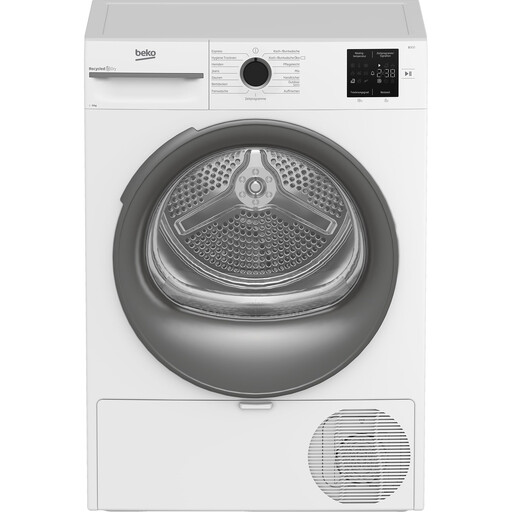
Beko BM3T39210W1 heat pump tumble dryer, 9 kg, energy class E
An option if you’re looking for a separate heat pump tumble dryer and your loads suit the stated capacity; consider the drum size if you often have small loads.
Rated capacity: 9 kg. Energy efficiency class: E. 15 programmes.
View at Joybuy
 No image available
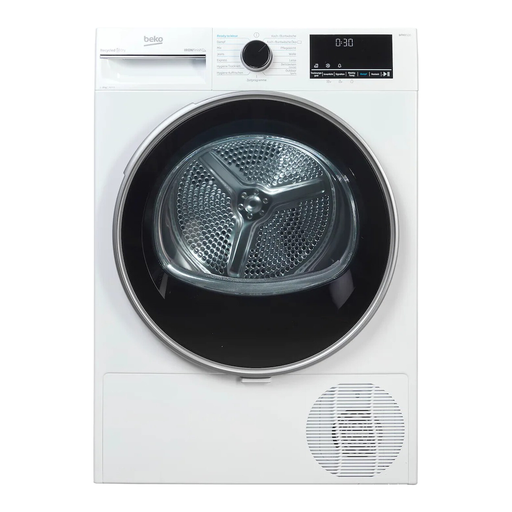
Beko B5T4824IF heat pump tumble dryer, 8 kg, energy class C
An option if you’re looking for a separate heat pump tumble dryer and the stated capacity suits your usual loads. If you plan to stack it, make sure the washing machine and stacking kit are also suitable for the combination.
Rated capacity: 8 kg. Energy efficiency class: C.
View at Joybuy
 No image available
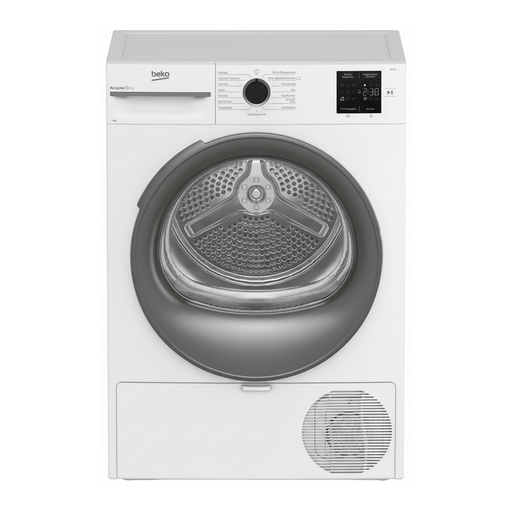
Beko BM3T38210W1 heat pump tumble dryer, 8 kg, energy class E
An option if you’re looking for a separate heat pump tumble dryer and the stated capacity suits the amount of laundry you have. Check the appliance dimensions, door opening and clearance separately for your intended installation space.
Rated capacity: 8 kg. Energy efficiency class: E. NX Design. Stainless steel drum.
View at Joybuy
 No image available
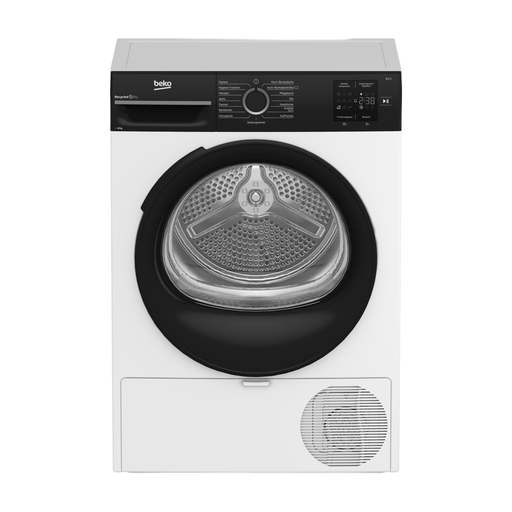
Beko BM3T30230W heat pump tumble dryer, 10 kg, energy class D
An option for larger loads if you have room for a separate heat pump tumble dryer. If you often have small loads, bear in mind that according to the German Environment Agency, a large dryer used half-full may consume more energy per kilogram.
Rated capacity: 10 kg. Energy efficiency class: D. 15 programmes.
View at Joybuy
Frequently asked questions
Can a washer-dryer dry the same amount of laundry as it can wash?
No. The drying capacity is listed separately and is the figure to check. For the LG V5WD85SLIM, the manufacturer lists 8.5 kg for washing and 5 kg for drying. If you wash a larger load, you’ll need to remove some items or dry them separately.
Can I simply put my tumble dryer on top of my washing machine?
Not without checking that the specific appliances are compatible and that you have the right stacking kit. Bosch advises checking that the appliances and installation space are suitable; this isn’t blanket approval for any combination.
Which figures can help me compare energy use?
The EU energy label for tumble dryers gives consumption in kWh per 100 eco cycles. For a rough cost estimate, divide this figure by 100, multiply it by the number of eco cycles you expect to run each year, then multiply the result by your electricity price per kWh. Other programmes and load sizes may use different amounts. The European Commission describes the current energy label, in force since 1 July 2025, as using a scale from A to G.
Are vented mini dryers banned under EU rules?
No, this doesn’t mean that all vented mini dryers are banned. The European Commission describes the heat pump requirement for newly marketed dryers with a capacity of more than 3 kg. Since 1 July 2025, the current energy label, capacity and date the model was placed on the market are also relevant when assessing a specific model.
What regular care does a tumble dryer need?
Bosch recommends cleaning the lint filter after every drying cycle. Other cleaning and maintenance steps depend on the instructions for your specific model.


