If you need specific suitable garments dried at short notice, the key question is whether the particular dryer’s quick programme is designed for those exact fabrics and the load size you have in mind. If you regularly dry small loads, load adjustment and moisture sensing are also important. Compare energy use using the current EU energy label, but don’t assume its Eco figures reflect the running time and energy consumption of a quick programme.
Who is a tumble dryer for small loads suited to?
If you need work clothes at short notice
If you want to dry specific suitable garments before the start of the working week, check whether the quick programme is designed for their fabric type and load size. Bosch Hausgeräte Deutschland and Siemens Hausgeräte Deutschland describe quick programmes for specific models.
Households that often dry small loads
If you regularly have small loads of laundry, drum size is only part of the picture. You should also consider features that adjust the cycle to the load and how much energy the dryer uses in your day-to-day routine. The German Environment Agency points out that a smaller drum isn’t automatically more energy efficient if you need to run it more often.
Households with limited space
If space is tight, plan for the appliance’s dimensions, door clearance and access for maintenance. Siemens Hausgeräte Deutschland lists the dimensions of the WT45HV94; the Verbraucherzentrale explains the space-saving benefit of washer-dryers, as well as their higher energy and water consumption compared with separate appliances.
What should you look for when buying?
The right choice depends on whether a fixed deadline, frequent small loads, different fabrics or the space available matters most to you.
Heat pump dryer with a quick programme
A good fit if: You need to dry a small, suitable load within a tight time window.
Bear in mind: Check the programme’s load limit and which fabrics it’s suitable for. Eco label figures don’t necessarily tell you how this quick programme performs.
Heat pump dryer with load adjustment
A good fit if: You regularly dry small loads that don’t always suit a set quick programme.
Bear in mind: An adjusted cycle time doesn’t guarantee that the laundry will be ready by a particular time.
Air drying
A good fit if: You have the space and time to hang your laundry out, and don’t need it at short notice.
Bear in mind: The weather, room conditions and time available can make it harder to plan reliably.
| Buying priority |
What to check when buying |
Who is it most relevant to? |
| Quick programme for a deadline |
Which fabrics are suitable and the permitted load size for the specific model’s programme. |
If I need a few suitable work clothes ready by the start of the working week, I want to know whether the quick programme allows those specific fabrics and that load size. Around 36% of consumers put this tight time window first. |
| Energy use for small loads |
Compare kWh per 100 Eco cycles and features that adjust the cycle for smaller loads. |
If I often dry small loads, I want to weigh up capacity and running costs together. Around 29% of consumers prioritise small loads and energy costs. |
| Different fabrics |
Check care labels and which programmes are suitable for mixed or delicate laundry. |
If the few items I need are made from different or delicate fabrics, the chosen programme must be suitable for them. Around 21% of consumers prioritise suitability for different fabrics over the shortest cycle time. |
| Space and maintenance |
Check the appliance’s dimensions, including door clearance, as well as how it is cleaned and how condensation is handled. |
If space is limited or I have little time for appliance maintenance, a separate dryer needs to fit both the space available and my daily routine. Around 14% of consumers prioritise space and maintenance requirements. |
Which buying and usage mistakes should you avoid?
-
Confusing the maximum drum capacity with the quick programme’s load limit
The appliance’s maximum capacity and the conditions for a quick programme aren’t the same thing. An advertised programme time doesn’t automatically apply to a full drum or every fabric type.
Check the permitted load size and the fabrics listed in the programme description for the exact model.
-
Assuming the Eco label figure applies to a quick programme for a small load
The energy label is based on standardised Eco drying cycles and doesn’t necessarily show the energy use of the quick programme you choose.
Use label figures to compare appliances on an Eco basis, and assess your quick programmes and usage separately. The Verbraucherzentrale explains how to compare energy use; the German Environment Agency points out that smaller drums aren’t automatically more energy efficient if you use them more often.
-
Choosing a washer-dryer just to save space
A combined appliance takes up less floor space than two separate machines, but it won’t necessarily dry a full washing-machine load in one go.
Check the washing and drying capacities and the energy and water consumption of the specific appliance. If you have enough space, consider a separate dryer or air drying too.
The Verbraucherzentrale notes that washer-dryers use more energy and water than separate appliances.
Which models from leading brands are worth considering?
Bosch
For the WQG233D20, Bosch Hausgeräte Deutschland describes a half-load option and an Extra Kurz 40' programme.
- The manufacturer’s 40-minute claim applies to small loads of synthetic fibres and lightweight materials.
- It doesn’t guarantee the cycle time for every type of workwear or load size.
Siemens
Siemens Hausgeräte Deutschland lists a 40-minute programme and autoDry for the WT45HV94.
- The maximum appliance capacity is listed as 8 kg.
- According to the manufacturer, this model doesn’t have a self-cleaning condenser. The appliance’s capacity doesn’t automatically tell you the quick programme’s load limit.
AEG
For the TR7T50689, AEG Deutschland describes MixDry, load adjustment and SpeedDry for suitable loads.
- The manufacturer advertises SpeedDry as drying up to 4 kg in 75 minutes.
- This figure applies to the named model and programme; it isn’t an independently measured result for every fabric mix.
Beko
Beko Deutschland lists a 7 kg capacity and sensor drying for the DS73S2PA.
- Sensor drying is useful when choosing your preferred dryness level.
- This doesn’t provide a comparable cycle time for a small load on this model.
Miele
Miele says that smaller loads have shorter programme times across the T2 Nova Edition range. The TQ 1000 WP Nova Edition is a heat pump dryer with a 9 kg capacity.
- The claim about shorter cycle times relates to the product range mentioned.
- It doesn’t apply to every Miele dryer and doesn’t give an independently measured cycle time for a specific small load.
Joybuy products for smaller laundry loads
Here you’ll find heat pump dryers with quick programmes or features that adjust to different load sizes.
 No image available
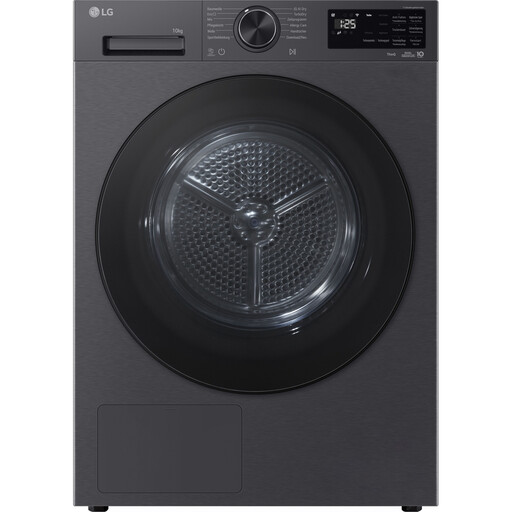
LG RT10X7B heat pump tumble dryer, 10 kg
The described adjustment to load weight and moisture levels is useful if your load sizes vary.
The product description lists AI Dry, a moisture sensor and a Dual Inverter heat pump.
View at Joybuy
 No image available
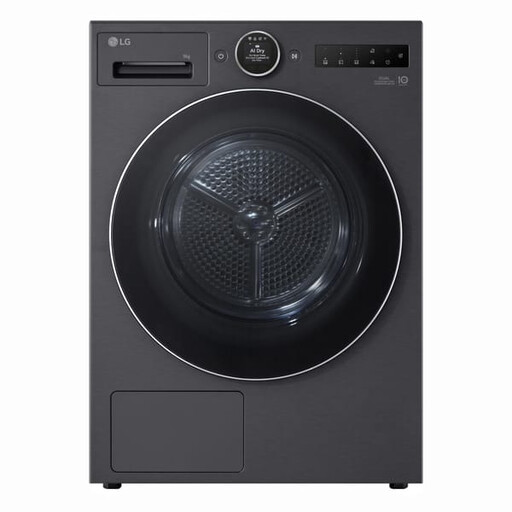
LG RT90X9B heat pump tumble dryer, 9 kg
If your load sizes vary, the described sensor and adjustment features may help you decide which model to choose.
The product description lists AI Dry, Sensor Dry and a Dual Inverter heat pump.
View at Joybuy
 No image available
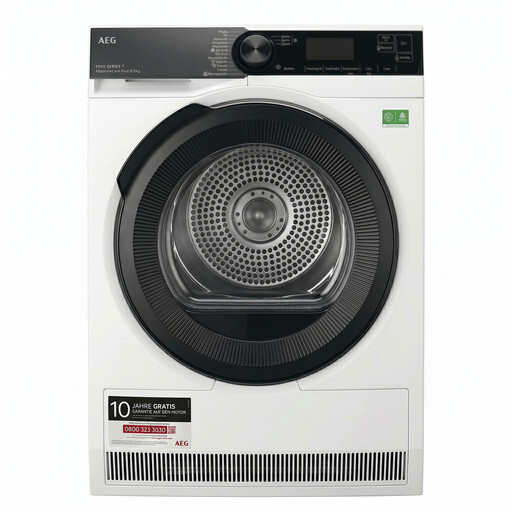
AEG TR9W75780 heat pump tumble dryer, 8 kg
If you need a small load ready within a tight time window, the quick programme described is worth checking.
The product description lists a 3 kg quick programme and MixDry for suitable mixed cotton and synthetic loads.
View at Joybuy
 No image available
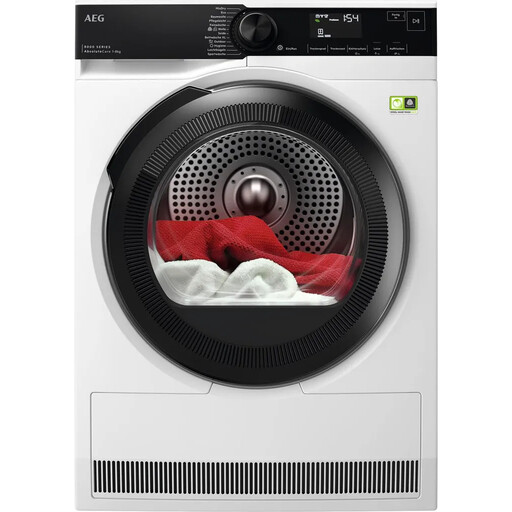
AEG TR8T75780 heat pump tumble dryer, 8 kg
If your load sizes change regularly, the described load adjustment feature is worth considering.
The product description lists ProSense, which adjusts drying time and energy use, and MixDry for suitable cotton and synthetic loads.
View at Joybuy
 No image available
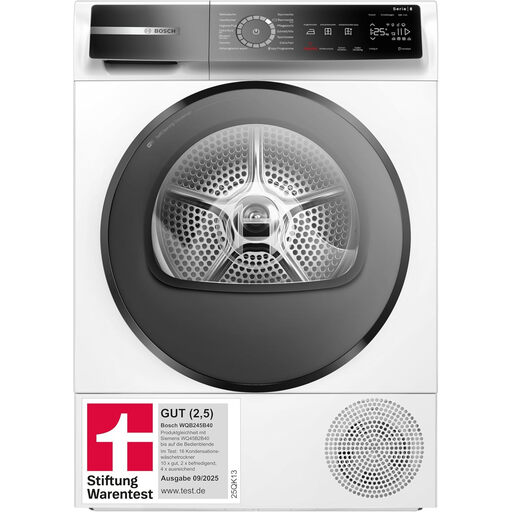
Bosch WQB245B40 Serie 8 heat pump tumble dryer, 9 kg
If you often dry small loads, the described half-load option may be worth considering.
The product description lists AutoDry with a moisture sensor, a half-load option and Quick 40'. Check which fabrics and load sizes are suitable for the specific programme.
View at Joybuy
Frequently asked questions
Is 40 minutes realistic for every small load?
No. Bosch Hausgeräte Deutschland limits its claim for the WQG233D20 to small loads of synthetic fibres and lightweight materials. For the specific appliance, check that the fabric type, programme load and dryness level you want are all suitable.
Which figures are useful for comparing energy consumption?
Among other things, the EU energy label shows consumption in kWh per 100 drying cycles using the Eco programme, along with capacity and Eco cycle time. The Verbraucherzentrale recommends using these figures to compare appliances on an Eco basis; quick programmes and your own usage may differ.
Does an online listing for a tumble dryer in Germany have to display an energy label?
Yes. EU rules for household tumble dryers require an energy label. Since 1 July 2025, the efficiency scale used for labelling has been rescaled from A to G. The European Commission explains the change, and EUR-Lex lists the relevant EU requirements.
What should I clean regularly after drying?
Clean the lint filter and condenser according to the instructions for your appliance. The Verbraucherzentrale warns that lint and dust can build up over time and become a fire hazard.


