Parents who need school clothes at short notice
If you occasionally need just a few tumble-dryer-safe items back quickly, check whether there’s a suitable quick or small-load programme for those fabrics and that load size.


If you regularly need tumble-dryer-safe school clothes back in a hurry and have room for a separate appliance, compare heat pump tumble dryers by their small-load programmes, actual cycle times and dimensions. Check the care label on every item: a quick programme is not automatically suitable for every fabric or a full drum, and it is not the same as an Eco cycle. If there’s no room for a second appliance, a washer-dryer could be an alternative; however, the Verbraucherzentrale points out that washer-dryers can dry a smaller load than they wash and use more electricity and water than separate appliances.
If you occasionally need just a few tumble-dryer-safe items back quickly, check whether there’s a suitable quick or small-load programme for those fabrics and that load size.
The appliance dimensions, door opening and access route all need to fit your available space. Stacking a tumble dryer on top of a washing machine is only an option with compatible appliances and a suitable stacking kit.
If you’ll be using it often, consider the energy consumption, noise level and ongoing maintenance, as well as choosing a drum size that suits your needs.
A good fit if: you regularly wash school clothes and have room for the appliance and its door to open, and, if needed, a suitable space above your washing machine.
The trade-off: The Verbraucherzentrale describes heat pump tumble dryers as more energy-efficient than condenser tumble dryers. However, a quick programme is not the same as an Eco programme, and the stated maximum load does not automatically apply to every programme setting.
A good fit if: you’ve considered the energy consumption and this type of appliance suits your needs. A vented tumble dryer also needs a suitable way to vent the air outside.
The trade-off: The Verbraucherzentrale rates these types of tumble dryer less favourably than heat pump tumble dryers for electricity consumption. A separate appliance also needs space, whatever type you choose.
A good fit if: there’s no room for a separate tumble dryer or clothes airer, and the drying capacity of the specific washer-dryer meets your needs.
The trade-off: According to the Verbraucherzentrale, you can’t dry the entire washing load in one go. Washer-dryers also use more electricity and water than separate appliances.
A good fit if: you have a suitable space to dry clothes, or need to dry individual items that aren’t suitable for a tumble dryer.
The trade-off: The German Environment Agency describes air-drying as the most energy-efficient method. If you’re short on space or need clothes dried at short notice, the available drying space may limit how useful this option is.
| Criteria | What to check before buying | Who it matters most to |
|---|---|---|
| Time for small loads | Check the fabric type, permitted load and duration of the specific quick programme separately. | If I need individual tumble-dryer-safe school items back soon, a quick programme that suits the fabric and load size matters to me. Around 40% of consumers put cycle time for small loads first. |
| Suitable installation | Measure the appliance and access route, including the door opening. Only plan to stack appliances if they’re compatible and you have a suitable stacking kit. | If space is limited, I want to know in advance whether the appliance will fit in the intended spot and whether the door can open. Around 30% of consumers prioritise available space. |
| Ongoing electricity consumption | When comparing similar types of appliance, check the label value in kWh per 100 Eco cycles and choose a suitable drum size. | If I have washing to do often, I want to assess energy use in relation to the size of my usual load. Around 20% of consumers put running costs first. |
| Caring for different fabrics | Check the care label and make sure the fabric type and load size are suitable for the relevant programme. | If school clothes are made from different materials, I want to dry each item according to its care label. Around 10% of consumers prioritise suitability and gentle fabric care. |
Quick programmes and Eco programmes run under different conditions. AEG states that SpeedDry on the TR7T861EX model can dry up to 4 kg in 75 minutes; this doesn’t automatically apply to every fabric or model.
For clothes you need regularly, check the approved fabric types, permitted load and stated cycle time in the instructions for the specific model.
According to the Verbraucherzentrale, only part of the washing load can be dried straight away in a washer-dryer. Depending on the load size, you may need an additional drying cycle. Washer-dryers also use more electricity and water than separate appliances.
Compare the washing and drying capacities, and check which cycle is suitable for the amount of washing you usually do.
Appliances can vary in depth from model to model, and stacking them requires compatible appliances.
Before ordering, check the appliance dimensions and access route, the door opening, and the requirements for a suitable stacking kit.
A suitable stacking kit may be needed to stack appliances; remember to factor in the extra installation work, too.
For its WQN245BR40 heat pump tumble dryer, Bosch lists a 9 kg capacity and a range of model-specific programmes.
The specifications for the TR7T861EX and TR9W75780 heat pump tumble dryers highlight the different features available across individual models.
The B3T42249S is an example of an 8 kg heat pump tumble dryer, as described by the manufacturer.
The WQ46B2D41 is a 9 kg heat pump tumble dryer with a quick programme listed by the manufacturer.
The TWC640WP is a T1 heat pump tumble dryer with an 8 kg capacity.
The following Joybuy products are separate heat pump tumble dryers. Check the programmes, dimensions and care instructions to make sure they suit your washing and installation space.
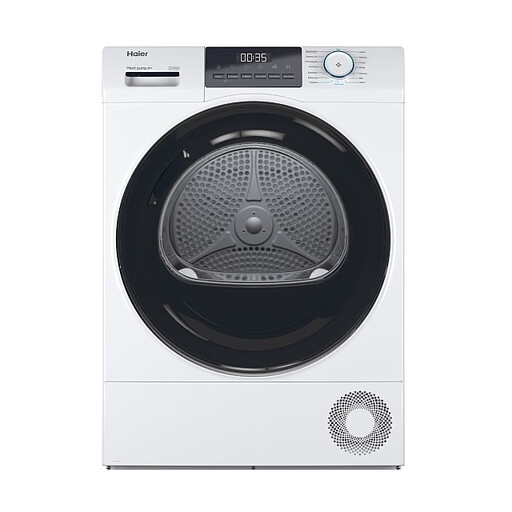 No image available
For regular loads of tumble-dryer-safe washing; the product description lists sensor drying and several programmes.
Capacity: 8 kg. The permitted load may vary between programmes.
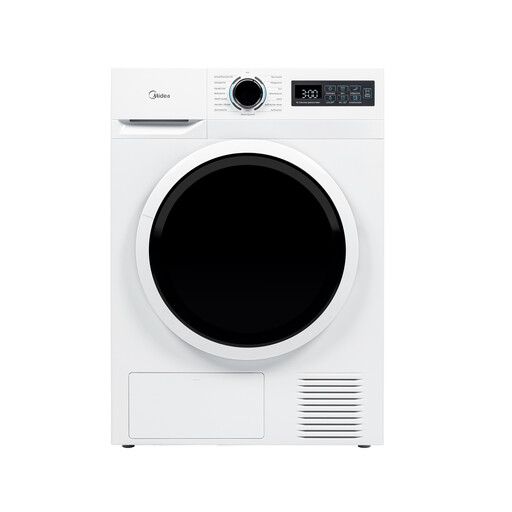 No image available
For a range of tumble-dryer-safe fabrics, the product description lists programmes including Delicates, Sport, Shirts and Wool, as well as sensor drying.
The description lists 15 programmes. It recommends cleaning the lint filter after every use and emptying the condensate tank regularly, unless you’re using a direct drain.
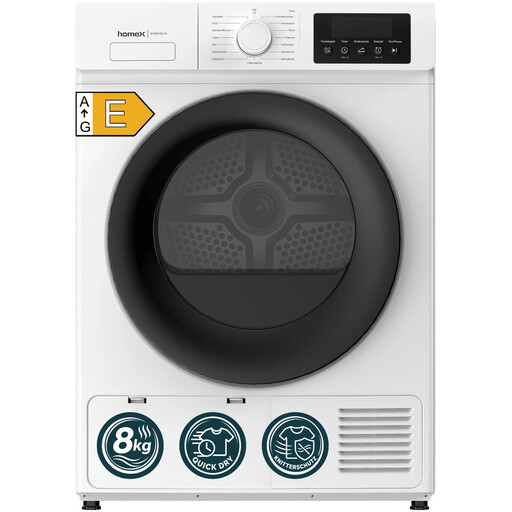 No image available
For tumble-dryer-safe school clothes when a suitable quick programme would be useful; the product description lists a Quick programme.
Capacity: 8 kg. Dimensions: 60 × 85 × 65 cm. The description lists 15 programmes in total, but doesn’t give the duration of the Quick programme.
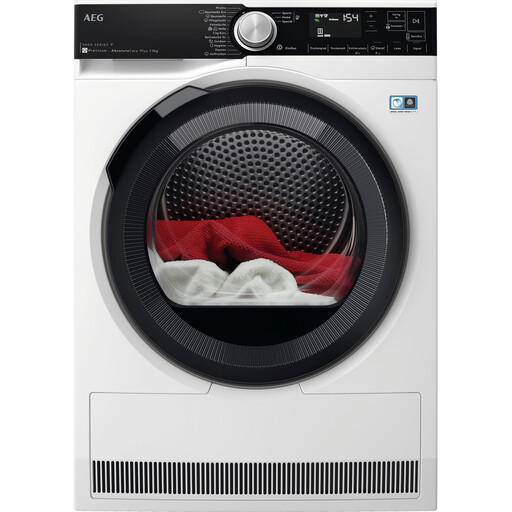 No image available
For small loads that need to be dried quickly, the product description lists a Quick programme with a load capacity of up to 3 kg.
Capacity: 9 kg. Dimensions: 850 × 600 × 660 mm. The description lists energy efficiency class C and 106 kWh per 100 cycles; these values aren’t the same as the energy consumption of a quick programme.
 No image available
For regular loads of tumble-dryer-safe washing, the product description lists sensor drying and a Silent programme.
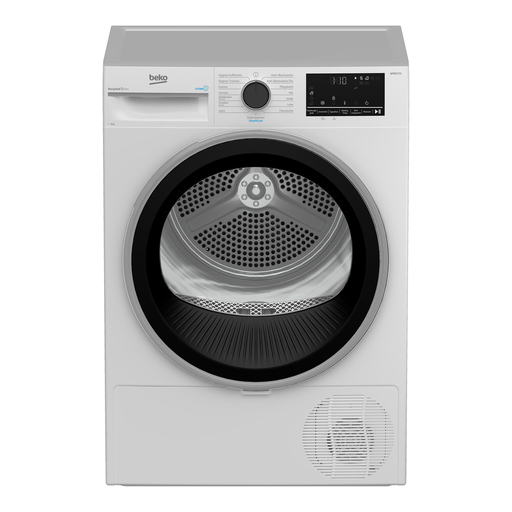
Capacity: 8 kg. The description lists 15 programmes and energy efficiency class B. According to the description, stacking it on top of a washing machine requires a compatible Beko washing machine and a suitable stacking kit.
No. First check the tumble-drying symbol on the item, then check which fabric types and load sizes are permitted for the specific programme. The example AEG gives for SpeedDry on the TR7T861EX is up to 4 kg; that doesn’t mean every jacket or sports shirt is suitable. GINETEX Germany explains what care symbols mean.
The energy label for household tumble dryers shows consumption in kWh per 100 Eco cycles. It doesn’t give the consumption for a quick programme with a different load. For a rough estimate, divide the label value by 100, then multiply it by your estimated number of Eco cycles and your electricity price in euros per kWh. The Verbraucherzentrale recommends checking electricity consumption when buying.
Measure the specific appliance and the available space, including the access route and door opening. Stacking a tumble dryer on a washing machine requires compatible appliances and a suitable stacking kit. Follow the installation and maintenance instructions for the model.
A washer-dryer could be an option if there’s no room for a separate appliance or clothes airer and its drying capacity suits your needs. The Verbraucherzentrale points out that you can’t dry the entire washing load in one go, and that washer-dryers use more electricity and water than separate appliances. So compare washing and drying capacities separately.
Yes, if the new household tumble dryer falls under EU energy-labelling rules. The required product information must also be provided for distance selling. Since 1 July 2025, tumble dryers have used the new A to G energy-efficiency scale. Washer-dryers are covered separately under the specific tumble dryer regulation; the European Commission explains the requirements for household tumble dryers.