Shared houses with frequent sportswear loads
If you need your training kit again soon, choosing a suitable fabric programme and checking the permitted load for each cycle are important. GINETEX explains the care symbols for tumble drying.


If your shared house regularly tumble-dries sportswear that is suitable for the dryer and you have enough space, compare heat pump tumble dryers by looking first at their programmes, permitted load sizes and energy consumption on a like-for-like EU label basis. For small loads, check the conditions and cycle times of the specific programme. If space is limited, you’ll also need to consider the appliance’s dimensions, noise levels and how to install it safely.
If you need your training kit again soon, choosing a suitable fabric programme and checking the permitted load for each cycle are important. GINETEX explains the care symbols for tumble drying.
If you share the appliance regularly, it’s worth comparing energy figures on the same Eco label basis. The Verbraucherzentrale notes that the label figure describes consumption on the Eco programme.
The available space and appliance dimensions need to work together. Noise levels and condensation efficiency may also matter if the dryer is near your living space. If you’re stacking it on a washing machine, both appliances must be suitable.
First, check which sportswear items the care label says can go in the tumble dryer. Then compare the programme load capacity and energy consumption. If space is limited, make the appliance’s dimensions and intended installation part of your decision from the outset.
| What matters | What to check before buying | Who is this important to? |
|---|---|---|
| Suitable fabric care | Check the care label, the suitable temperature setting, and the programme and permitted load for the specific appliance. | If I want to dry sportswear for my next training session, I need to know that the care label and programme are compatible. Around 36% of consumers put suitable fabric care first. |
| Ongoing energy consumption | Compare kWh per 100 Eco cycles on the same label basis, and consider actual usage separately. | When we share energy bills, I want to be able to understand recurring consumption rather than look only at the label figure for a single load. Around 29% of consumers prioritise running costs. |
| Space and surroundings | Check the appliance’s dimensions and the space available. For a washer-dryer stack, confirm that both appliances are suitable and that you have a compatible stacking kit. | If the laundry area is cramped or the dryer is near the living space, it needs to fit the room. Around 21% of consumers consider space and surroundings first. |
| Drying small loads quickly | Check the instruction manual for the short programme’s conditions, suitable fabric types and permitted load. | If I only have a few items suitable for tumble drying after a workout, I want to know whether there’s a suitable short programme. Around 14% of consumers prioritise getting small loads ready quickly. |
For the Bosch WTH85V94, the manufacturer’s advertised 40-minute cycle time applies only under the stated conditions, including a small load of synthetic fabrics and lightweight materials.
Check which fabrics are suitable and the short programme’s permitted load on the specific appliance.
The energy figure applies to Eco drying under the specified conditions; it does not automatically reflect the consumption of a small sportswear load. The Verbraucherzentrale recommends comparing label figures on a like-for-like basis.
Factor in how often you use the dryer and your energy tariff separately.
If you regularly use other programmes, your actual energy costs may differ from an estimate based only on the Eco figure.
Stacking requires both the washing machine and tumble dryer to be suitable and safely positioned together. Bosch describes a compatible stacking kit as a way to prevent the appliances from moving or falling.
Before buying, check that the specific models are compatible and that you have the right stacking kit.
You’ll also need to allow for a compatible stacking kit and, if required, professional installation.
Bosch home appliances lists the WTH85V94 with a rated capacity of 8 kg and a sportswear programme.
AEG Germany lists the TR8SWEX with a rated capacity of 8 kg and programmes for suitable outdoor fabrics and mixed loads.
Beko Germany lists the B3T4224SD as a heat pump tumble dryer with a rated capacity of 8 kg and OptiSense sensor drying.
Miele Germany lists the TWC640WP as an 8 kg heat pump tumble dryer with DirectSensor and Miele@home.
The heat pump tumble dryers below are options for shared houses looking to dry laundry and sportswear that is suitable for the dryer, in line with the care labels. For each model, check that the programme, load capacity and installation requirements suit your fabrics and your space.
 No image available
An option for shared laundry loads if the stated capacity suits your needs. The product details list a heat pump, sensor drying and several drying programmes.
 No image available
The stated capacity may suit shared houses that want to accommodate smaller loads. The product details list a 35-minute Quick-Dry programme, 15 programmes and sensor-controlled drying. Check the manual for the conditions that apply.
 No image available
The product details list a sportswear programme for suitable items, but the care label on each garment remains the deciding factor. They also give figures of 85 kWh per 100 cycles, a self-cleaning condenser and a freestanding design.
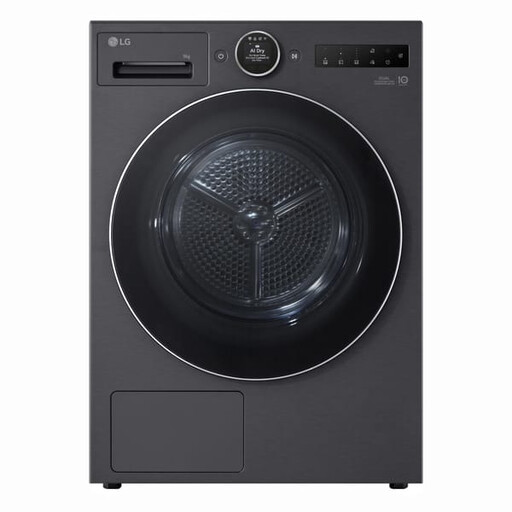 No image available
The larger stated capacity may be useful for shared laundry loads. Compare it with the space you have and how you’ll use the appliance. The product details list a sportswear programme and 79 kWh per 100 cycles; this figure does not automatically reflect the consumption of a sportswear load.
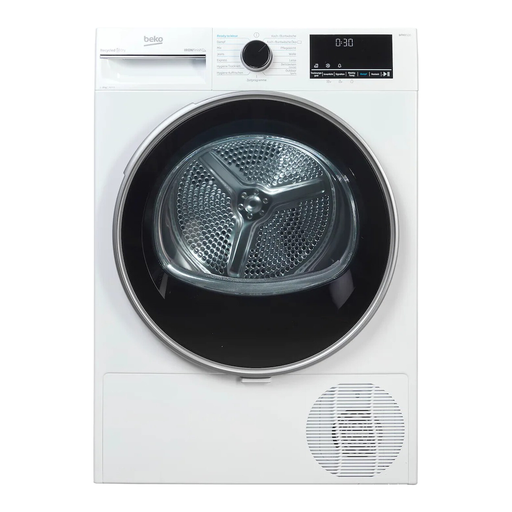 No image available
The product details list an outdoor programme for suitable outdoor fabrics; remember to check the care label. They also give figures of 1.02 kWh per cycle and 64 dB(A). For a washer-dryer stack, you’ll need a compatible washing machine and a suitable stacking kit.
No. The care label on each item is what matters. GINETEX distinguishes, among other things, between normal and low tumble-drying temperatures, as well as the symbol for ‘Do not tumble dry’. Choose a suitable appliance programme accordingly.
Bosch’s care instructions recommend cleaning the fluff filter after every use and emptying the condensate container. Other models have their own instructions. If there’s a drain connection and it’s properly connected, this may change how you need to handle the container.
The figure shows consumption per 100 drying cycles on the Eco programme and is a comparison figure for that test programme. To work out your energy costs, you’ll also need to consider how you actually use the dryer and your energy tariff. A sportswear or short cycle won’t necessarily use the same amount of energy. The Verbraucherzentrale explains the Eco basis used for the figure.
Under EU consumer law, goods you receive are generally covered by a legal guarantee of at least two years, which you can claim from the seller. For online purchases, you generally have 14 days from delivery to withdraw from the contract. Check for possible exceptions and return costs before placing your order. A voluntary manufacturer’s warranty does not replace the legal guarantee. Your Europe, the European Union’s information portal, explains these rights.
Compare current labels and the same figures on a like-for-like basis. The European Commission says that, since 1 July 2025, household tumble dryers have been rescaled to classes A to G, replacing the older plus classes.