People with delicate sportswear
If you want to tumble dry technical clothing, follow the care label on each item and choose only a programme that’s suitable for it. GINETEX Germany explains the care symbols for tumble drying and gentle treatment.


For sportswear that is suitable for tumble drying, a separate heat-pump tumble dryer with suitable sportswear or gentle-care programmes is an obvious choice if you have a suitable space for it or can safely stack it on your washing machine. First, check the care label on each item and measure the space you actually have, including room for the door to open. Then compare noise and energy figures on a like-for-like label basis. A washer-dryer is worth considering mainly if you can’t fit either a separate tumble dryer or a safe washer-dryer stack.
If you want to tumble dry technical clothing, follow the care label on each item and choose only a programme that’s suitable for it. GINETEX Germany explains the care symbols for tumble drying and gentle treatment.
If space is tight, measure the installation area, including room for the door to open, and check whether a washer-dryer stack is possible using a suitable stacking kit. The Verbraucherzentrale (German consumer advice centre) notes that washer-dryers can be a space-saving alternative, but their energy use and load capacities differ from those of separate appliances.
If the tumble dryer will be close to your living space, its noise rating, condensation efficiency and installation requirements can help you choose. Compare appliances using the same label figures and follow the installation instructions for each model.
Start by checking your sportswear care labels and the space available for the appliance. You can then compare running costs, noise ratings and programmes for small loads more effectively.
The percentages below relate to consumers choosing a tumble dryer for tumble-dryer-safe sportswear in a small flat.
| Consideration | What to check before buying | Who is this especially important to? |
|---|---|---|
| Drying sportswear appropriately | Check the care symbols against the sportswear, synthetics or gentle-care programmes listed for the specific model. | When I dry technical clothing, I want to find the right programme for each item’s care label. Around 29 % of consumers say textile care is their main concern. |
| Space requirements | Measure the installation space, access route and room for the door to open. If stacking, check that both appliances and the stacking kit are suitable. | If the tumble dryer needs to fit in a small flat, I want to know before buying whether there’s enough room, including clearance. Around 23 % of consumers say installation space is their main concern. |
| Ongoing electricity costs | Compare the EU energy label and consumption in kWh per 100 Eco cycles, and consider your actual usage separately. | If I use the tumble dryer frequently, I want to factor ongoing electricity costs into my decision. Around 18 % of consumers put running costs first. |
| Noise and moisture | Compare the noise rating in dB(A) and condensation efficiency, and check the permitted installation location. | If the appliance is within earshot of my living space, I want to consider its noise and how it handles moisture when choosing where to put it. Around 18 % of consumers put peace and quiet at home and room humidity first. |
| Drying small loads quickly | Check the manual to see which fabrics and load sizes are suitable for quick or half-load programmes. | If I need my sportswear again soon, I want to know whether a quick programme is designed for those specific fabrics and that load size. Around 12 % of consumers say a short cycle time is their main concern. |
Whether an item can go in the tumble dryer, and how it can be treated, depends on its care label — not just the name of the programme.
Check the label on every item and choose a compatible programme. A crossed-out tumble-drying symbol means the item must not be tumble dried.
The depth of the appliance, door movement and required clearance can all affect whether it will fit in the space you have planned for it.
Compare the appliance dimensions with the installation space and the installation instructions. If you’re stacking appliances, also check that both models can be safely stacked using a suitable stacking kit.
Stacking may require a suitable stacking kit and additional installation work.
The Verbraucherzentrale states that the consumption figure is based on 100 drying cycles using the Eco programme. It doesn’t guarantee the energy use or cycle time for every small load of synthetic fabrics.
Use label figures to compare appliances on the same basis, and check the conditions for any quick programme you’re interested in in the appliance manual.
Washer-dryers differ from separate appliances in their energy use and drying capacity. The Verbraucherzentrale notes that they use more electricity and water than a separate washing machine and tumble dryer.
First, check whether a safe washer-dryer stack is possible. If not, compare the washer-dryer’s washing and drying capacities, as well as the relevant energy label.
According to Bosch, the WQA233C91 model has sportswear and synthetics programmes, as well as a half-load option.
According to Siemens, the WQ35G2D00 heat-pump tumble dryer combines a quick programme with a half-load option and an outdoor programme.
The B3T42249S is a heat-pump tumble dryer with sensor drying.
LG describes the RT80V9C as a heat-pump tumble dryer with Sensor Dry and a self-cleaning condenser.
The T1 TWC640WP 8kg heat-pump tumble dryer is one model to consider. Check its dimensions, programmes and controls individually.
This selection features separate heat-pump tumble dryers for laundry that can be tumble dried, including models with several programmes, sensor drying or a dedicated sportswear programme.
 No image available
An option for laundry that can be tumble dried if you’re looking for several drying programmes and sensor drying.
8 kg capacity according to the product name.
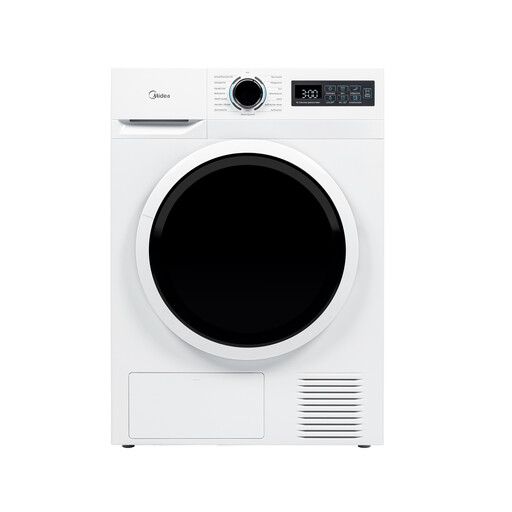 No image available
For smaller loads, with sensor drying and a quick programme to consider.
7 kg capacity and 15 drying programmes according to the product description.
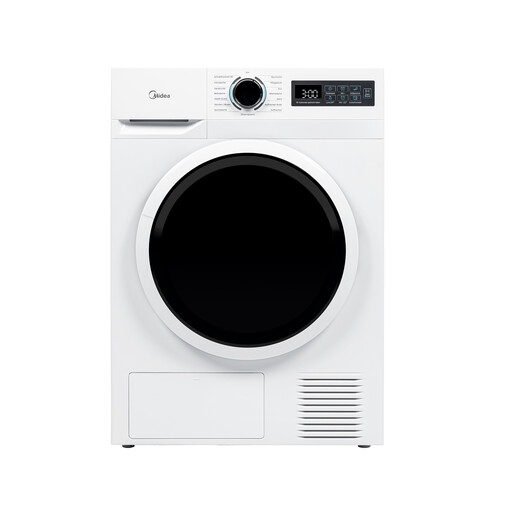 No image available
An option for sportswear that can be tumble dried if a dedicated sportswear programme and sensor drying are important to you.
The product description lists 15 programmes and a double lint filter.
 No image available
For sportswear that can be tumble dried, with a listed sportswear programme and sensor features to consider.
8 kg capacity according to the product name; the product description lists Sportswear, AI Dry, TurboDry and SensorDry.
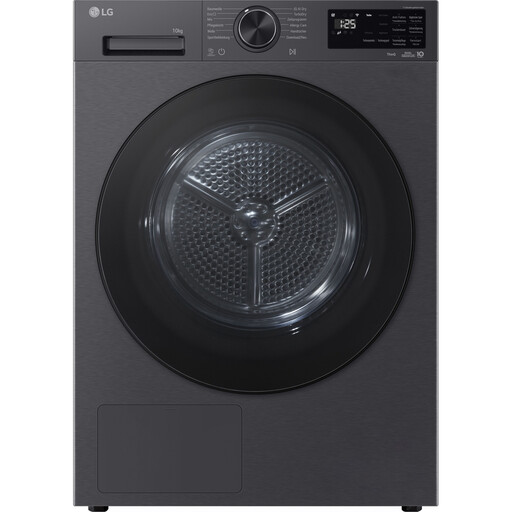 No image available
An option for sportswear that can be tumble dried if you’re looking for a listed sportswear programme and sensor features.
10 kg capacity and energy efficiency class C according to the product name; the product description lists AI Dry and a self-cleaning condenser.
No. Choose how to treat each item based on its care label and the appliance’s programme information. A crossed-out tumble-drying symbol means the item must not be tumble dried.
Check that both specific appliances are suitable for stacking, measure the space and clearances, and use a suitable stacking kit. Follow the appliance manufacturers’ instructions when installing them.
First, compare the kWh per 100 drying cycles using the Eco programme on each tumble dryer’s energy label. To estimate your own costs, divide this figure by 100, then multiply it by the number of cycles you expect to run and your electricity price per kWh. Sportswear programmes may use a different amount of energy; the label figure doesn’t guarantee the cost of those programmes.
When buying from a business seller, you generally have a statutory warranty of at least two years. Distance purchases generally come with a 14-day right to cancel from the date of delivery; exceptions may apply, and you should check the information about return costs. A voluntary manufacturer’s guarantee is separate from this.
Since 1 July 2025, tumble dryers sold in shops and online have used the A to G scale. EU ecodesign rules for newly marketed appliances don’t retrospectively ban older stock that was already placed on the market; washer-dryers are covered by different product-specific rules.