If several housemates regularly machine-dry towels that are suitable for tumble drying, and you have space for a separate appliance, a heat pump tumble dryer could be a good choice. Compare its typical load size with the current EU energy label. If you only need to dry clothes occasionally, an airer can save the electricity used for a drying cycle. A washer-dryer is mainly worth considering if there’s no room for either a separate tumble dryer or an airer. The Verbraucherzentrale notes that washer-dryers use more electricity and water than separate appliances. In a shared house, you’ll also need to think about noise, where to put the appliance and how to organise a clear cleaning routine.
Which shared-house situations suit a tumble dryer?
House shares with shared electricity bills
If you share a tumble dryer, consider both the purchase price and running costs. The Verbraucherzentrale recommends comparing electricity use in kWh per 100 eco cycles. The Umweltbundesamt also points out that a smaller drum isn’t automatically more energy-efficient if you have to run it more often.
House shares with small towel loads
If you often only have a few towels to dry, choose a model whose rated capacity and moisture sensor suit your typical loads. Check the specific model to see whether it has an option for small loads or a towel programme.
House shares with limited space
If the tumble dryer will be near living or sleeping areas, check the appliance dimensions and door opening against the space available, and follow the installation instructions. Noise and condensation can also affect where you decide to put it.
Which buying criteria matter in a shared house?
First, work out whether you’ll use a separate appliance regularly and have room for it where you plan to put it. Then compare the details that suit your loads and how you’ll share its use.
| What matters |
What to look for when buying |
Who it matters most to |
| Running costs |
Compare kWh per 100 eco cycles and programme duration on the current EU label. To work out your own estimate, use the same kWh figure, planned number of drying cycles and household electricity tariff. |
If we use the tumble dryer together often, we want to be able to budget for its energy use. Around 31% of consumers would make running costs their main consideration. |
| Capacity for different-sized loads |
Compare your usual towel load with the rated capacity. Check the specific model to see whether it has a moisture sensor or an option for small loads. |
If we dry towels individually or in a shared load, we want the capacity to suit the loads we typically have. Around 31% of consumers would prioritise small or varying loads. |
| Space and installation |
Check the appliance dimensions, door opening and route into the property. Read the installation instructions too, and make sure you can access the condensate tank. |
If space is tight in our house share, we need to be able to install and use a separate appliance where we plan to put it. Around 23% of consumers would put available space first. |
| Noise and condensation |
Consider the noise level in dB(A), condensation efficiency and eco programme duration together on the current label. These figures apply to the test conditions specified on the label. |
If the appliance is near shared or sleeping areas, we want to consider both operating noise and moisture in the room. Around 15% of consumers would prioritise noise and condensation. |
Which common buying mistakes should you avoid?
-
Choosing a large drum just for a few towels
A large rated capacity doesn’t mean that small loads will dry especially efficiently. The Umweltbundesamt also points out that smaller drums don’t automatically use less energy if you have to run them more often.
Choose a capacity that suits the towel loads you typically dry together, and consider how often you can combine your washing.
-
Comparing old A+++ ratings directly with current labels
The energy labels for tumble dryers have been rescaled, so letters from different labelling systems aren’t directly comparable.
Compare current product details, especially kWh per 100 eco cycles, capacity and programme duration. The European Commission describes the A-to-G label for tumble dryers, in use since 1 July 2025.
-
Assuming a washer-dryer is the standard space-saving option
A washer-dryer only needs the space for one appliance, but it often can’t dry the full washing load in one go. The Verbraucherzentrale also says that washer-dryers use more electricity and water than separate appliances.
When deciding, factor in the extra electricity and water used compared with separate appliances, as described by the Verbraucherzentrale.
Consider a washer-dryer mainly if there’s no room for either a separate tumble dryer or an airer, and you need a washing machine too.
-
Leaving filter cleaning to the next person
When an appliance is shared, it’s easy for regular cleaning to be missed if no one knows who’s responsible.
Agree who will clean the lint filter after every drying cycle and empty the condensate tank when needed. Bosch recommends cleaning the lint filter in its tumble dryers after every use. Follow the instructions for your specific model for any other maintenance.
Which brand models can you use as a guide?
Bosch
The WQG233D40 is a useful point of comparison for house shares with small or varying towel loads.
- Bosch lists an 8 kg capacity, Auto Dry, a half-load option and a towel programme for this model.
- The manufacturer lists dimensions of 842 × 598 × 613 mm, a noise level of 64 dB(A) and energy efficiency class C. The condenser is not self-cleaning; details for this model don’t necessarily apply to other Bosch appliances.
Beko
The B3TSW48C9ZW offers a point of comparison for shared loads with sensor drying.
- For this specific model, Beko lists an 8 kg capacity and OptiSense sensor drying.
- The manufacturer lists energy efficiency class C, a noise level of 63 dBA and dimensions of 84.6 × 59.8 × 67.2 cm. Any test score shown on the product page is provided by the manufacturer, not an independent test result.
AEG
The TR9X75889 is a useful point of comparison if the stated noise and energy figures are a priority.
- For this 8 kg model, AEG lists energy efficiency class A, 73 kWh per 100 cycles and a noise level of 60 dB(A). The manufacturer gives the eco programme duration at rated capacity as 3:19 hours.
- Claims about SmartDry and 3DScan are from the manufacturer and don’t demonstrate a particular benefit for drying towels in a shared house.
Miele
The TWC640WP is another 8 kg heat pump model. You can also check its controls and any optional services.
- Miele lists DirectSensor and Miele@home as features.
- The benefits and costs of optional delivery and installation services depend on your specific order. The product details aren’t evidence of an independent comparison of towel-drying performance.
Heat pump tumble dryers for towels in shared houses
This selection covers separate heat pump tumble dryers for towels that are suitable for tumble drying, and for shared loads.
 No image available
Haier I-Pro 1 HD80-E929E-DE, 8 kg
For shared loads, the product description lists sensor drying that ends the cycle when the selected dryness level is reached.
8 kg heat pump tumble dryer with several drying programmes listed.
View at Joybuy
 No image available
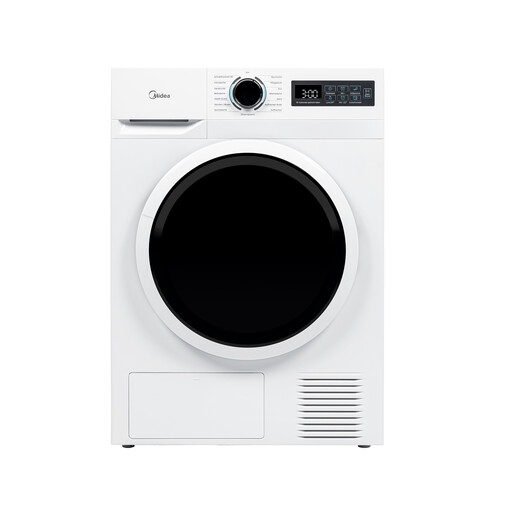
Midea MD110H70B-E, 7 kg
The product details list a 7 kg capacity, sensor drying and 15 drying programmes, which may be useful when comparing models for varying loads.
Other listed features include a quick-dry function, crease protection and drum lighting.
View at Joybuy
 No image available
LG RT80X7B, 8 kg
The product details list a dedicated programme for towels suitable for tumble drying.
They also list sensor drying, 85 kWh per 100 cycles and 62 dB; these details apply to this model.
View at Joybuy
 No image available
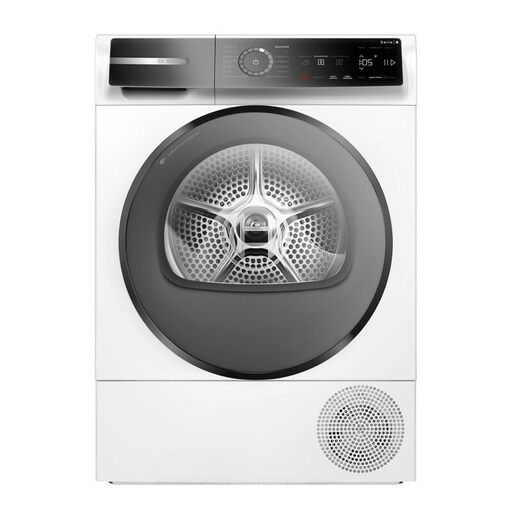
Bosch WQB246D41 Series 8, 9 kg
For smaller or combined house-share loads, the listed half-load function and towel programme are useful features to check.
The product details list energy efficiency class B, 59 dB and a self-cleaning condenser; rated capacity is 9 kg.
View at Joybuy
 No image available
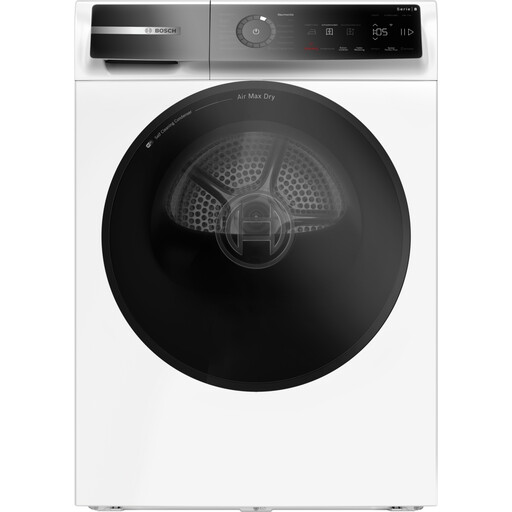
Bosch WRB247C40, 9 kg
A towel programme is listed for towels suitable for tumble drying, along with a half-load option.
The product details list energy efficiency class A, 57 dB, sensor drying and a self-cleaning condenser. Rated capacity is 9 kg.
View at Joybuy
Frequently asked questions
What does the tumble-drying symbol on a towel mean?
Check the care label on each towel before putting it in the tumble dryer. GINETEX’s guide to care symbols distinguishes between tumble drying at a normal or low temperature and ‘do not tumble dry’.
How can you estimate the electricity use of a shared tumble dryer?
Divide the label figure in kWh per 100 eco cycles by 100, then multiply it by your planned number of those cycles and your price per kWh to get an estimate. This calculation is based on the eco label test conditions; it doesn’t guarantee the energy use for a towel programme or small partial loads.
How should you look after a shared tumble dryer?
Agree who will clean the lint filter after each cycle and empty the condensate tank when needed. Bosch recommends cleaning the lint filter in its tumble dryers after every use; follow the instructions for your specific model for any other maintenance.
What should you know about buying and disposing of a tumble dryer?
Household tumble dryers in the EU are covered by ecodesign and energy labelling rules. Since 1 July 2025, the rescaled A-to-G label has been used in shops and online. Old appliances must be taken to an authorised collection point. The Bundesumweltministerium explains that local authorities and, in certain circumstances under the law, retailers accept old appliances. Before placing your order, check whether collection can be arranged when your new appliance is delivered.


