People with a small laundry area
Check that the appliance, door movement and maintenance access will all fit in the space available. If stacking appliances, make sure the washing machine, tumble dryer and stacking kit are compatible.


If a separate appliance will fit in your laundry area or on a suitable washing machine, a heat pump tumble dryer with a drum capacity suited to your usual towel load is a sensible place to start. Measure the available space, door clearance and access for maintenance before comparing models by their energy use per 100 Eco cycles, noise level and programmes. A washer-dryer may be a better option if there’s no room for a separate appliance; its drying capacity may be lower than its washing capacity.
Check that the appliance, door movement and maintenance access will all fit in the space available. If stacking appliances, make sure the washing machine, tumble dryer and stacking kit are compatible.
Compare the drum capacity with your usual loads and check the maximum load for the programme you want to use.
Energy use in kWh per 100 Eco cycles makes it easier to compare equivalent label figures. To work out your own costs, you’ll also need to consider how often you use the dryer and your electricity tariff.
| Buying priority | What to check before buying | Who should consider it? |
|---|---|---|
| Space | Measure the alcove, door swing and access to filters. If stacking appliances, check that both appliances and the right stacking kit are suitable. | If space is limited, the appliance and its door need to fit in my laundry area without blocking access for maintenance. For around 36% of shoppers, available space is the top priority. |
| Running costs | Compare the current EU energy label and kWh per 100 Eco cycles. For your own calculation, factor in how often you’ll use the dryer and your electricity price. | If I dry clothes regularly, I want to compare Eco energy use with my routine and tariff, rather than relying on the energy efficiency class alone. Around 29% of shoppers focus primarily on running costs. |
| Towel load | Compare your usual load size with the drum capacity and the maximum load for the towel or cotton programme. | If I dry towels regularly, I want the capacity to suit the amount of laundry I actually have. For around 21% of shoppers, having the right load capacity comes first. |
| Room conditions and maintenance | Check condensation efficiency, the Eco noise level, and how easy it is to reach the fluff filter and water tank. Follow the care instructions for the specific model. | In a small laundry area, I want to keep an eye on moisture, noise and access to the parts that need regular care. Around 14% of shoppers consider these factors most important. |
Depth, door swing and access for maintenance also determine whether you can use the appliance properly in the alcove. For a stacked set-up, the two appliances and stacking kit must all be compatible.
Measure the space and the route the appliance will take before you buy. If stacking, check the installation instructions for both appliances and make sure the specific stacking kit is suitable.
You may also need to buy a compatible stacking kit. Allow enough space for installation and future access, too.
The EU energy scale for tumble dryers changed to A–G on 1 July 2025. Classes from different scales therefore aren’t directly comparable.
Compare the current label for each model and its energy use in kWh per 100 Eco cycles.
According to the Verbraucherzentrale, a washer-dryer can often dry only part of a load straight after washing.
Check the washing and drying capacities separately, and compare the drying capacity with your usual towel load.
A self-cleaning condenser unit doesn’t automatically mean that other accessible filters are maintenance-free. Fluff and dust can still build up.
Check the care instructions for the specific model and make sure you can reach the filters and other parts that need attention. Bosch recommends cleaning the fluff filter in its tumble dryers after every cycle.
The TWP803-031D weiss is an 8 kg option for shoppers who are particularly mindful of the listed appliance depth.
According to AEG, the TR9W75780 is worth considering if you want to dry a range of loads as well as towels.
The WQG243D41 is one option with sensor-controlled drying and a half-load function.
According to Beko, the B3T42249S is an 8 kg heat pump model suited to regular towel loads.
This selection features freestanding heat pump tumble dryers for towels that are suitable for tumble drying. Compare each model’s capacity and listed dimensions with your needs and available space.
 No image available
For tumble-dryer-safe towel loads up to the stated capacity. The description says sensor control ends the cycle when the laundry is dry.
8 kg; heat pump technology; sensor drying; several drying programmes.
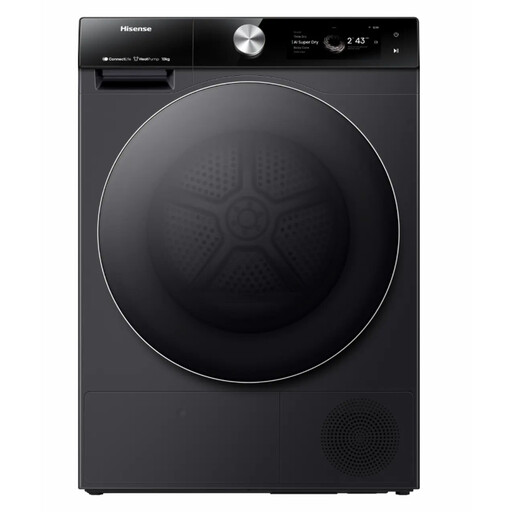 No image available
The 10 kg capacity may suit larger towel loads. Compare it with your usual laundry volume and check how much space the appliance needs.
Heat pump technology; 10 kg; AI Auto Dry; listed dimensions: 64 × 59.5 × 88.5 cm. Allow extra space for the door to open and for installation clearances.
 No image available
The listed Towels programme and 8 kg capacity are worth considering if you dry towels regularly. Check that the stated depth will fit in your laundry area.
Heat pump technology; sensor drying; 85 kWh per 100 cycles; 62 dB; listed depth: 66 cm.
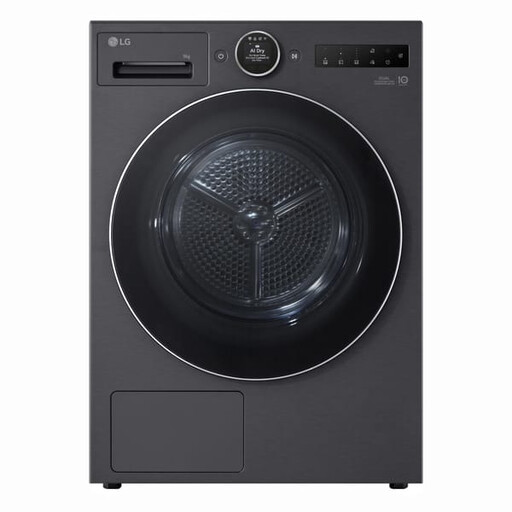 No image available
The listed Towels programme and 9 kg capacity may suit regular towel loads. Check the 66.0 cm depth against the door clearance and installation space you have available.
Heat pump technology; sensor drying; 79 kWh per 100 cycles; dimensions: 85.0 × 59.5 × 66.0 cm.
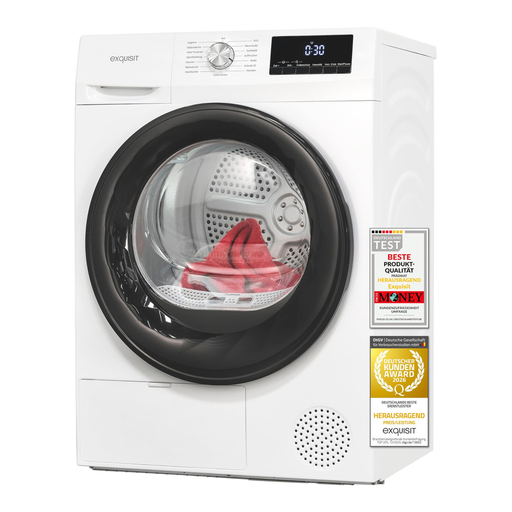 No image available
The description lists towels as suitable laundry. Check whether 7 kg is enough for your usual load and whether the left-hand door hinge leaves enough room to open in your alcove.
Heat pump technology; 15 programmes; delay start: 4–24 hours; listed depth: 54 cm.
A washer-dryer may be an option if there’s no room for a separate appliance or a suitable stacked set-up. Check the washing and drying capacities separately: the Verbraucherzentrale notes that often only part of a wash load can be dried straight away, and that washer-dryers use more electricity and water than two separate appliances.
The tumble dryer must go on top, and both appliances need to be suitable for the specific stacking set-up. Check the dimensions, installation instructions and compatibility of the stacking kit. Bosch recommends professional help for the set-up described on its website.
For Eco cycles, divide the label figure by 100, then multiply it by the expected number of Eco cycles per year and your electricity price per kWh. This figure applies to Eco drying; a towel or quick-dry programme may use a different amount of energy.
Clean the fluff filter according to the instructions for your specific appliance. Bosch recommends cleaning the filter in its tumble dryers after every cycle. Other care tasks and how often to do them will depend on the model.
Since 1 July 2025, household tumble dryers have used the rescaled EU energy label from A to G, which the European Commission says must be displayed in shops and online. Compare the current class and energy use per 100 Eco cycles; old class ratings aren’t directly comparable with the new scale.