Which option is right for you?

Households with nowhere to hang clothes

If an airer would take up space all the time, check whether you can fit in a separate appliance or whether a washer-dryer is a better option. The German Environment Agency and the Verbraucherzentrale (German consumer advice centre) both highlight space requirements and appliance combinations as important factors in this decision.

Households with frequent small loads

If you wash just a few items at a time and need them again soon, look for programmes and settings designed for small loads – not just the maximum capacity. Bosch and Siemens offer a half-load option on certain models.

Buyers mindful of energy use and fabric care

If you want to compare running costs or find suitable programmes for your clothes, check the figures on the energy label and the care labels on your garments. The Verbraucherzentrale explains the label figures, while GINETEX Germany explains the care symbols.

What should you look for when buying?

Separate heat-pump tumble dryer

A good fit if: you have a suitable spot for it and want to dry small loads regularly.

Consider: a second appliance takes up space. Check the dimensions, door clearance and small-load functions of the specific model.

Washer-dryer

A good fit if: you have neither space for a second appliance nor a practical place to hang clothes.

Consider: drying capacity may be lower than washing capacity. The Verbraucherzentrale notes that washer-dryers generally use more electricity and water than two separate appliances.

Air-drying

A good fit if: you have somewhere to hang clothes occasionally and don’t need to use a tumble dryer.

Consider: clothes need both space and time to dry. If you never have anywhere to hang them, this option won’t solve the space problem.

What matters What to check before buying Who should pay particular attention?
Space requirements Check the appliance’s full dimensions and the access needed to install it. If you’re considering a washer-dryer, also check whether it can replace your existing washing machine. If I don’t want an airer taking up space, a separate appliance needs to fit in the room. Around 36% of consumers say available space is their top priority.
Small loads Check whether the specific model has a half-load option, sensor controls and a short programme, and what conditions apply. If I need a few items again soon, a setting for small loads matters more than maximum capacity. Around 29% of consumers prioritise small, time-sensitive loads.
Running costs Compare like-for-like label figures: Eco drying cycles for tumble dryers, and complete wash-and-dry cycles for washer-dryers. If I dry clothes frequently, I want to compare figures that reflect how I plan to use the appliance. Around 21% of consumers put running costs first.
Fabric care Check the care labels on the clothes you actually want to dry, as well as the programmes designed for them. If my few items have different care requirements, each one needs to be suitable for tumble-drying. Around 14% of consumers make fabric care their main priority.

Common buying mistakes

  • Focusing only on washing capacity when buying a washer-dryer

    According to LG, the LG V5WD95SLIM has a washing capacity of 9 kg and a drying capacity of 5 kg. So a full wash load won’t necessarily fit in the same wash-and-dry cycle.

    Compare both capacities with the size of the loads you usually want to dry.

    Key brands at a glance

    Bosch

    The WQG235D00 heat-pump tumble dryer is a specific model to consider when checking small-load options.

    • Bosch lists an 8 kg rated capacity, Auto Dry and a half-load option for this model.
    • The dimensions of 842 × 598 × 613 mm apply to this model. Don’t assume other appliances have the same or similar dimensions.

    Beko

    The B3T41239 is a heat-pump tumble dryer with a rated capacity of 7 kg. Its depth is worth checking when measuring your available space.

    • Beko lists a depth of 54,3 cm and OptiSense sensor drying for this model.
    • The stated E energy rating and 64 dBA are model-specific figures. A shallower appliance doesn’t necessarily use less energy.

    Siemens

    The WQ33A2CEM is a heat-pump tumble dryer with a specifically named half-load option.

    • Siemens says the option adjusts the running time for smaller loads. The model measures 842 × 598 × 613 mm.
    • The manufacturer’s description of the function doesn’t guarantee a particular energy consumption for an individual small load.

    AEG

    The TR7T50689 is a separate heat-pump tumble dryer with documented MixDry and SpeedDry programmes.

    • AEG says SpeedDry can dry up to 4 kg in 75 minutes and lists ProSense load detection.
    • The stated appliance depth of 66 cm is worth bearing in mind if space is tight. The programme details apply to this model.

    LG

    The V5WD95SLIM washer-dryer is one possible all-in-one option if you only have room for one appliance.

    • LG lists a washing capacity of 9 kg and a drying capacity of 5 kg for this model.
    • The Verbraucherzentrale notes that washer-dryers generally use more electricity and water than two separate appliances. This isn’t an individually measured figure for this model.

Joybuy products

The Joybuy products below are heat-pump tumble dryers for households with room for a separate appliance. Before choosing, check the dimensions and make sure the listed functions suit your small loads.

Haier I-Pro 1 HD80-E929E-DE heat-pump tumble dryer, 8 kg

Haier I-Pro 1 HD80-E929E-DE, 8 kg

The product description lists sensor controls that stop the cycle once the clothes are dry.

Heat-pump tumble dryer; 8 kg; several drying programmes, as stated in the product name.

View at Joybuy

LG RT80X7B freestanding heat-pump tumble dryer, 8 kg, Matt Black

LG RT80X7B, 8 kg, Matt Black

The product description lists AI Dry, which adjusts drying according to the load’s weight, fabric type and moisture level.

Freestanding heat-pump tumble dryer; Dual Inverter Heat Pump; TurboDry and SensorDry, as stated in the product name.

View at Joybuy
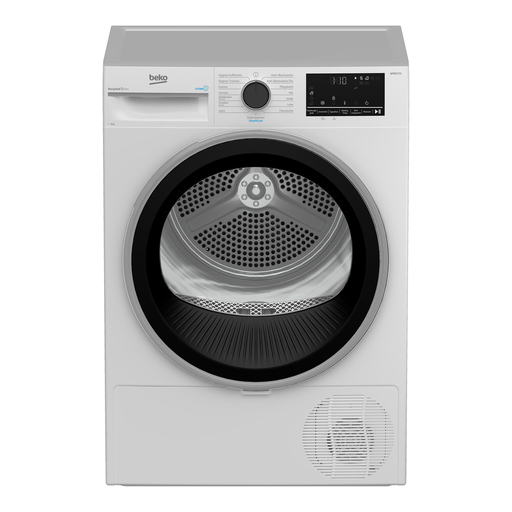
Beko B5TD6821B heat-pump tumble dryer, 8 kg

Beko B5TD6821B, 8 kg

The product description lists Sensor Drying, which stops the cycle once the clothes are dry.

Heat-pump tumble dryer; 15 programmes; B energy rating, as stated in the product name.

View at Joybuy
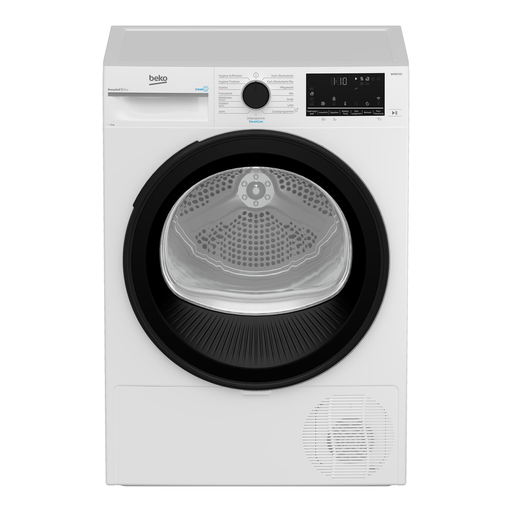
Beko B7TDT8820A heat-pump tumble dryer, 8 kg

Beko B7TDT8820A, 8 kg

The product description lists Sensor Drying and 15 drying programmes.

Heat-pump tumble dryer; HomeWhiz, SteamCure and AquaWave drum, as stated in the product name; A energy rating, as stated in the product name.

View at Joybuy
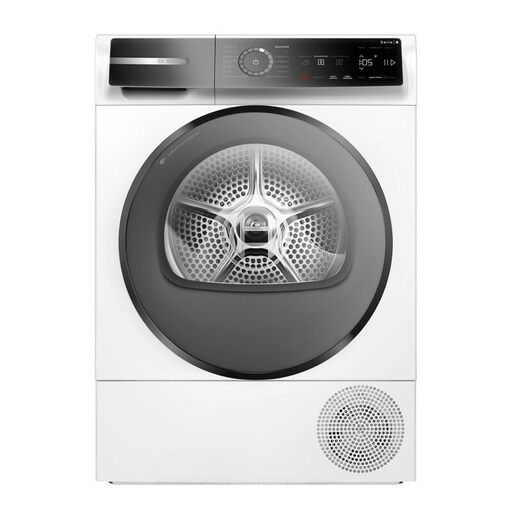
Bosch WQB246D41 heat-pump tumble dryer, 9 kg, Series 8

Bosch WQB246D41, Series 8, 9 kg

The product description lists a half-load function for smaller loads.

Heat-pump tumble dryer; AutoDry and SelfCleaning Condenser, as stated in the product description; B energy rating, as stated in the product name.

View at Joybuy

Frequently asked questions

Can I compare a washer-dryer’s energy use directly with that of a separate tumble dryer?

Not by looking at the “kWh per 100 cycles” figure alone. For a separate tumble dryer, the label refers to Eco drying cycles. Washer-dryer labels show complete wash-and-dry cycles separately from wash-only cycles. Compare like-for-like use cases rather than just the figures, as the Verbraucherzentrale and the respective energy labels advise.

Is a washer-dryer a good idea if I already have a washing machine?

It’s worth considering if you have neither room for a second appliance nor somewhere suitable to hang clothes, and you can replace your washing machine. Check the drying capacity and the energy use of a complete wash-and-dry cycle. The Verbraucherzentrale notes that washer-dryers generally use more electricity and water than two separate appliances.

Which energy labels apply when buying a tumble dryer in Germany?

Since 1 July 2025, household tumble dryers sold in the EU have carried an energy label with ratings from A to G, as explained by the European Commission. Washer-dryers have their own label figures, shown separately for washing and for washing and drying. Don’t compare these with the figures for a separate tumble dryer without checking that they’re like for like.

What should I know about cleaning and everyday use?

Bosch recommends cleaning the fluff filter after every use. For other cleaning steps, such as cleaning the heat exchanger, follow the instructions for your specific appliance.

What should I do with an old tumble dryer?

In Germany, an old tumble dryer must be collected separately and not put in household waste. The German Environment Agency says that municipal collection points generally accept old electrical appliances free of charge. Take-back through retailers is subject to specific conditions.