Commuters with items they need in a hurry
If you need a few tumble-dryer-safe cotton items again soon after a wet commute, check whether a small-load or quick programme is suitable for those specific items and that load size.


The key question is whether you need to dry a few tumble-dryer-safe cotton items quickly after a wet commute, or regularly dry larger loads in winter. For small loads, only choose programmes whose instructions allow the specific cotton items and load size. If you dry laundry frequently, drum capacity suited to your usual load and the energy consumption shown on the current EU label matter more. The German Environment Agency points out that an oversized tumble dryer, often only half full, can use more energy per kilogram of laundry.
If you need a few tumble-dryer-safe cotton items again soon after a wet commute, check whether a small-load or quick programme is suitable for those specific items and that load size.
For frequent, larger loads, a drum sized for your usual laundry and ongoing electricity consumption matter more than a short programme duration.
If space is tight or you want to drain away condensation water, check the appliance dimensions, door opening, water drainage options and installation requirements for the specific model in advance.
A good fit if: you need a few tumble-dryer-safe items again soon after your commute.
Consider: A quick programme is suitable only if the instructions approve that fabric type and load size; a time estimate alone does not guarantee dry cotton.
A good fit if: you frequently have cotton laundry that is suitable for washing and tumble drying in winter, and you have a suitable space for the appliance.
Consider: Compare drum capacity, consumption per 100 ECO cycles and the condensation efficiency of the specific model. ECO figures describe a set operating cycle, not a quick programme.
A good fit if: you already have a working tumble dryer, or enough space and ventilation, and you don't need the laundry again straight away.
Consider: Air-drying indoors adds moisture to the room. The German Environment Agency recommends regular ventilation when there are additional sources of moisture.
| What you need | What to check when buying | Who will find this especially important? |
|---|---|---|
| Dry a small load quickly | Check that the quick or small-load programme allows cotton and the specific load size. | If I need a few tumble-dryer-safe items again soon after a wet commute, choosing the right programme matters to me. Around 31% of consumers put a quick small load first. |
| Electricity use with frequent drying | Compare kWh per 100 ECO cycles and make sure the EU labels are from the same generation; other programmes may differ. | If I use the tumble dryer often in winter, I want to estimate its ongoing electricity use using comparable label figures. Around 25% of consumers prioritise electricity costs. |
| The right load size per cycle | Compare your usual laundry load with the rated capacity and any lower programme limit. | For regular, larger loads, I want to fill the drum sensibly without relying on the maximum capacity alone. Around 19% of consumers prioritise having the right load size. |
| Dry cotton appropriately | Check the care label, cotton programme and desired dryness level; a sensor does not replace checking whether the fabric is suitable. | If I want to take care of my tumble-dryer-safe cotton clothes, I want to check the care label alongside the selected programme. Around 13% of consumers put fabric care first. |
| Space and condensation water | Check the appliance and door-opening dimensions, the water container or possible drainage connections, and the installation requirements. | If space is tight or I need to manage condensation water in a particular way, I want to know before buying whether the appliance and connection will suit my home. Around 12% of consumers prioritise installation and water drainage. |
A quick-programme time does not prove that every load size or level of dampness will be dry within that time. You may need to run another cycle or wait longer.
Check the instructions for the specific model to see which fabrics and load sizes are approved for the programme.
The EU rescaled the energy label for tumble dryers on 1 July 2025. Comparing old and new classes directly can give you a misleading picture of ongoing electricity use.
Compare models using the current label generation and the stated kWh per 100 ECO cycles.
The energy-class information for the AEG TR9T75680 varies: Joybuy lists A+++, while AEG Germany gives the model a C rating.
Before buying, check the full model number against the current product data sheet. Compare energy classes only within the same label generation.
Bosch Home Appliances Germany lists a 9 kg capacity, Auto Dry, a half-load option and Extra Kurz 40′ for the WQB245B40.
Siemens Home Appliances Germany lists an 8 kg capacity, autoDry, half load and a 40-minute quick programme for the WQ35G2D00.
AEG Germany lists the TR9T75680 as a heat pump tumble dryer with an 8 kg capacity and a stated condensation efficiency.
For the 8 kg TWC640WP, Miele Germany states a weighted consumption of 95 kWh per 100 operating cycles on the ECO cupboard-dry programme and an ECO cycle time of 170 minutes.
Beko lists an 8 kg capacity and OptiSense sensor drying for the B3T42240S.
This selection includes heat pump tumble dryers for regular loads, as well as models with details of small-load or quick programmes.
 No image available
The stated sensor drying may be useful for regular loads; check which dryness level is right for your laundry.
Joybuy lists this model as an 8 kg heat pump tumble dryer with sensor drying.
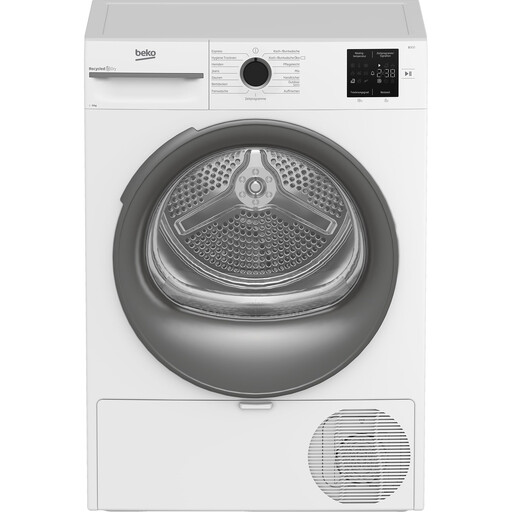 No image available
For larger loads, the stated capacity is a useful guide; compare it with the amount of laundry you usually dry.
Joybuy lists a 9 kg capacity, energy class E and 15 programmes. Compare electricity use using the current EU label.
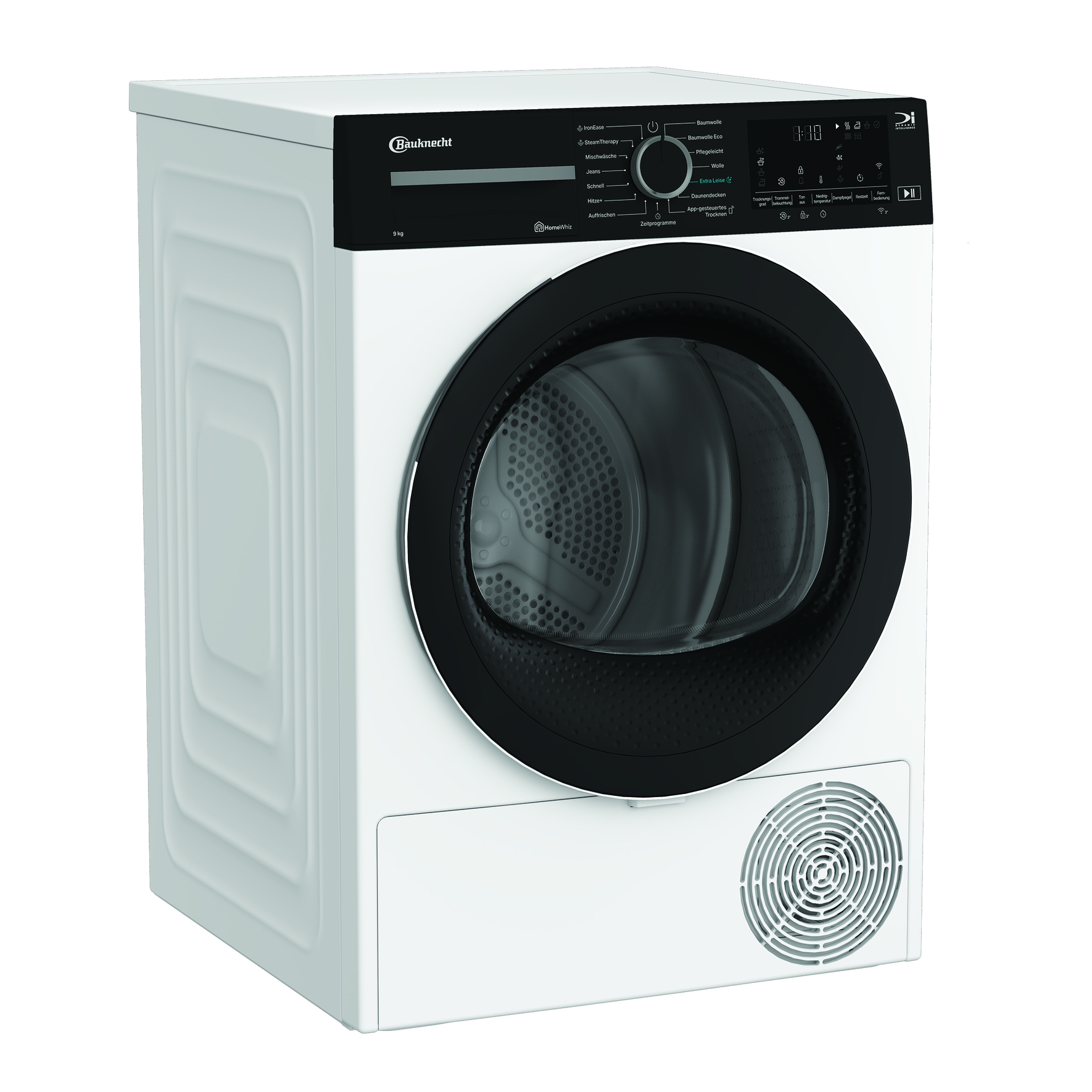 No image available
If you often dry larger loads, you can compare the stated capacity with the amount of laundry you usually dry.
Joybuy lists this model as a 9 kg heat pump tumble dryer with energy class C; check the current EU label for the specific appliance.
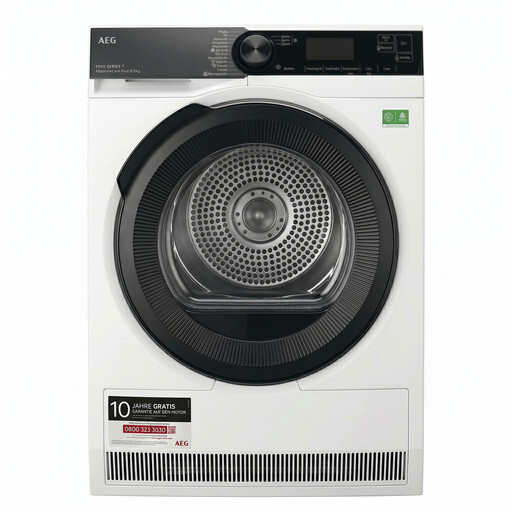 No image available
This model is only an option for a small, urgent load if the instructions approve the specific cotton items for the quick programme listed.
Joybuy lists an 8 kg capacity and a 3 kg quick programme. Check which fabrics are suitable before choosing it.
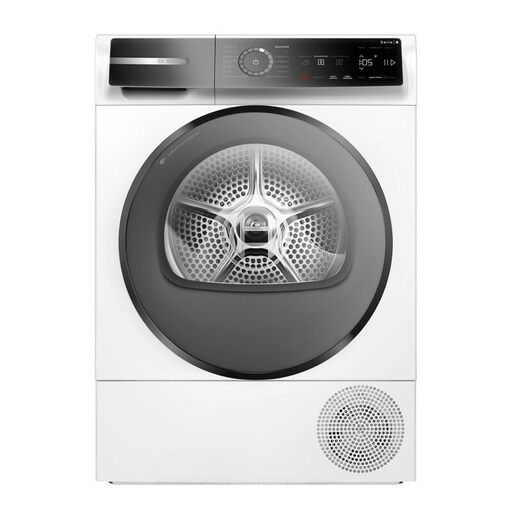 No image available
For smaller loads, the stated half-load function may be useful; check which cotton load sizes are approved for it.
Joybuy lists this model as a 9 kg heat pump tumble dryer with energy class B. Compare energy classes only within the same label generation.
No, not just because it contains cotton. Check the care label and the instructions for your specific appliance. The Miele instructions we checked allow only fabrics marked as suitable for tumble drying and washed in water. Don't assume this model-specific guidance applies to other appliances or to clothes that are simply rain-soaked and unwashed.
Follow the instructions for your appliance. Bosch recommends cleaning the lint filter in its tumble dryers after every cycle; a self-cleaning condenser does not remove the need to do this.
For current comparisons in Germany, the rescaled EU energy label from A to G has applied since 1 July 2025, as explained by the European Commission. Appliances already placed on the market before that date are not covered by the new ecodesign measures in the same way. So don't treat old and new classes as directly equivalent.
If the appliance is faulty, your statutory rights apply against the seller; a guarantee is an additional, voluntary benefit. The conditions for retailers and customers to arrange free take-back of a like-for-like old appliance when buying a new one are set out by the Stiftung ear. Check how collection will work before delivery.