Households with limited cotton laundry
If you’ll need towels or everyday clothes again soon this winter, drum capacity and the duration of the cotton programme are important factors to consider.


If you need tumble-dryer-safe cotton laundry again soon this winter and have nowhere to put an airer, a heat pump tumble dryer with a drum size suited to your usual loads is worth considering. Compare the Eco cycle duration and energy use per 100 Eco cycles, as well as the dimensions and condensation efficiency. A quick programme for small synthetic loads won’t tell you how long a full cotton load will take. Check care labels before drying, and if you plan to stack the dryer on your washing machine, make sure the exact appliance combination is approved.
If you’ll need towels or everyday clothes again soon this winter, drum capacity and the duration of the cotton programme are important factors to consider.
If you don’t want to leave an airer up permanently, check the appliance dimensions, door clearance and, if relevant, whether the proposed washer-dryer stack is approved for both appliances.
If you use a tumble dryer regularly, compare the stated energy use on the same Eco programme basis and choose a drum size that suits your usual laundry loads.
| Purchase priority | What to look for | Who is it important for? |
|---|---|---|
| Having cotton laundry ready in good time | Compare the Eco cycle duration and cotton programme; match the load capacity and moisture control to your usual loads. | If you’ll need towels or everyday clothes again soon, the duration of the relevant cotton programme matters. Around 36% of consumers prioritise this. |
| Drying clothes without an airer | Measure the appliance, door clearance and available space; if stacking the appliances, check that both are approved for this setup and that you have a suitable stacking kit. | If you can’t spare floor space for drying, you need a setup that fits your home and works safely with your existing appliances. Around 29% of consumers say limited drying and floor space is their main concern. |
| Keeping running costs down | Compare kWh per 100 Eco cycles on the same labelling basis, and factor in your needs and electricity tariff. | For households that dry clothes regularly, energy use over time is a priority. Around 21% of consumers say this is their main concern. |
| Looking after fabrics and the appliance | Check the tumble-dryer symbol and permitted temperature; follow the cleaning instructions for the specific model. | If suitable fabric care and straightforward maintenance are important, make sure the care label and cleaning routine are compatible. Around 14% of consumers prioritise this. |
According to Bosch, the 40-minute programme on the Bosch WQG233D40 is for small loads of synthetics and lightweight fabrics. It isn’t a promise that a full cotton load will be dry in that time.
Compare the conditions for the quick programme separately from the stated Eco cycle duration and cotton programme.
The energy label also shows consumption in kWh per 100 Eco drying cycles. Values are only useful to compare when they’re based on the same labelling system; other programmes and load sizes may differ.
Compare the consumption figures and estimate running costs based on the number of Eco cycles you expect to use and your electricity tariff.
You’ll also need to check the available space, door clearance and the specific appliance combination. If stacking the appliances, check that the stacking kit is suitable for both.
Measure the installation space, including clearance, and check the manufacturer’s approval for your exact washing machine and tumble dryer.
You may also need a suitable stacking kit or installation service. Before buying, check what’s required for your specific setup.
The Verbraucherzentrale (German consumer advice centre) says washer-dryers use more electricity and water than a separate washing machine and tumble dryer. Their drying capacity can also be lower than their washing capacity.
Consider a washer-dryer only if you specifically need an all-in-one space-saving option, and check its washing and drying capacities as well as the relevant energy label separately.
Bosch lists an 8 kg capacity, cotton programmes, Auto Dry and a half-load option for the WQG233D40.
The BM3T38220X is a heat pump tumble dryer with sensor drying and a stated depth of 54.5 cm.
The TR8T75789 is an 8 kg heat pump tumble dryer from the 8000 AbsoluteCare range, with MixDry and stated suitability for stacking with a stacking kit.
According to Miele, the T1 TWC640WP is an 8 kg heat pump tumble dryer with DirectSensor, as well as the manufacturer’s DryProtect and Miele@home features.
According to Hisense, the DH5S102BW is a 10 kg heat pump tumble dryer. Its larger drum is worth considering particularly if you regularly dry large loads.
These are separate heat pump tumble dryers for machine-drying laundry. Compare their specifications with your usual cotton loads and the space available.
 No image available
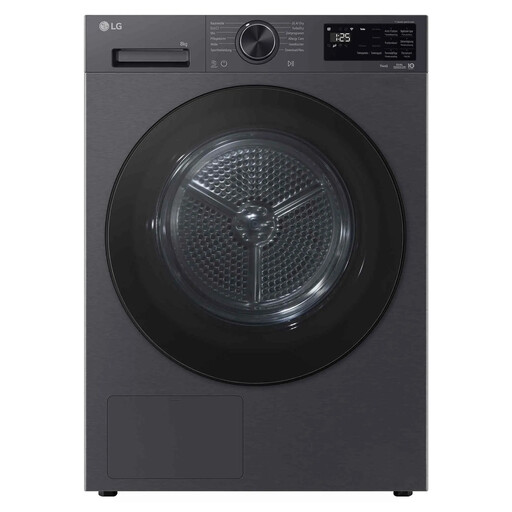
The stated 8 kg capacity and cotton programme are useful points of comparison for your usual laundry loads.
85 kWh per 100 cycles; AI Dry; stated dimensions: 85 × 60 × 66 cm. No specific TurboDry duration is given for this model.
 No image available
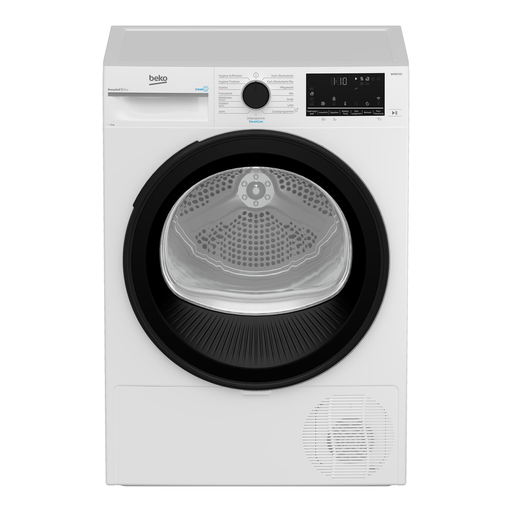
Sensor drying and automatic shut-off when the selected dryness level is reached are useful for handling different load sizes.
The product description gives it an energy class of A. For stacking, it specifies a compatible Beko washing machine and a suitable stacking kit, available separately.
 No image available
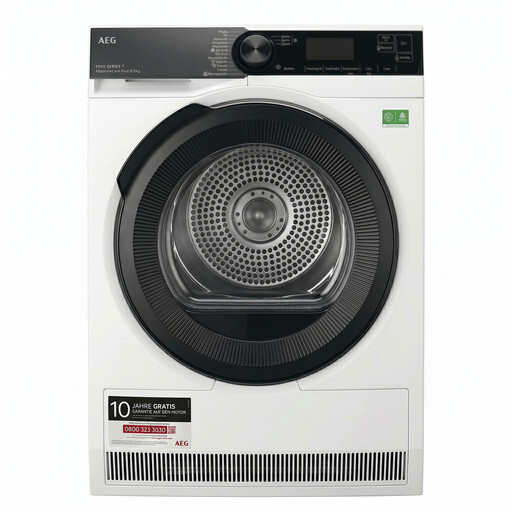
The cotton programme is suitable for appropriate cotton laundry; according to the description, MixDry is designed for mixed loads of cotton and synthetics.
85 kWh per 100 cycles; stated programme duration: 179 minutes. This isn’t a guaranteed drying time for every cotton load.
 No image available
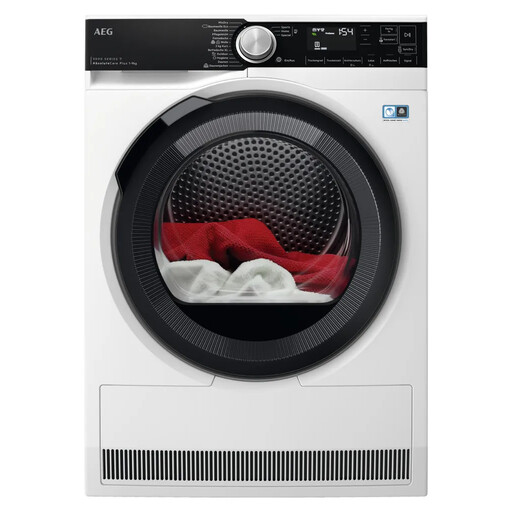
The stated 9 kg capacity and cotton programme can be compared with your usual load size; MixDry is also listed.
The product description says ProSense adjusts the drying time to the size of the load.
 No image available
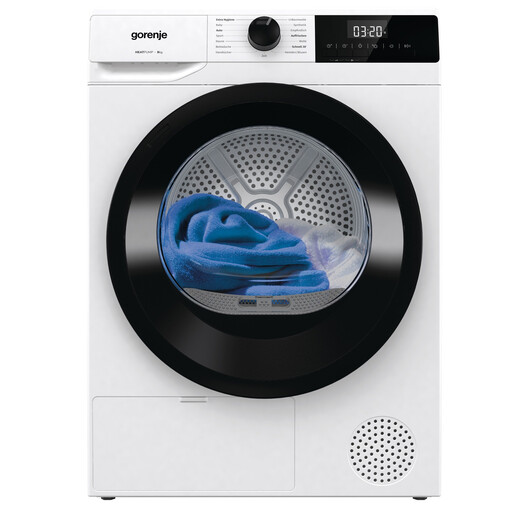
According to the description, AutoDry monitors how dry the laundry is and ends the cycle automatically; check whether the stated depth fits your available space.
Energy class D; 119 kWh per 100 cycles; Eco programme stated as 130 minutes; appliance depth: 550 mm.
No. The fibre content alone isn’t enough to go on. Check the tumble-dryer symbol on each garment and follow any instruction to use a lower temperature before selecting a cotton programme.
Not without checking the specific appliance combination. Bosch recommends using a suitable stacking kit for its washer-dryer stacks and checking both appliances. Don’t assume the dimensions and clearances will work for other models without checking.
Since 1 July 2025, household tumble dryers have been rated on a scale from A to G. According to the European Commission, the relevant label must be displayed both in shops and online. Don’t confuse the current scale with the previous A+++ to D scale. Washer-dryers use different labelling information.
Multiply the stated kWh per 100 Eco cycles by the number of those cycles you expect to run, divide by 100, then multiply by your electricity price per kWh. Other programmes and load sizes may differ. Also check in advance whether you might need to pay for a suitable stacking kit or installation.
Follow the instructions for your specific model. Bosch says its tumble dryers’ fluff filters should be cleaned after every cycle; depending on the model, other accessible parts may also need regular care.