What should you look for when buying?
Start by checking the permitted load for the bedding programme. Then compare Eco energy use and make sure the fabric-care options, dimensions and noise level suit your household.
| What matters |
What to look for when buying |
Who should pay particular attention? |
| Large bedding loads |
Check the rated capacity and the permitted load for each programme; look for a bedding programme or reversing drum on the specific model. |
If we put covers and smaller items in the drum together, I want to know the permitted load and avoid them getting badly tangled. Around 31% of consumers put large bedding loads first. |
| Energy use |
Compare kWh per 100 Eco cycles and Eco programme duration for models with a similar capacity. |
If the tumble dryer runs often, I want to weigh its stated energy use against the Eco programme’s running time. Around 31% of consumers prioritise running costs. |
| Fabric care |
Check the care label on each item against the programme description and the load limit for the specific model. |
If I dry suitable duvets or more delicate fabrics as well as covers, I want to choose the right treatment for each item. Around 23% of consumers put fabric care first. |
| Space and noise |
Check the appliance dimensions, including room to open and connect it, as well as its stated noise level in dB(A). |
If space is tight or the appliance will be near living areas, I need dimensions that fit and a noise level that suits its location. Around 15% of consumers prioritise space and noise. |
The Verbraucherzentrale recommends comparing energy use on the same label basis. Since 1 July 2025, tumble dryer energy efficiency has been shown on an A-to-G scale; the European Commission explains this labelling. The energy use shown on the label is based on the standardised Eco programme and does not automatically tell you how much a bedding or quick programme will use.
Heat pump tumble dryers at Joybuy
This selection includes heat pump tumble dryers with stated capacities of 8 to 10 kg. Depending on the model, they have a bedding programme or a reversing drum. Before buying, check the load limit for the programme you want to use and the care labels on your bedding.
 No image available
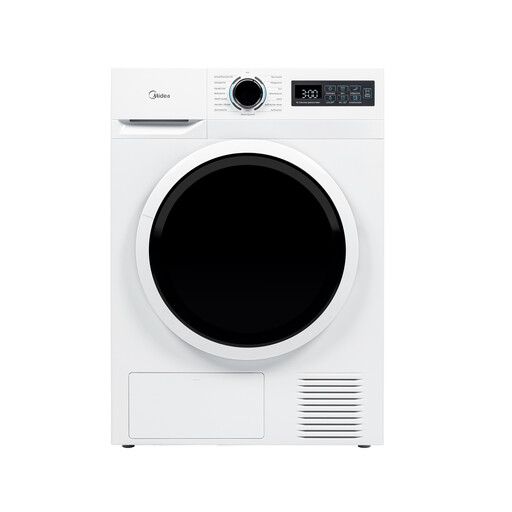
Midea MD110H80B-E heat pump tumble dryer, 8 kg
The stated capacity and listed Bedding programme give you specific details to compare with your bedding.
Capacity: 8 kg.
Listed features: Bedding programme, sensor drying and double lint filter.
View at Joybuy
 No image available
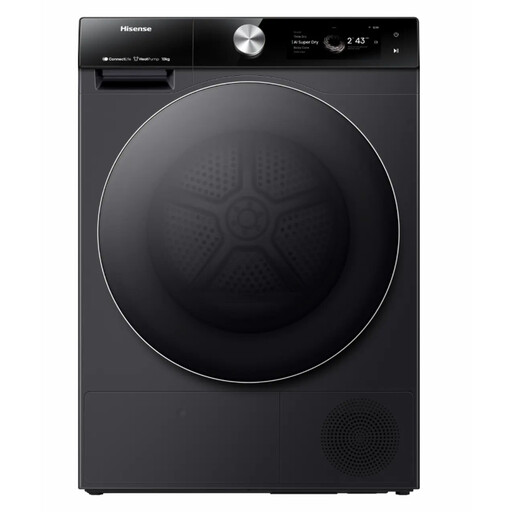
Hisense DH7S107BB heat pump tumble dryer, 10 kg
The stated capacity gives you a size to compare with your household loads; remember to check the programme load as well.
Capacity: 10 kg.
Listed in the product name: AI Auto Dry, Anti-Crease function and TFT display.
View at Joybuy
 No image available
LG RT80X7B heat pump tumble dryer, 8 kg
The stated capacity and reversing drum are useful features to compare when drying larger items.
Capacity: 8 kg.
Listed features: reversing drum, AI Dry and moisture sensor.
View at Joybuy
 No image available
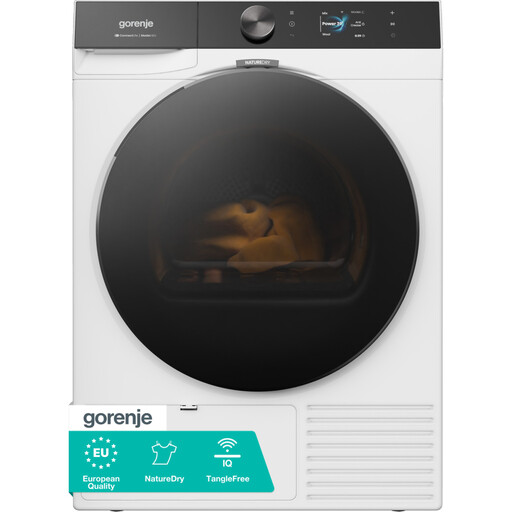
Gorenje DG89BP heat pump tumble dryer, 9 kg
The listed Bedding-XL programme and reversing drum are useful features to compare for bedding loads.
Capacity: 9 kg.
Listed features: Bedding-XL programme, reversing drum, moisture sensor and 15 programmes.
View at Joybuy
 No image available
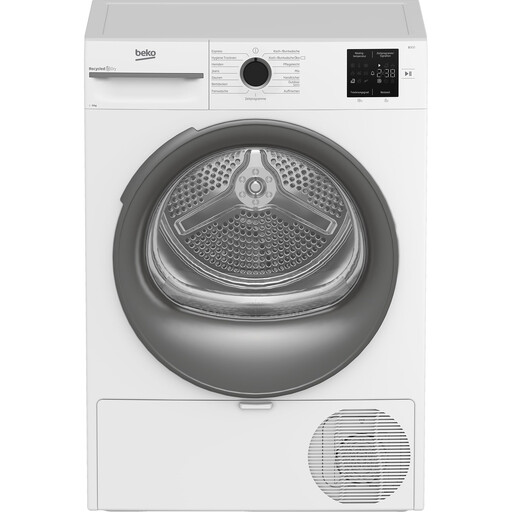
Beko BM3T39210W1 heat pump tumble dryer, 9 kg
The stated capacity helps you compare sizes; also check the bedding load against the programme instructions.
Capacity: 9 kg. Energy class E.
Listed features: 15 programmes and AquaWave drum.
View at Joybuy
Frequently asked questions
Can every duvet go in a tumble dryer with a bedding programme?
No. Check the care label on each item: GINETEX distinguishes between normal and low-temperature tumble drying, and items that must not be tumble dried. An appliance programme does not override the fabric-care instructions.
What does the energy figure on a current tumble dryer label tell me?
It shows energy use in kWh per 100 drying cycles on the standardised Eco programme. Since 1 July 2025, tumble dryer labels have used an A-to-G scale, as explained by the European Commission; figures from older scales are not directly comparable.
What should I clean regularly on my tumble dryer?
The Verbraucherzentrale recommends cleaning the lint filter and condenser regularly, following the appliance manual. Lint and dust can also pose a fire risk over time.
Can I return my old tumble dryer when buying online?
Online retailers must take back old appliances in certain circumstances set out by law. Before completing your purchase, check with the retailer about take-back or an agreed collection; free collection from your home is not available unless the relevant conditions are met. The Federal Ministry for the Environment explains these conditions.


