Parents who need a quick change of clothes
If you need certain suitable items again soon, it’s important to know whether there’s a suitable programme for a small load. Bosch home appliances lists a quick programme for specific small loads.


If you regularly need school clothes ready again at short notice, a heat pump tumble dryer could be worth considering, provided the programme and load are suitable for the fabrics. For example, Bosch lists a 40-minute quick programme for small loads of synthetics and lightweight fabrics on the WQG233D40 — not for every full or soaking-wet load. Check the care label and the appliance manual. If you use the dryer frequently, the Verbraucherzentrale recommends comparing energy consumption using the current energy label.
If you need certain suitable items again soon, it’s important to know whether there’s a suitable programme for a small load. Bosch home appliances lists a quick programme for specific small loads.
For cotton, synthetics or outdoor clothing, the programme needs to match the care label. AEG describes MixDry for suitable mixed loads, while GINETEX explains what textile care symbols mean.
If you use the dryer regularly, energy consumption and appliance care matter as well as the load size. The Verbraucherzentrale recommends taking energy consumption into account when buying, while Bosch home appliances advises cleaning the lint filter regularly.
First, check whether the care label says the items can go in the tumble dryer and whether there’s a suitable programme for the load you need to dry. If you use the dryer frequently, compare the current energy label as well as the installation and care requirements.
| Priority | What to look for when buying | Who it matters most to |
|---|---|---|
| Dry a small load quickly | Check the programme, suitable fabrics and permitted load size for that programme in the appliance manual. | If I need a suitable item of clothing again soon, it matters whether the quick programme is suitable for that specific load size. Around 36% of consumers say quickly drying small loads is their main priority. |
| Care for different fabrics | Check the tumble-drying symbol and programme requirements for mixed laundry or outdoor fabrics. | If school clothes are made from different fabrics, I don’t want to overlook care instructions by drying them together. Around 29% of consumers put fabric care first. |
| Take energy consumption into account | Compare the current EU energy label and the appliances’ consumption figures on the same basis. Since 1 July 2025, the scale has run from A to G. | If rainy weather means I have laundry to dry regularly, I want to factor in running costs when choosing a dryer. Around 21% of consumers say energy consumption is their main priority. |
| Plan for space and maintenance | Check the dimensions, door clearance and installation guidance. If stacking appliances, make sure they’re compatible and check which stacking kit is needed. | If space is limited or I want to keep maintenance to a minimum, installation and upkeep are important. Around 14% of consumers prioritise space and appliance care. |
The advertised short cycle time may apply only to a small load and specific fabrics. The maximum drum capacity doesn’t tell you how much laundry will fit in the quick programme.
Compare the permitted load size for the specific programme with the appliance’s maximum capacity.
A tumble dryer programme doesn’t override the garment’s care instructions. A crossed-out tumble-drying symbol means the item shouldn’t go in the dryer.
Check the care label first, then consult the appliance manual. Dry unsuitable items another way.
The EU scale for tumble dryers changed to classes A to G in 2025. Old and current classes therefore aren’t directly comparable.
When comparing models, use the current label and consumption figures based on the same criteria.
For safe stacking, the appliances need to be compatible and you’ll need the right stacking kit. The lint filter and condensate tank may also need regular attention.
Measure the space and check the door clearance, installation guidance, stacking kit and care instructions for the model you’re considering.
You may need a suitable stacking kit to stack the appliances.
For the WQG233D40 and WQB245B40 models, Bosch home appliances lists quick-programme features for specific loads.
For the 8 kg TR8T75780, AEG lists MixDry and programmes for delicate and outdoor fabrics.
Beko lists the B3T22491 as an 8 kg heat pump tumble dryer with OptiSense sensor drying.
For the 9 kg TE717I WP, Miele lists the QuickPowerDry and WoolDry programmes.
This selection features heat pump tumble dryers for regular laundry and different fabrics. Whether a programme is suitable for wet school clothes depends on the care label, the load and the details for the model in question.
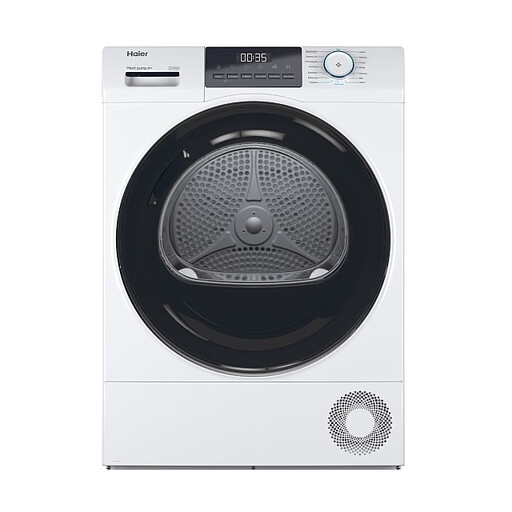 Image unavailable
Could be suitable for regular household laundry; check that the programme matches the care labels for the load.
8 kg; heat pump tumble dryer; sensor drying and several drying programmes according to the product details.
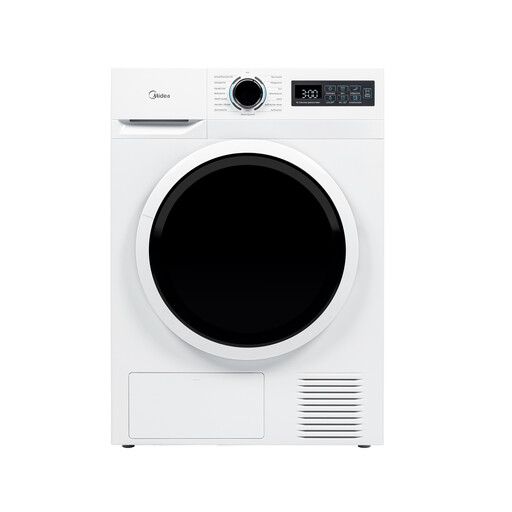 Image unavailable
The listed programmes for different fabrics may make it easier to choose a cycle for suitable school clothes; check the guidance for each item.
Heat pump tumble dryer; sensor drying, 15 programmes and double lint filtration according to the product details. Programmes include cycles for sportswear, shirts, wool and delicates.
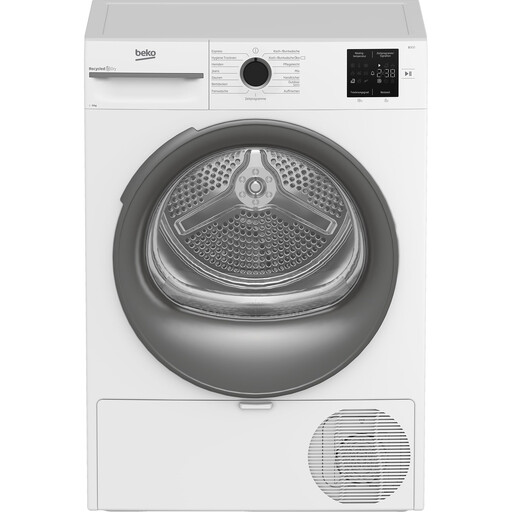 Image unavailable
The capacity and Express programme may be useful for larger loads or when you’re short on time; a quick programme isn’t guaranteed to suit every load.
9 kg; energy class E; heat pump technology and 15 programmes according to the product details, including an Express programme.
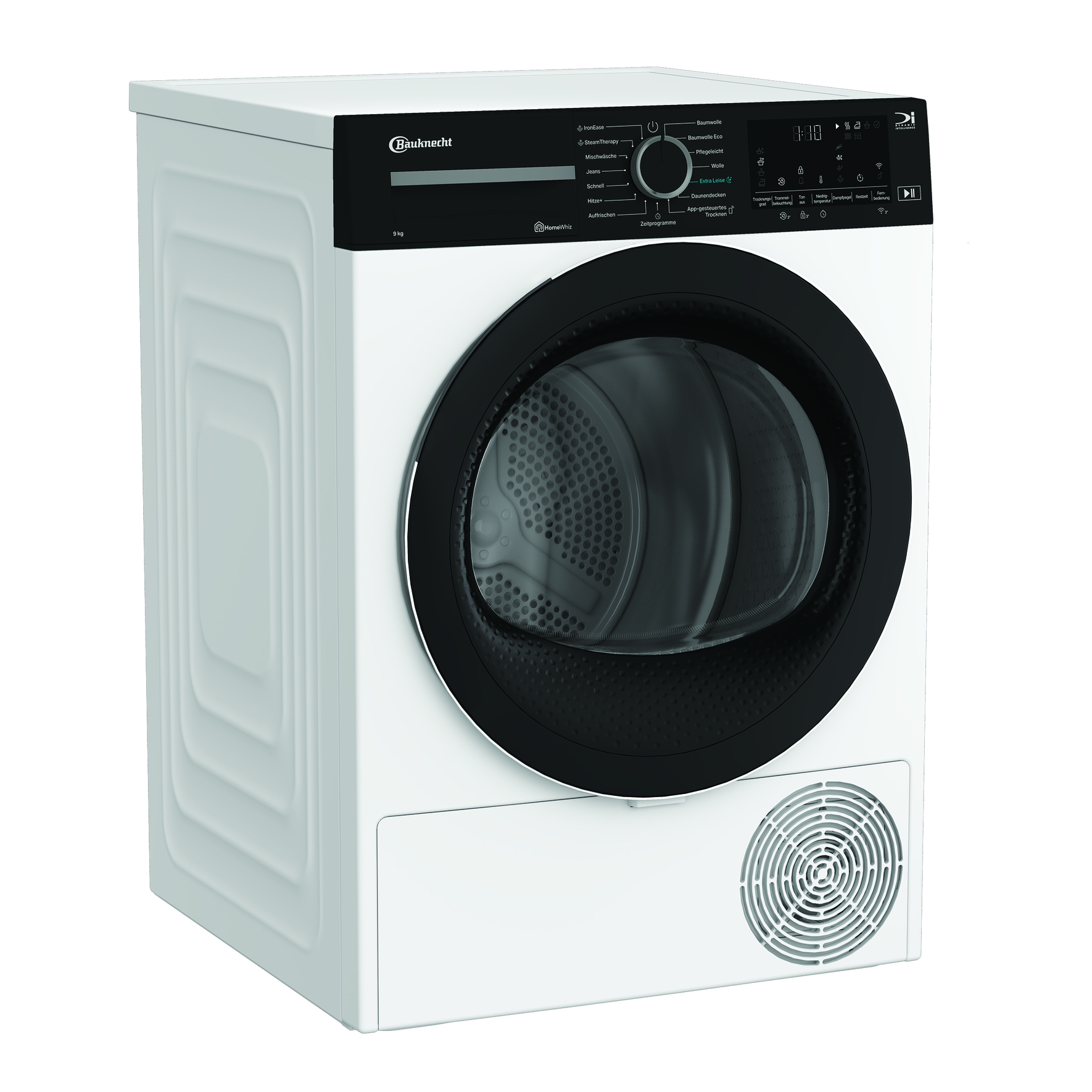 Image unavailable
Could be suitable for regular household laundry and different fabrics; make sure the programme you choose matches the care label.
9 kg; energy class C; the product details list programmes for jeans, synthetics, wool and eco cotton.
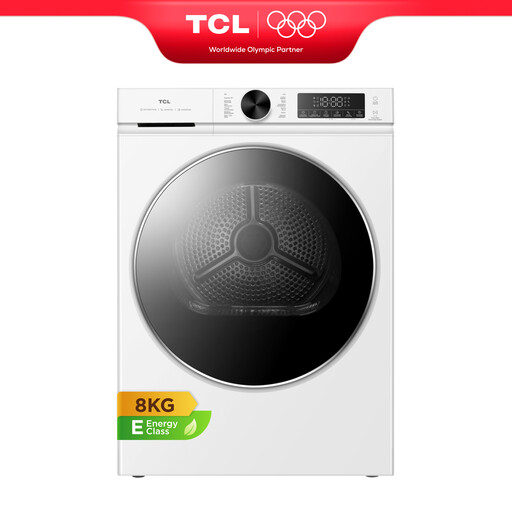 Image unavailable
The product details list Quick Dry for suitable laundry you need in a hurry; the advertised time doesn’t automatically apply to every load.
8 kg; energy class E; heat pump. Quick Dry is advertised as taking up to 30 minutes. Programmes for delicates and sportswear are also listed.
Only if the care label allows tumble drying and the appliance manual says the selected programme is suitable. A crossed-out tumble-drying symbol means the item shouldn’t go in the dryer. If the clothes are soiled, check the appliance manual as well.
No — you can’t assume it will dry a full load. Bosch home appliances lists 40 minutes for small loads of synthetics and lightweight fabrics on the WQG233D40; the appliance’s maximum capacity of 8 kg isn’t the stated load size for this quick programme.
Follow the instructions for your specific appliance. Bosch home appliances recommends cleaning the lint filter after every use and emptying the condensate tank after each cycle on its tumble dryers. Heat exchanger maintenance can vary depending on the model’s features.
Since 1 July 2025, tumble dryers sold in shops have used the EU energy label with classes A to G. The European Commission lists this scale for labelling in shops and online; old A+++ ratings aren’t part of the current comparison scale.
No. According to the German Federal Ministry for the Environment, old electrical appliances must be collected separately and taken to an authorised collection point or, where the legal requirements are met, handed to a retailer. Check the take-back arrangements for large appliances when you make your purchase.