If you regularly need tumble-dryer-safe school clothes in a hurry, choose a dryer based on your usual load size and check which fabrics and load sizes the quick cycle is designed for. For frequent family laundry, energy use and the right capacity matter too. The care label, available space and longer Eco cycle time should also factor into your decision.
Who is a tumble dryer right for?
Families with school clothes needed at short notice
If you need individual suitable items ready before the next school day, check the fabric type and the quick cycle’s maximum load together. Bosch limits the 40-minute cycle on the WQG235D00 to small loads of synthetic fibres and lightweight fabrics.
Households with lots of laundry to do
For regular school and everyday laundry, the capacity should suit your usual load and energy use matters. The German Environment Agency points out that an oversized dryer, often only half full, can use more energy per kilogram of laundry than a suitably loaded machine.
Families with technical fabrics or limited space
Check whether the care label says the garment can go in the tumble dryer, and whether there’s a safe place for a separate appliance. GINETEX explains that care symbols show the maximum permitted treatment.
What should you look for when buying?
For laundry needed in a hurry, first check the limits of the specific cycle. For regular family loads, also consider the drum size, energy use and a practical place to install the dryer.
| What matters |
What to check before buying |
Who it matters most to |
| Getting school clothes dry in time |
Fabric type, maximum load and quick cycle duration; consider the Eco cycle separately. |
If I only need a few suitable items ready before the next school day, I want to know whether this exact amount and fabric type are suitable for the quick cycle. Around 26% of consumers prioritise quick loads like these. |
| The right drum size |
Compare your usual laundry load with the stated capacity and the load limits for specific cycles. |
With several school and family loads to dry, I want a suitable capacity without often having to run the machine only partly full. Around 21% of consumers focus mainly on the size of their regular loads. |
| Energy use with frequent drying |
Compare the current A–G label and kWh per 100 Eco cycles on the same basis. |
If I use the dryer often, I want to understand how its stated energy use will affect my running costs. Around 21% of consumers prioritise energy use for regular drying. |
| Looking after fabrics properly |
Check the care symbol, permitted treatment and instructions for the chosen cycle. |
For waterproof jackets, sportswear or delicate school clothes, I don’t want to assume that a cycle is suitable for every item. Around 16% of consumers put fabric suitability first. |
| A safe place to install the dryer |
Measure the available space and door opening; if stacking the appliances, check the specific combination and stacking kit. |
If space is limited, I need a solution that can be installed safely where I plan to put it. Around 16% of consumers prioritise the available space and installation. |
Common buying misconceptions
-
Assuming a quick cycle can handle a full drum
A dryer’s stated capacity doesn’t necessarily apply to every cycle. Bosch says the 40-minute cycle on the WQG235D00 is for small loads of synthetic fibres and lightweight fabrics, not a full load in general.
Check the manual to see which fabrics and load sizes are suitable for the quick cycle you want to use.
Key brands to consider
Bosch
The WQG235D00 may appeal if you’re looking for a quick cycle for suitable small loads that need drying in a hurry.
- Bosch lists an 8 kg capacity, Auto Dry, a half-load option and a self-cleaning condenser for this model.
- According to Bosch, the 40-minute cycle is for small loads of synthetic fibres and lightweight fabrics, not school clothes or a full drum in general.
AEG
The TR9T75680 heat pump model is aimed at buyers comparing cycles for suitable outdoor and delicate fabrics.
- AEG promotes AbsoluteCare and 3DScan as features for suitable fabrics on this 8 kg model.
- This doesn’t mean its gentle treatment of your own school clothes has been independently verified. The product information lists a C energy rating and 98 kWh per 100 cycles.
Siemens
The iQ700 WQ46B2D41 may be worth considering if you’re looking for a stated capacity of 9 kg and want to take the noise level where it will be installed into account.
- Siemens lists 56 dB(A), autoDry and a self-cleaning condenser for this model.
- The 40-minute cycle doesn’t mean that 9 kg of laundry will be dry in that time. Check the load limit for the cycle you plan to use.
Beko
The B3T42240S is an 8 kg heat pump dryer to compare for its sensor controls, cycles and installation dimensions.
- Beko lists OptiSense, a C energy rating, 63 dB(A) and dimensions of 84,6 × 59,8 × 60,5 cm.
- Claims that it is especially gentle or quiet come from the manufacturer and aren’t independently measured results presented here.
Miele
The TWC640WP is an 8 kg model for buyers who want to compare details such as energy use and noise levels.
- Miele lists a C energy rating, 95 kWh per 100 Eco cycles, an Eco cycle duration of 170 minutes and 64 dB(A).
- The Eco cycle duration doesn’t tell you how long a small quick load will take. Further claims about durability aren’t independent test results.
Joybuy products for tumble-dryer-safe laundry
The separate heat pump dryers below give you options to compare for tumble-dryer-safe family laundry. For each model, check the suitable load size for the cycle you want to use, as well as the care instructions for your clothes.
 No image available
Haier I-Pro 1 HD80-E929E-DE, 8 kg
This separate heat pump dryer is worth comparing for regular family laundry that’s suitable for tumble drying. Its stated 8 kg capacity doesn’t replace the need to check the load limit for a quick cycle.
Listed in the product name: heat pump technology and 8 kg capacity.
View at Joybuy
 No image available
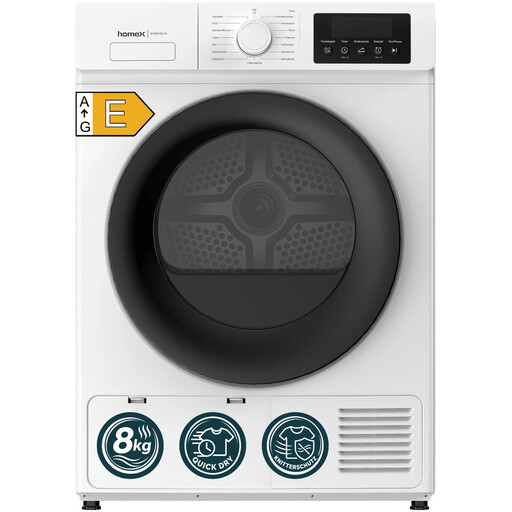
homeX WT8W1E-W, 8 kg
This freestanding heat pump dryer is a useful comparison for regular family loads. Match the load size to the cycle and the laundry you’re drying.
Listed in the product name: heat pump technology and 8 kg capacity.
View at Joybuy
 No image available
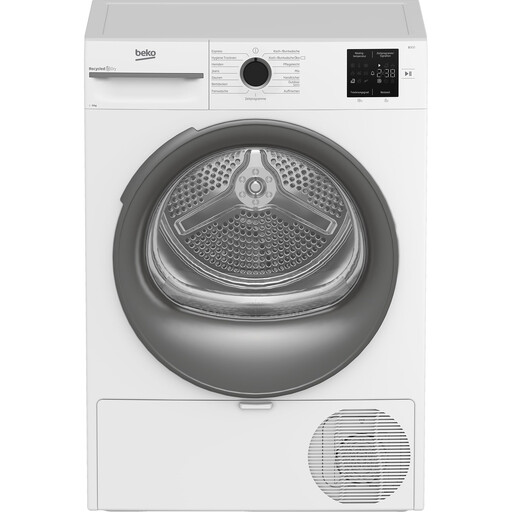
Beko BM3T39210W1, 9 kg
The stated 9 kg capacity gives you a point of comparison for larger family loads, but doesn’t tell you what size load is suitable for a quick cycle.
Listed in the product name: heat pump technology and 9 kg capacity.
View at Joybuy
 No image available
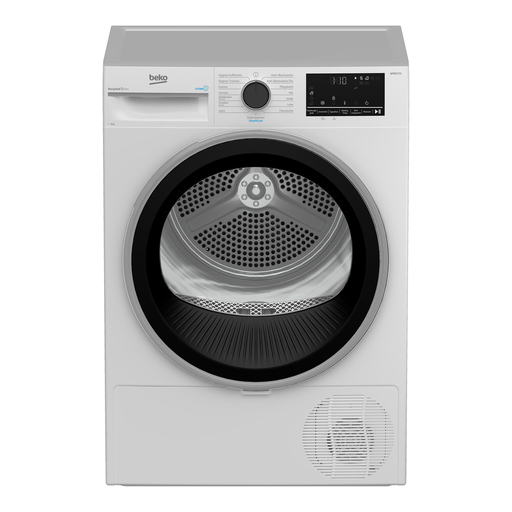
Beko B5TD6821B, 8 kg
This model is worth comparing for regular loads that are suitable for tumble drying. For delicate or technical fabrics, check both the care label and the cycle instructions.
Listed in the product name: heat pump technology and 8 kg capacity.
View at Joybuy
 No image available
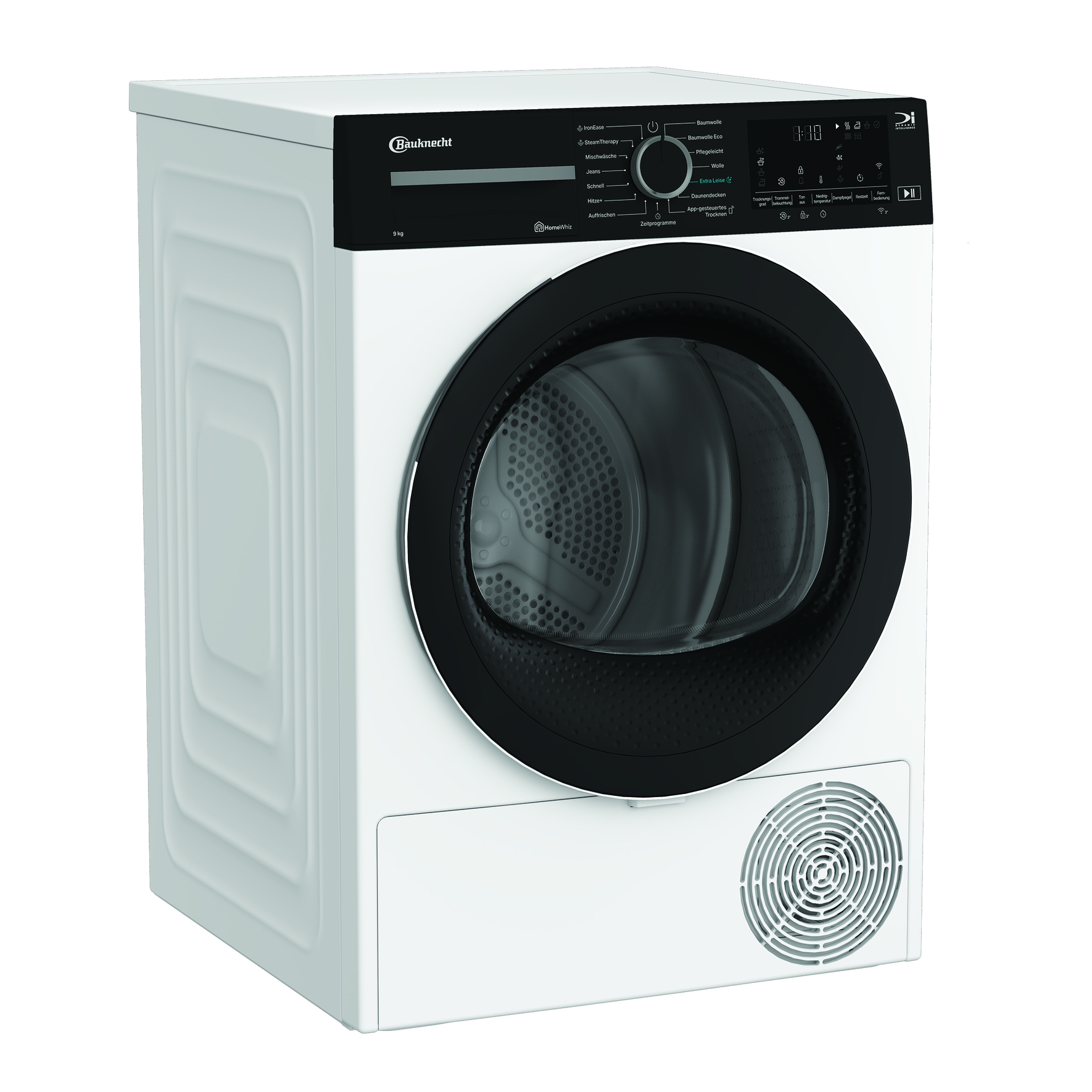
Bauknecht BD 9C WBS, 9 kg
The stated 9 kg capacity can help when comparing dryers for larger family loads. Also check the permitted load size for the cycle you actually plan to use.
Listed in the product name: heat pump technology and 9 kg capacity.
View at Joybuy
Frequently asked questions
Does a 40-minute cycle mean all the school laundry will be dry in 40 minutes?
No. Bosch specifically says that the 40-minute cycle on the WQG235D00 is for small loads of synthetic fibres and lightweight fabrics. Check the relevant cycle instructions for other fabrics and appliances.
Can you put a waterproof jacket in the tumble dryer?
Check the jacket’s care label first: according to GINETEX, the symbols show the maximum permitted treatment. An Outdoor cycle doesn’t replace this check.
How can you compare the energy use of different tumble dryers?
Compare the kWh per 100 Eco cycles shown on the current energy label, and consider how you’ll use the dryer. The label value doesn’t show the energy use of every individual quick cycle.
Can you simply put the tumble dryer on top of the washing machine?
Only stack appliances if the instructions allow that specific combination and you use a compatible stacking kit. Bosch explicitly advises checking compatibility for its stacking kit.
What day-to-day care does a tumble dryer need?
Clean the lint filter and condenser regularly, following the appliance instructions. Verbraucherzentrale warns that lint and dust build-up can become a fire hazard over time.


