Who would benefit from a tumble dryer in winter?

Households without space to dry clothes

If you want to dry cotton loads in winter without keeping a clothes airer in your living space, start by checking where the appliance will go, including how far the door opens. A washer-dryer stack also requires a suitable stacking kit for both appliances. The Verbraucherzentrale and Miele highlight the relevant space and model requirements.

Households with problems caused by damp

If you want to limit moisture in a small flat when drying clothes, compare the condensation efficiency of the specific models you’re considering. The Verbraucherzentrale explains that a higher condensation efficiency means less water is released into the room as moisture.

Households that use a tumble dryer regularly in winter

If you often dry cotton, consider energy use per 100 Eco cycles alongside the drum size that suits your needs. The German Environment Agency points out that an oversized dryer, often only half full, uses more energy per kilogram of laundry than a suitably sized appliance with a full load.

Which buying criteria matter most?

Separate heat pump tumble dryer

A good fit if: you have a suitable space and want to machine-dry cotton regularly.

Consider: You’ll still need room for the door to open and space for maintenance. Compare the specifications of the specific model.

Washer-dryer

A good fit if: you can’t accommodate a separate tumble dryer or clothes airer, and you’re happy to dry smaller loads.

Consider: According to the Verbraucherzentrale, a washer-dryer uses more electricity and water than two separate appliances. Washing and drying capacities also differ.

Clothes airer or drying room

A good fit if: you have a suitable place to dry clothes outside your living space, or can ventilate regularly.

Consider: A clothes airer takes up space and time. The German Environment Agency recommends ventilating regularly when drying damp laundry indoors.

Condenser or vented tumble dryer

A good fit if: you check a specific appliance’s energy use and installation requirements.

Consider: A vented dryer needs an outlet to the outside; a condenser dryer doesn’t need an exhaust vent.

What matters to you What to check before buying Who should consider this?
Suitable installation space External dimensions, door clearance and access for maintenance; if stacking, check approval for both appliances and the stacking kit. If you need to fit a tumble dryer into a small flat, the space it occupies and room for the open door are important. Around 33% of consumers put finding a suitable installation space first.
Moisture release The condensation efficiency or condensation class of the specific model on its current energy label. If you dry clothes indoors, you’ll want to minimise the extra moisture released into the air. Around 27% of consumers consider moisture release their top priority.
Electricity use kWh per 100 Eco cycles; your usage frequency and electricity tariff for a personalised cost estimate. If you use the dryer regularly in winter, you may want to give the stated energy use particular weight. Around 20% of consumers put electricity costs first.
Drum size Compare the rated capacity in kg with your usual cotton loads; for washer-dryers, check washing and drying capacities separately. If you want to dry your usual cotton loads without frequently running partial loads or extra drying cycles, pay close attention to capacity. Around 13% of consumers make this a priority.
Noise Compare the stated airborne noise emissions in dB(A) and the Eco programme’s noise class. If your tumble dryer will be near your living space, the noise level may matter to you. Around 7% of consumers put a quiet home environment first.

Which buying and usage mistakes should you avoid?

  • Looking only at the energy-efficiency class

    The class alone doesn’t show the stated energy use of the specific model. Older ratings such as A+++ also can’t be compared directly with today’s scale.

    Compare the current energy-label figure in kWh per 100 Eco cycles and take your usual cotton loads into account. The Verbraucherzentrale recommends checking a tumble dryer’s energy use before buying.

  • Assuming no exhaust hose means no moisture is released

    An appliance without an exhaust vent to the outside can still release moisture into the room. Condensation efficiency shows how much of the water removed from the laundry is collected.

    Check the figure for the specific model and consider the ventilation options in your flat. The German Environment Agency recommends regular ventilation when drying damp laundry indoors.

  • Confusing a washer-dryer’s washing and drying capacities

    You can’t necessarily dry a full maximum washing load in one go; you may need to run an additional drying cycle.

    Compare the stated washing and drying capacities, as well as the energy use of the wash-and-dry cycle, before ruling out two separate appliances.

  • Planning a washer-dryer stack without checking compatibility

    Matching widths alone don’t confirm that the tumble dryer, washing machine and stacking kit can be used together.

    Check the model numbers against the manufacturer’s approvals for both appliances and the specified stacking kit. Miele lists the compatible ranges and exceptions for the WTV 501.

Which brands and models can help you decide?

AEG

The 9000 Series TR9W75780 is an 8 kg heat pump tumble dryer with published energy-label data.

  • AEG states 85 kWh per 100 Eco cycles, 91% condensation efficiency and 63 dB(A).
  • Check the dimensions and installation requirements against your specific space. Claims about 3DScan drying are made by the manufacturer.

Siemens

The WQ35B2B30 heat pump tumble dryer has a stated capacity of 8 kg and published external dimensions to help you check the available space.

  • Siemens states dimensions of 842 × 598 × 613 mm, a noise level of 61 dB(A) and a self-cleaning condenser.
  • The dimensions don’t mean the appliance can be stacked with any particular washing machine. Check the approval and the suitable stacking kit.

Beko

The B3TSW48C9ZW is an 8 kg heat pump tumble dryer with a moisture sensor and stated external dimensions.

  • Beko states energy-efficiency class C, a noise level of 63 dB(A) and dimensions of 84,6 × 59,8 × 67,2 cm.
  • Check the stated depth against the space required, door clearance and access at the intended location.

Hisense

The DH3S802BW3 is an 8 kg heat pump option with published Eco and condensation figures.

  • Hisense states 102 kWh per 100 Eco cycles, condensation class B and an average condensation efficiency of 85% at full load.
  • Advertised quick and hygiene programmes don’t prove that a full cotton load will dry faster on the Eco programme.

Miele

The T1 heat pump tumble dryer TWC640WP has a rated capacity of 8 kg, with model-specific accessories available for stacking.

  • Miele confirms the model and its rated capacity.
  • The WTV 501 stacking kit is only compatible with the specified appliance ranges and under the stated conditions. This doesn’t mean it can be used for stacking universally.

Heat pump tumble dryers at Joybuy

This selection at Joybuy features separate heat pump tumble dryers for regular cotton loads. Before choosing, compare the dimensions, capacity, condensation efficiency and energy use with your needs.
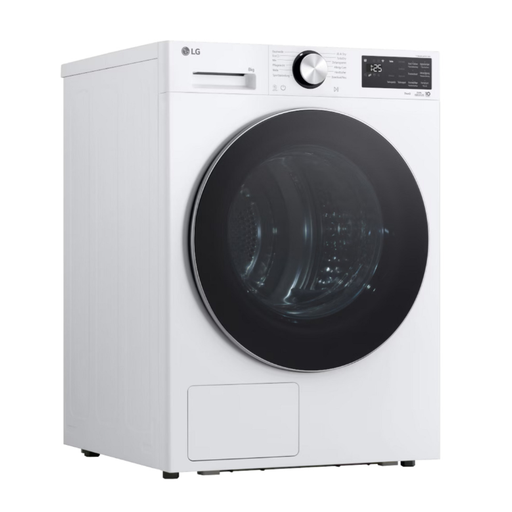
LG RT80X72W heat pump tumble dryer, 8 kg

LG RT80X72W heat pump tumble dryer, 8 kg

A cotton programme is listed, and you can compare the rated capacity of 8 kg with your usual cotton loads.

The stated figures are energy-efficiency class B, 85 kWh per 100 cycles, 91% condensation efficiency and 62 dB. The stated dimensions are 600 × 850 × 660 mm; a clearance of 1.140 mm is listed with the door open at 90°. The description specifies a self-cleaning condenser.

View at Joybuy
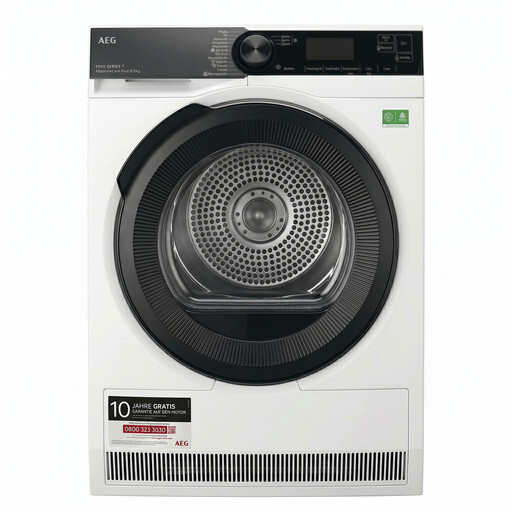
AEG TR9W75780 heat pump tumble dryer, 8 kg

AEG TR9W75780 heat pump tumble dryer, 8 kg

A cotton programme is listed for regular cotton loads, and the capacity is 8 kg.

For this model, AEG states energy-efficiency class B, 85 kWh per 100 cycles, 91% condensation efficiency and 63 dB. The stated dimensions are 850 × 596 × 657 mm.

View at Joybuy
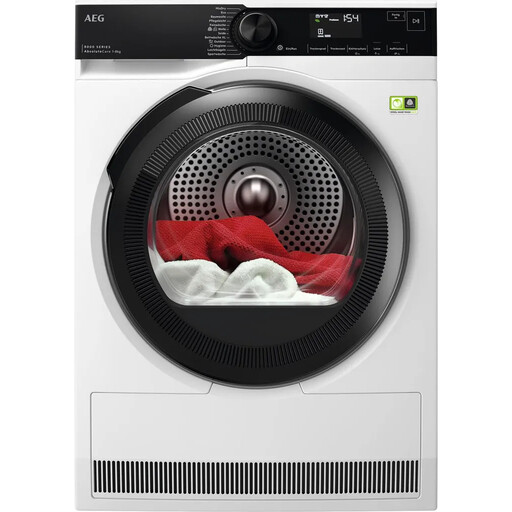
AEG TR8T75780 heat pump tumble dryer, 8 kg

AEG TR8T75780 heat pump tumble dryer, 8 kg

A cotton programme is listed. With an 8 kg capacity, you can check whether the drum suits your usual loads.

The description states energy-efficiency class B, 85 kWh per 100 cycles and 63 dB. The stated dimensions are 850 × 600 × 660 mm.

View at Joybuy
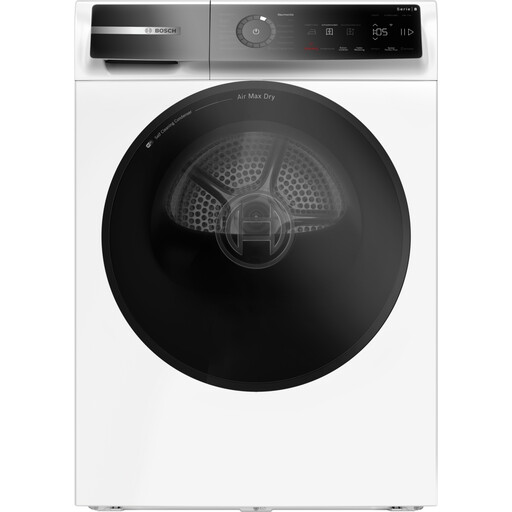
Bosch WRB247C40 heat pump tumble dryer, 9 kg

Bosch WRB247C40 heat pump tumble dryer, 9 kg

Cotton programmes and a capacity of 9 kg are listed. Compare the drum size with your usual loads.

The description states energy-efficiency class A, condensation-efficiency class A and 57 dB. The dimensions are 59,8 × 84,2 × 62,7 cm. Stacking is listed as an option; check approval for your washing machine and the stacking kit required.

View at Joybuy
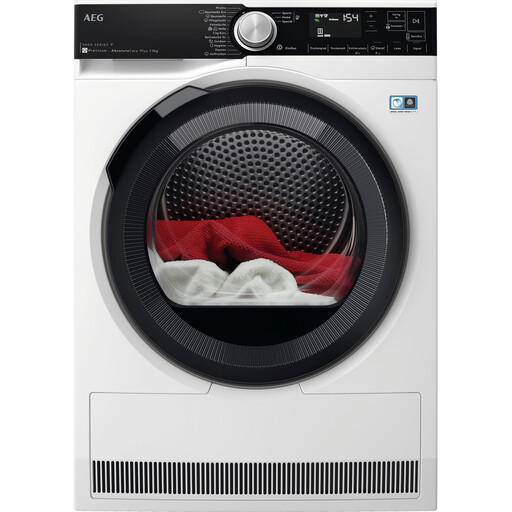
AEG TR9DW80690 heat pump tumble dryer, 9 kg

AEG TR9DW80690 heat pump tumble dryer, 9 kg

A cotton programme is listed; the 9 kg capacity may be useful for larger loads.

The stated figures are energy-efficiency class C, 106 kWh per 100 cycles, 91% condensation efficiency and 63 dB. The dimensions are 850 × 600 × 660 mm. The product description states that the appliance contains flammable refrigerant R290; do not damage the refrigerant circuit.

View at Joybuy

Frequently asked questions about drying clothes in small flats

Which energy-label figures matter most in a small flat?

For the specific tumble dryer, compare energy use in kWh per 100 Eco cycles, condensation efficiency, capacity, programme duration and Eco-programme noise. The Verbraucherzentrale explains the current A to G scale; older A+++ ratings aren’t directly comparable with today’s classes.

Can I simply put the tumble dryer on top of the washing machine?

No. Matching widths alone don’t confirm that the appliances are compatible. Check approval for both specific appliances and the stacking kit. Miele lists the compatible ranges and exceptions for the WTV 501.

What should I bear in mind when drying cotton?

Check the care labels on your textiles, choose a suitable programme, and clean the filters and condenser as instructed for your appliance. The German Environment Agency points out that thoroughly spinning laundry before drying reduces residual water, drying time and energy use.

Who is responsible if something goes wrong, and is a manufacturer’s guarantee the same thing?

When you buy as a consumer in the EU, you have statutory rights if goods are faulty, which you can exercise against the seller. The EU’s Your Europe consumer information states that these rights apply for a minimum of two years from the date you receive the goods. A voluntary manufacturer’s guarantee may offer additional benefits, but it doesn’t replace these rights.

What should I do with an old tumble dryer when buying online in Germany?

Old electrical appliances must be taken to authorised collection points or retailers required to take them back. Online retailers also have take-back obligations. Before buying, check what return or collection options are available for the specific large appliance.

Have older condenser dryers been banned since July 2025?

No, not across the board. According to the European Commission, the new EU ecodesign requirements apply to appliances newly placed on the market, not retrospectively to appliances placed on the market before 1 July 2025 that are still held in retailers’ stock.