If you have room for a separate tumble dryer, first check its dimensions, including the space needed to open the door, and whether the specific model has a function for small loads. You can then compare energy use using current EU energy labels. If there’s no space for a separate appliance, a washer-dryer may be an option, although the consumer advice centre notes that these use more electricity and water than separate appliances. If you’re stacking appliances, make sure the washing machine, tumble dryer and stacking kit are compatible.
Who is this buying decision relevant to?
Small flat with no space to dry clothes
If you don’t want a clothes airer taking up space in your living area all the time, first check whether a standalone tumble dryer or a stacked setup will fit in the space available. The German Environment Agency considers space requirements an important factor when choosing an appliance; Bosch says you should check compatibility when choosing a stacking kit.
Household that often dries small loads
If you regularly dry just a few items, check whether the specific model offers a load adjustment or a dedicated small-load programme. Bosch lists a ‘Half Load’ option for the WQA233C41; the German Environment Agency notes that a large tumble dryer that is often only half full may use more energy per kilogram.
Household mindful of energy use and indoor air quality
If you have room for the appliance, you can compare energy consumption, condensation efficiency and noise levels for the specific model. The consumer advice centre recommends looking at energy use per 100 drying cycles on the Eco programme; the EU label also includes information on condensation efficiency.
What matters when drying small loads in limited space?
| Buying priority |
What to check before buying |
Who is it most relevant to? |
| Space and installation |
External dimensions, including clearance for the open door; for a stacked setup, check that the appliances and stacking kit are compatible. |
If I have limited floor space, the appliance needs to fit securely in its intended position and the door must open for loading. Around 31% of consumers cite space as their main concern. |
| Small loads |
Compare your usual laundry load with the capacity and programme limits; check whether the specific model has a load adjustment or small-load option. |
If I usually dry just a few items, I want the programmes and load detection to suit those amounts. Around 31% of consumers cite small loads as their main concern. |
| Energy use |
Compare kWh per 100 Eco cycles and maximum load capacity using the same label basis; don’t compare old and new energy efficiency classes as if they were equivalent. |
If the appliance is used regularly, I want to consider its stated energy use alongside my usual load. Around 23% of consumers cite energy costs as their main concern. |
| Indoor air quality and noise |
Compare condensation efficiency and noise levels on the current label; follow the installation instructions for the specific room. |
If the tumble dryer is near living areas, I pay particular attention to its stated moisture emissions and operating noise. Around 15% of consumers cite indoor climate and noise as their main concern. |
Common buying misconceptions
-
Comparing the appliance’s depth with the space available, without allowing for the open door
You’ll need extra room to load and unload the appliance. For the Bosch WQA233C41, the manufacturer lists a depth of 613 mm and a depth of 1096 mm with the door open at 90°.
Measure the space in front of the appliance too. If you’re stacking appliances, also check that the stacking kit is suitable for that specific pair.
-
Assuming a large drum will dry small loads efficiently
The German Environment Agency notes that a large tumble dryer that is often only half full may use more energy per kilogram of laundry than an appliance running at a suitable load.
Choose a capacity that suits your usual loads as well as the occasional larger one, and check whether the specific model has functions for small loads.
If the drum is often only partly full, energy use per kilogram may be higher.
-
Assuming a washer-dryer is equivalent to two separate appliances
The amount of laundry that can be dried straight after washing may be lower than the washing capacity. The consumer advice centre says washer-dryers use more electricity and water than a separate washing machine and tumble dryer.
Compare the washing and drying capacities separately, then decide whether the space saved is worth the higher running costs for your household.
The higher electricity and water use cited by the consumer advice centre could make a difference during everyday use.
-
Comparing old and new energy efficiency classes directly
Since July 2025, tumble dryers have been rated under a new A-to-G scale on the EU energy label, with updated measurement and classification methods.
Compare current product information sheets on the same basis instead of directly matching an older A+++ rating to a current class.
Brands and models to consider
Beko
The DS73S2PA is a 7-kg heat pump tumble dryer with a stated depth of 50,8 cm. This could be a useful feature to check if you have a narrow space.
- Beko lists sensor drying and a noise level of 65 dBA for this model.
- Depth alone doesn’t guarantee that it will fit every space, or that it will use little energy with small loads. Claims about gentle drying come from the manufacturer.
Bosch
The WQA233C41 is an 8-kg model with a specifically listed ‘Half Load’ option – a useful feature to check if you often dry small loads.
- Bosch lists appliance dimensions of 842 × 598 × 613 mm and a depth of 1096 mm with the door open at 90°.
- The manufacturer does not describe this model’s condenser as self-cleaning. These features do not automatically apply to other Bosch models.
AEG
The TR7C40699 is a 9-kg model with ProSense load adjustment and a MixDry programme, which may be useful if you dry larger or mixed loads as well as small ones.
- AEG lists energy use of 103 kWh per 100 operating cycles and a noise level of 64 dB(A) for this model.
- The claimed time and energy savings from ProSense come from the manufacturer. A 9-kg capacity is not automatically an advantage if you only dry small loads.
Siemens
The WQ46B2D41 is a 9-kg model to consider if noise levels are important where you plan to install it.
- Siemens lists a noise level of 56 dB(A) and a self-cleaning condenser for this model.
- Its capacity and dimensions of 842 × 598 × 613 mm won’t automatically solve issues with small loads or limited space.
Miele
The TK100C WP is an 8-kg heat pump tumble dryer whose features and service options can be considered when comparing specific models.
- Miele lists DryProtect, FragranceDos, and delivery and installation options.
- Claims about fabric care and durability come from the manufacturer. They don’t provide a measured energy figure for drying a small load.
Joybuy products for small loads and limited space
The products below include standalone heat pump tumble dryers and a combined washer-dryer. Compare capacity and dimensions with your needs; for a washer-dryer, make sure you check the stated drying capacity separately.
 No image available
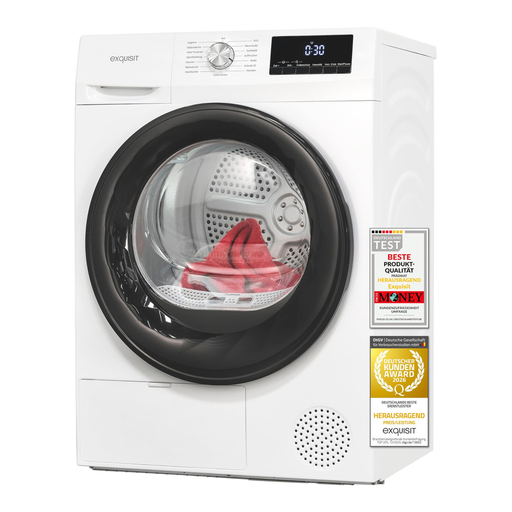
Exquisit 7-kg heat pump tumble dryer
The stated 7-kg capacity and Quick-30’ programme are useful points of comparison for smaller households.
15 programmes; appliance dimensions: 54 × 66 × 84,5 cm. The door is hinged on the left.
View at Joybuy
 No image available
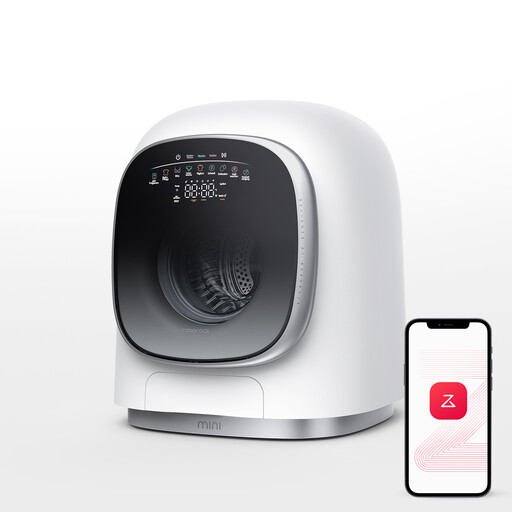
Roborock Zeo Mini washer-dryer
This combined washer-dryer could be an option if you only have room for one appliance and its small drying capacity suits your needs.
It has a stated washing capacity of 1 kg and drying capacity of 0,5 kg, plus more than 20 wash and dry programmes.
View at Joybuy
 No image available
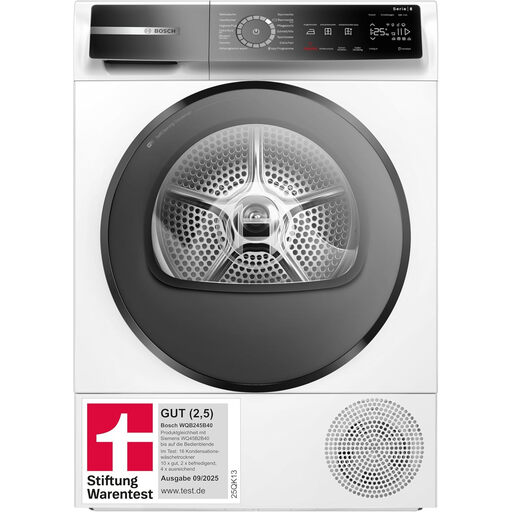
Bosch WQB245B40 Serie 8 heat pump tumble dryer, 9 kg
The stated Half Load option is worth checking if you also dry smaller loads.
The appliance is 613 mm deep; a depth of 1.105 mm is stated with the door open at 90°. Check that there’s enough space in front of the appliance.
View at Joybuy
 No image available
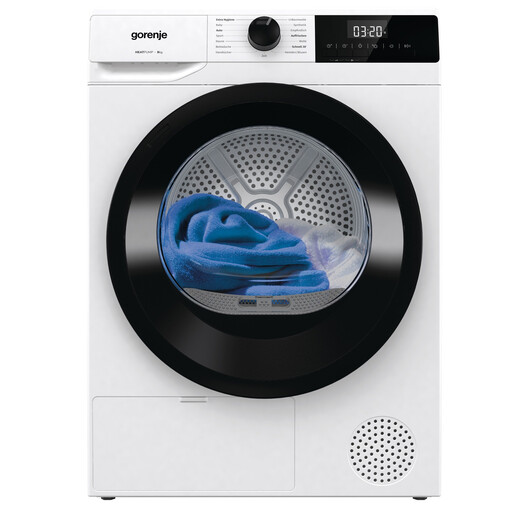
Gorenje DHNE82 heat pump tumble dryer, 8 kg
Compare the stated 8-kg capacity with your usual loads before deciding on the drum size.
15 programmes; appliance dimensions: 595 × 845 × 550 mm. The stated energy use is 119 kWh per 100 cycles, with a noise level of 64 dB. According to the product description, AutoDry ends the cycle when the selected dryness level is reached.
View at Joybuy
 No image available
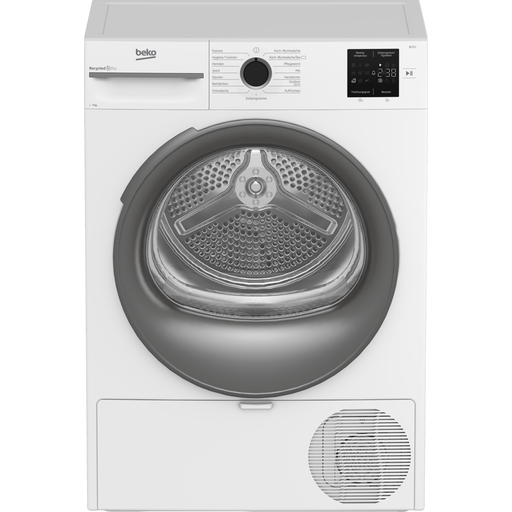
Beko BM3T37210W1 heat pump tumble dryer, 7 kg
The stated 7-kg capacity and sensor drying are features you can compare with your usual loads.
Appliance dimensions: 84,6 × 59,8 × 54,5 cm. The stated energy use is 1,33 kWh per cycle, with condensation efficiency of 82 % at full load.
View at Joybuy
Frequently asked questions
How do I compare the energy use of two tumble dryers?
Start by comparing the kWh per 100 Eco cycles on current EU energy labels, and take into account the load size you’ll actually use. The label figure isn’t a measurement for your specific small-load programme. Older A+++ classes cannot be compared directly with the A-to-G scale introduced in July 2025.
Can I simply put a tumble dryer on top of my washing machine?
No. Matching widths alone aren’t enough. Check the manufacturer’s approval and make sure the stacking kit is suitable for those specific appliances. Bosch explicitly requires a compatibility check for stacking kit 20007791.
What should I know about the water container and filters?
Check whether your model collects condensation in a container or drains it away. Also follow the instructions for emptying the container and cleaning the filters; not every model is listed as having a drain option.
What does the current EU energy label for tumble dryers mean?
Tumble dryers sold in the EU must meet requirements for energy labelling and ecodesign. Since 1 July 2025, the new energy label with its A-to-G scale has applied in shops and online. This does not mean buyers have to choose a particular minimum efficiency class.
What are my rights if a new tumble dryer is faulty in Germany?
Your statutory rights for faulty goods are against the seller and are separate from any voluntary guarantee. For ordinary consumer goods, § 438 BGB generally sets a two-year limitation period from delivery; the remedies available depend on the fault and the statutory requirements.


