Households with lots of small loads
If you often dry just a few items, check whether the specific model has programmes or settings for smaller loads.


For frequent small loads of laundry, a heat pump tumble dryer with documented load adjustment is a good choice. The maximum drum capacity alone tells you little about how a programme handles a small load. The Verbraucherzentrale (German Consumer Advice Centre) rates heat pump tumble dryers as more energy-efficient than condenser dryers. Short programmes are only suitable for the fabrics and load sizes specified for them.
If you often dry just a few items, check whether the specific model has programmes or settings for smaller loads.
If you use your tumble dryer regularly, consider the Eco programme’s energy use alongside its duration and how you actually use the appliance. The Verbraucherzentrale recommends taking energy consumption into account when buying.
Check the appliance dimensions, installation guidance and the space needed to access the filter and water tank. If you’re considering a washer-dryer, also check its drying capacity; the Verbraucherzentrale highlights differences compared with separate appliances.
If you often dry small loads, check programme adjustment, energy use and the limitations of short programmes separately.
| What matters | What to check before buying | Who is this important to? |
|---|---|---|
| Adjustment for small loads | Check whether the model offers a half-load option, automatic load adjustment or moisture control, and what load size is specified for the programme you want to use. | If I often dry just a few items, I want to know whether the programme takes the actual load into account. For around 31% of consumers, adjusting to small loads is the top priority. |
| Energy use with frequent operation | Compare the current energy label and consumption in kWh per 100 Eco cycles, and also consider programme duration and maximum load capacity. The European Commission lists these figures as a basis for comparing tumble dryers. | If I dry clothes regularly, I want to understand the energy use without assuming the label figure applies to every small load. Around 25% of consumers put energy use first. |
| Shorter waiting times | Check the manual to see which fabrics and load limits the short programme is designed for. | If I need individual items again soon, it matters whether a short programme is suitable for their specific fabric and load size. Shorter waiting times are the top priority for around 19% of consumers. |
| Gentle fabric care | Check care labels and the specific model’s guidance on mixed loads, delicates and moisture control. | If a small load contains different fabrics, I want to be able to choose a programme that suits their care labels. For around 13% of consumers, fabric care comes first. |
| Space and access for maintenance | Compare the appliance dimensions and installation guidance, and check that the filter, water tank and, where applicable, drain are easy to reach. | If space is limited, I want to check in advance that the appliance and maintenance access will fit in the intended location. For around 12% of consumers, available space is the top priority. |
The capacity in kilograms shows the maximum load. It doesn’t tell you whether a particular programme adjusts its running time or settings for a small load.
Check the specific model for a half-load option, automatic load adjustment and the permitted load size for each programme.
Manufacturers specify short programme times for particular fabrics and load sizes. A short programme is therefore not a blanket guarantee that it’s suitable for towels, delicate fabrics or a full drum.
Check the care label and programme description. Bosch describes “Extra Kurz 40” as suitable for small loads of lightweight fabrics and synthetics.
Since 1 July 2025, household tumble dryers covered by EU rules have used the A to G scale. Figures from the previous scale and information for other appliance categories are not directly comparable.
Check the current label and compare tumble dryers in the same appliance category and on the same programme basis. The European Commission gives the date the A to G scale came into effect; washer-dryers are covered by different rules.
A washer-dryer can save space by combining two appliances. According to the Verbraucherzentrale, the amount it can dry at once may be less than the wash load; the combination appliance also uses more electricity and water than separate appliances.
Consider a washer-dryer mainly if saving space is a deciding factor, and check its washing and drying capacities separately.
The WQA233C9K heat pump tumble dryer is listed with Auto Dry and a half-load option.
For its WQ33G2D41 heat pump tumble dryer, Siemens lists autoDry, a 40-minute programme and a half-load option.
The TR7TE86 heat pump tumble dryer features ProSense, MixDry and SpeedDry, according to AEG.
The B3T41230 heat pump model has a stated capacity of 7 kg.
For its 8 kg MD110H80B-E heat pump tumble dryer, Midea lists sensor drying and a 35-minute quick programme.
The Joybuy products below are heat pump tumble dryers with different stated capacities, some of which have listed short programmes or load adjustment features. Check the programme conditions for the specific model, fabrics and load size.
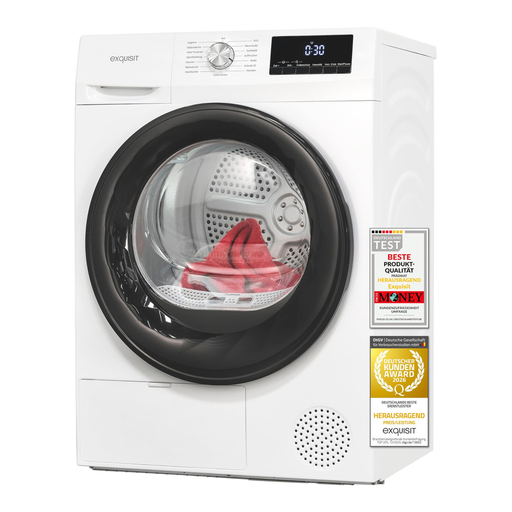 Image unavailable
If you’re looking for a stated short programme for suitable fabrics, Quick-30' is listed. Check the programme conditions for your load.
The product details list 15 programmes and a start delay of 4–24 hours.
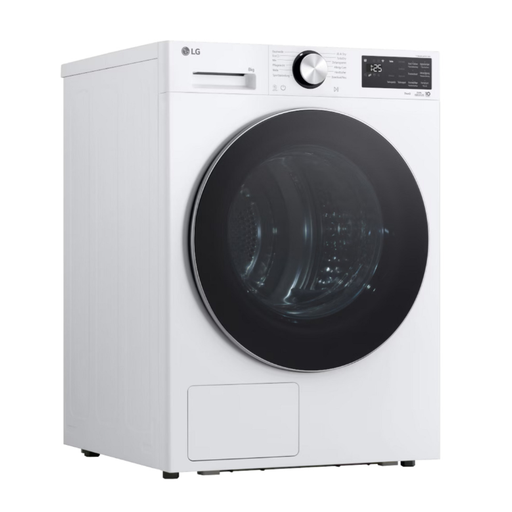 Image unavailable
If your load sizes vary, the product description lists AI Dry, which adjusts the drying process to the size of the load.
A half load is listed as taking 152 minutes and using 0,71 kWh. The model has an energy efficiency rating of B.
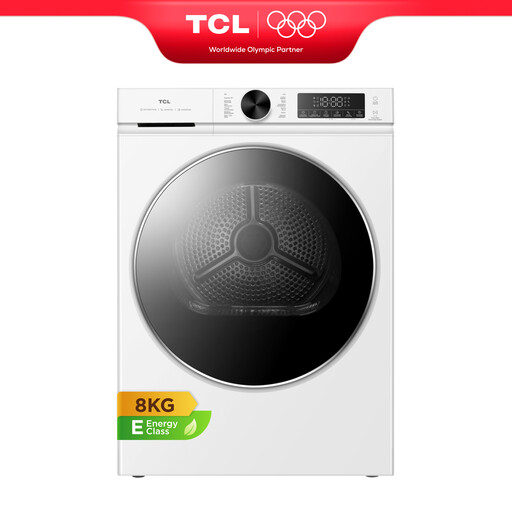 Image unavailable
If a short drying cycle might suit your needs, Quick Dry is listed as taking up to 30 minutes. Check that the programme is suitable for the fabric and load size.
The product details list Auto Dry and an energy efficiency rating of E.
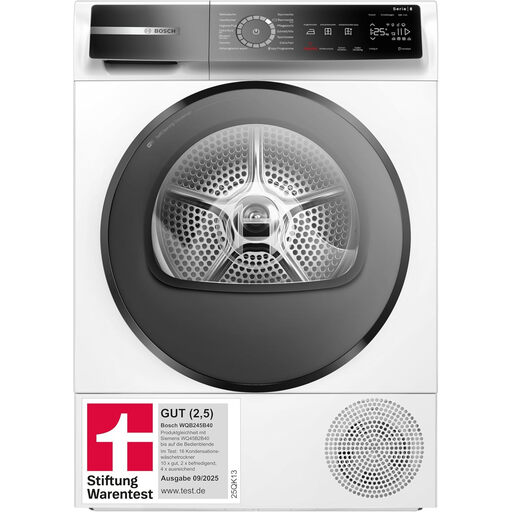 Image unavailable
If you dry smaller loads, a half-load option is listed for this model. Check the running times for the relevant programmes.
The Eco programme is listed as taking 2 hours 5 minutes for a half load. The model has an energy efficiency rating of C.
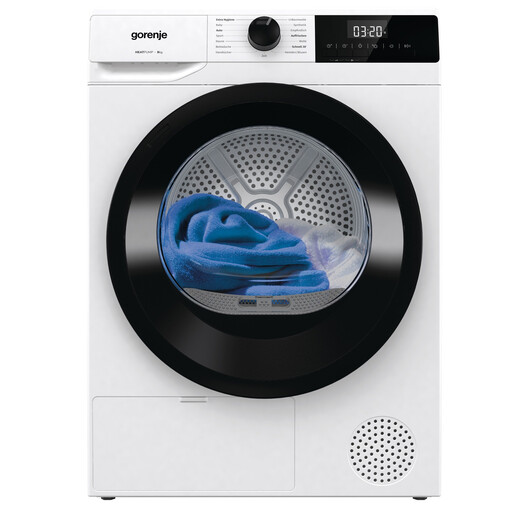 Image unavailable
If you’re looking for a shorter programme for a suitable load, Speed 30' is listed. Check the programme description to make sure it’s suitable for your fabrics.
This freestanding model lists 15 programmes, AutoDry and AutoDrain.
No. Check the supported load sizes and moisture control for your preferred programmes. The stated capacity is the maximum load, not an indication that every programme is suitable for every small load.
It shows consumption in kWh per 100 drying cycles on the Eco programme under standardised conditions. The figure helps you compare models, but it doesn’t predict the energy use of your individual small load or a short programme.
No. The fabrics and load limits specified in the manual for the particular programme are what matter. A small load doesn’t automatically mean that every item is suitable for a short cycle.
Check the dimensions, installation guidance and condensate drainage instructions in the manual for the specific model. Clean the lint filter and, where applicable, the condenser as instructed in the manual. The Verbraucherzentrale warns that lint build-up can pose a fire risk.
Since 1 July 2025, household tumble dryers covered by EU rules have used the A to G scale. The European Commission gives this date; washer-dryers are covered by different rules and shouldn’t be compared using the same appliance category.