
Lieferung heute & morgen

Qualitätsgarantie

Willkommens-Angebote freischalten: KOSTENLOSE Lieferung | Bis zu 80 % RABATT | Kostenlose 30-Tage-JoyPlus-Testphase
App herunterladen
Finding authentic Turkish sweets can be a challenge, especially with the vast selection available online. Many lovers of Turkish cuisine want to enjoy the genuine taste of lokum or halva but are unsure which products meet their quality standards. This article serves as a guide. It introduces objective criteria for your selection and presents a curated list of products to make your decision easier.
To find products that meet your expectations, it's helpful to consider a few key aspects. The following points can guide your selection.
A careful review of the ingredients list reveals the quality of a confection. Traditional lokum, often known as "Turkish Delight," is typically made from sugar, water, and starch. High-quality versions contain a high proportion of real nuts like pistachios or hazelnuts. The term Fistikli Lokum, for example, specifically refers to the use of pistachios. Look for clear information on the nut content and the absence of excessive artificial flavours.
The world of Turkish confectionery is diverse. The two most famous types are lokum and halva, which differ fundamentally in texture and main ingredients.
The demand for reduced-sugar alternatives is also growing in the confectionery space. Some manufacturers offer products made with sweeteners instead of conventional sugar. An example of this is Koska Sugar-Free Halva, which is suitable for individuals who want to consciously manage their sugar intake.
Based on the criteria mentioned above, we have compiled a selection of products that cater to different tastes and preferences.
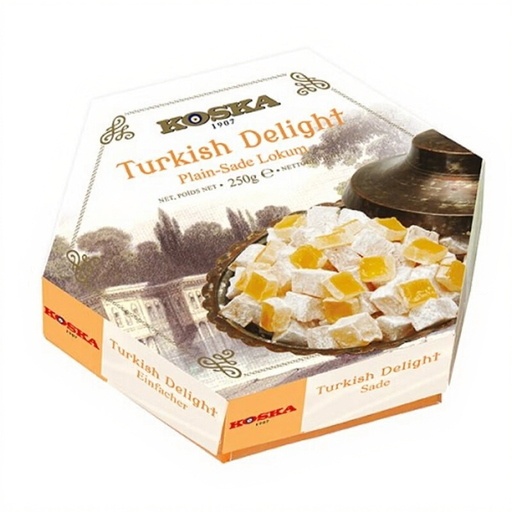
This product from KOSKA represents the classic version of Turkish lokum. The soft consistency of the confection is complemented by the addition of whole pistachios, creating a balanced mouthfeel that is both tender and crunchy.

This variety offers a flavourful alternative to pistachio lokum. Here, roasted hazelnuts are combined with the soft confection and coated in coconut flakes, which adds an extra layer of flavour.
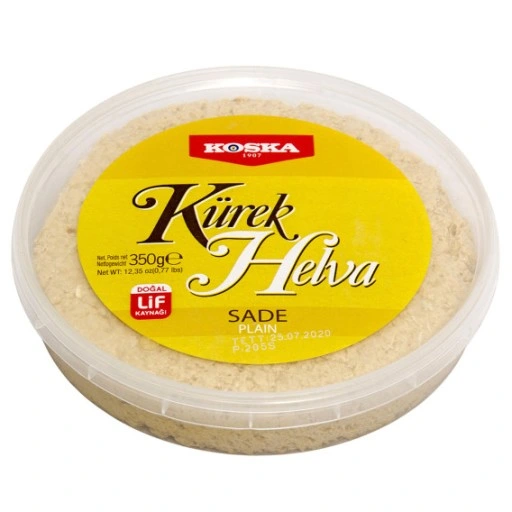
This product is aimed at consumers who enjoy the intense flavour of halva but want to avoid added sugar. The sweetness is achieved through a blend of sweeteners such as maltitol syrup, isomalt, and sorbitol.
The products featured here offer a glimpse into the world of Turkish confectionery. However, you might be looking for different flavours or wish to combine various delicacies to create a custom Sweets Box. In our broader assortment, you will find more options that may suit your preferences.
Explore our entire range of Natural Sweets and find more specialities for any occasion.
The main difference lies in their basic ingredients and texture. Lokum is a soft, gel-like confection based on starch and sugar, often infused with nuts or flavours like rosewater. Halva, on the other hand, is a firmer, often crumbly sweet typically made from sesame paste (tahini) and sugar or sweeteners.
Both sweets should be kept in a cool, dry place in an airtight container. Storing them in the refrigerator is not recommended, as the cold can alter the texture: lokum can become hard, and halva can lose its crumbly consistency. The flavour and texture are best preserved at room temperature.
Yes, some varieties are specifically developed for a reduced-sugar diet. An example is the Koska Sugar-Free Halva, which uses sweeteners instead of sucrose. When buying, it is important to check the product description and ingredients list for terms like "no added sugar" or the names of the sweeteners used.