People who share their LPs
If several people will be playing folk LPs, a fully automatic turntable can make things easier. Audio-Technica and Sony describe automatic features on the models mentioned here.


When choosing a turntable for folk LPs in a shared living space, the main considerations are which speakers you already have and whether several people need to use the turntable easily. A fully automatic model with the right phono or line signal path can work with existing speakers. Models with built-in speakers save you from buying separate components, but their placement is tied to where you put the turntable. Passive speakers also need an amplifier.
If several people will be playing folk LPs, a fully automatic turntable can make things easier. Audio-Technica and Sony describe automatic features on the models mentioned here.
If you want to connect your turntable to existing speakers or an amplifier, check that the phono or line signal path matches your active or passive speakers. Audio-Technica and Sony list relevant connection features for some of their models.
If you want to keep the number of separate components in your shared living space to a minimum, consider a model with built-in speakers. Lenco notes that the LS-430BK's speakers cannot be positioned independently of the turntable.
First, check the signal path to your existing speakers. Then decide whether easy, automatic operation or a setup with as few separate components as possible matters more in your shared space.
| What you need | What to look for | Who is it important to? |
|---|---|---|
| Connecting to speakers | Make sure the inputs and outputs, active or passive speakers, and phono or line settings are compatible. | I want to connect the turntable to my existing system and need the right signal path. Around 33% of consumers prioritise connecting to existing speakers. |
| Easy operation | Check whether start, stop and tonearm return are automatic. An automatic stop alone does not necessarily mean the turntable is fully automatic. | When different people play LPs, I want to keep tonearm adjustments to a minimum. Around 27% of consumers prioritise ease of use. |
| A stable position | Choose a stable, level surface away from direct speaker vibrations. | I need a spot where the turntable and speakers won't transmit vibrations directly to each other. Around 20% of consumers prioritise a quiet, suitable location. |
| Fewer separate components | Check whether the turntable has built-in speakers and which way any Bluetooth function works. | I want to listen to folk LPs without setting up a separate pair of speakers. Around 20% of consumers prioritise a simple setup with as few components as possible. |
For the Lenco LS-430BK, the manufacturer describes Bluetooth streaming from a phone to the built-in speakers. Sony, on the other hand, describes the PS-LX310BT as connecting to Bluetooth speakers.
Before buying, check specifically that Bluetooth supports the signal direction you need.
A phono preamplifier prepares the cartridge signal. Passive speakers also need an amplifier.
Check the entire signal path from the turntable to the speakers before choosing a model.
Direct vibrations from speakers can affect how the stylus tracks the record.
Choose a stable, level surface and don't place the turntable right next to speakers that vibrate.
The AT-LP60X and AT-LP70XBT are automatic turntables. The AT-LP70XBT also offers Bluetooth output.
The PS-LX310BT combines automatic operation with phono and line outputs, as well as Bluetooth.
The LS-430BK is designed for playback through four built-in speakers.
According to the manufacturer, the PLATINUM Automatic EAS offers several connection options and an automatic stop at the end of a record.
The Joybuy models below include fully automatic turntables with connections for external speakers, as well as models with built-in speakers.
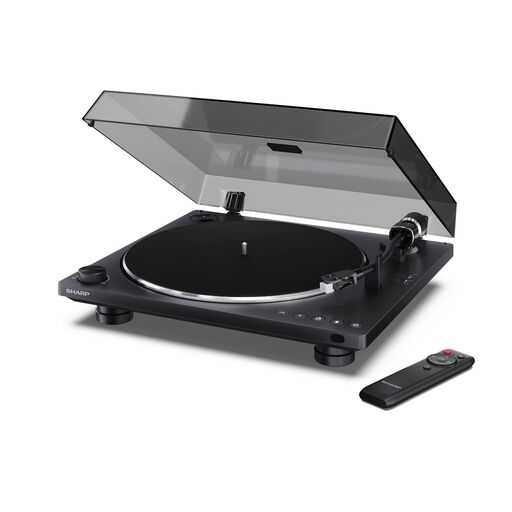 No image available
For listening together through external speakers: the product description specifies Bluetooth output to compatible speakers or headphones.
It also lists Bluetooth 5.4, USB-C recording, RCA outputs and a built-in preamplifier.
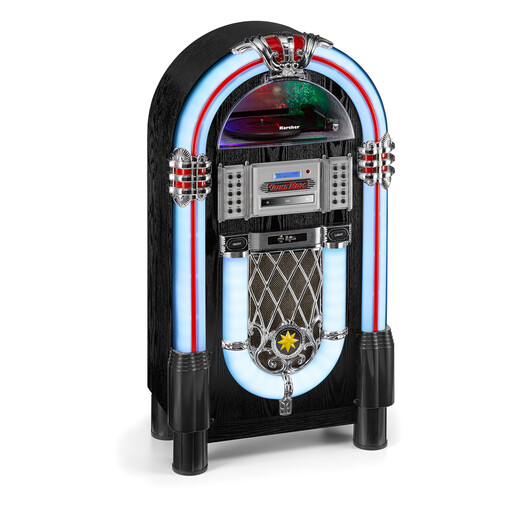 No image available
For a setup without a separate pair of speakers: the product description specifies two built-in stereo speakers.
According to the description, the turntable supports 33, 45 and 78 rpm. Other listed playback sources include CD, DAB+, FM, USB and SD card.
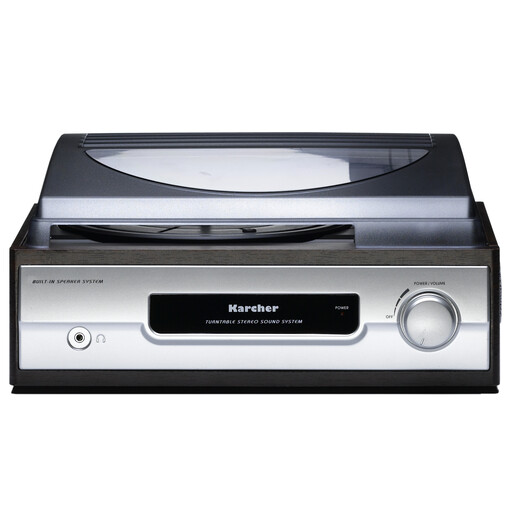 No image available
For folk LPs without a separate pair of speakers: the product description says this model has built-in stereo speakers.
Features listed include 33 and 45 rpm, auto-stop, a headphone socket and an RCA line output. Auto-stop is not the same as fully automatic operation.
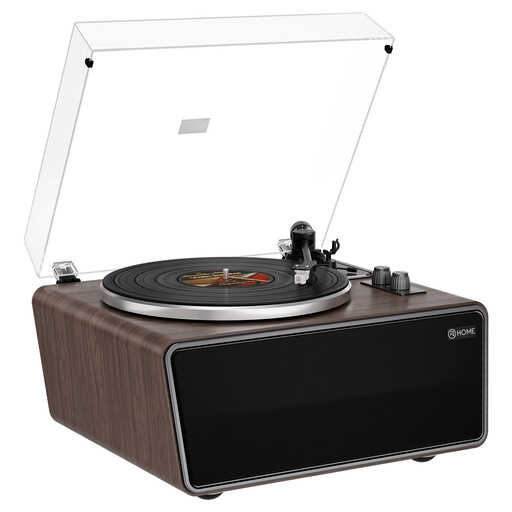 No image available
If you don't plan to use a separate pair of speakers, the product description specifies a built-in four-channel speaker system.
Features listed include an AT-3600L-MM cartridge, phono/line RCA outputs, an AUX input and USB recording. The description lists records in 7, 10 and 12-inch sizes, as well as 33 1/3 and 45 rpm.
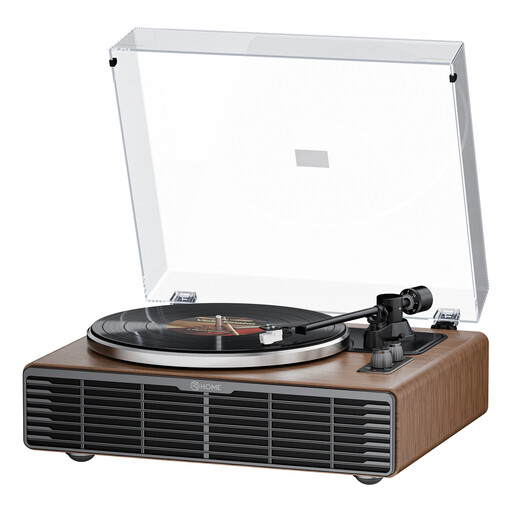 No image available
For a compact setup, the product description specifies four built-in speakers. RCA phono/line outputs also provide a connection for external equipment.
Features listed include an AT3600L cartridge, belt drive, and 33⅓ and 45 rpm. Check which signal direction the Bluetooth function on this specific model supports.
Yes, provided the output and input are compatible and the signal path includes a phono preamplifier if one is needed. Audio-Technica specifies a switchable preamplifier for the AT-LP60X and says it can connect to active speakers. Passive speakers also need an amplifier.
Place it on a stable, level surface, not directly on or right next to speakers that vibrate. Audio-Technica gives this placement advice, but it is not a guarantee that the stylus will never skip.
Check whether the model can send LP audio to Bluetooth speakers, or whether Bluetooth is only an input for music from your phone. For the LS-430BK, Lenco describes streaming from a phone to the built-in speakers; Sony specifies a connection to Bluetooth speakers for the PS-LX310BT.
Ortofon recommends gently removing dust and cleaning the stylus towards its tip with a suitable fibre brush. The manufacturer advises against using solvents on the stylus or record surface. You should also follow the instructions for the specific cartridge you use.
Your Europe, the European Union's consumer portal, explains that for most online purchases from traders, you generally have a 14-day right to cancel from the date of delivery. Exceptions and rules on return costs apply. Separately, faulty goods are covered by the statutory guarantee, which the portal says lasts for at least two years.