Listeners short on space
You’ll need a dry, stable spot with enough room to open the dust cover. Dual gives the CS 329 a height of 390 mm with the dust cover open.


A fully automatic turntable is a practical choice for listening while you cook, as long as its connections are compatible with your existing system. A manual turntable may suit you better if you want to set it up yourself and have more control over its adjustments. First, find a dry, stable surface with enough room to open the dust cover. Manufacturer figures for speed stability cannot be treated as a direct sound comparison unless they use the same measurement method.
You’ll need a dry, stable spot with enough room to open the dust cover. Dual gives the CS 329 a height of 390 mm with the dust cover open.
You want to understand speed-stability figures and adjustment options without treating figures from different manufacturers as a direct listening comparison. Audio-Technica explains the terms used for speed fluctuations, while Pro-Ject lists adjustable feet for the Debut EVO 2.
You put on LPs while cooking or eating and want to keep hands-on adjustments to a minimum, with connections that work with your existing system. Depending on the model, Audio-Technica, Dual and Sony describe automatic operation and different connection options.
First, check where you’ll put the turntable and which inputs you have available. Then decide whether automatic operation or greater control over setup matters more to you.
| What you’re looking for | What to check | Who is it important for? |
|---|---|---|
| A safe place to set it up | A dry, stable surface away from the sink and hob, with room to open the dust cover. Dual gives the CS 329 a height of 390 mm with the dust cover open. | If the turntable needs to fit into a compact kitchen-diner, I need a dry spot and enough clearance for the dust cover. Around 25 % of consumers put a safe place to set it up first. |
| Speed stability and adjustments | Check the speeds available for your LPs, how the speed-stability figure is defined, and the adjustment options on the specific model. Figures based on different measurement methods aren’t directly comparable. | If I listen to longer classical pieces, I want to be able to assess speed stability and adjustment options. For around 25 % of consumers, speed stability is the main factor in their buying decision. |
| Easy operation while you do other things | Check whether starting, stopping and returning the tonearm are automatic, and what you’ll still need to do when turning the record over. | If I play music while cooking or eating, I want to do as little as possible at the turntable. Around 20 % of consumers prioritise ease of use. |
| Connecting to your system | Check that your speakers or amplifier inputs match the specific model’s phono, line and, where available, Bluetooth outputs. | If I want to keep using my existing speakers or amplifier, the signal path needs to be compatible. Around 20 % of consumers prioritise connection compatibility. |
| Stylus care and replacements | Check the care instructions, which replacement stylus is compatible, and whether the stylus and cartridge can be replaced separately. | If I want to use the turntable for a long time, I need to know how to care for the stylus and replace it when necessary. Around 10 % of consumers put maintainability and spare parts first. |
A dust cover is no substitute for a dry location. Audio-Technica’s AT-LP70XBT manual warns against moisture, dripping water and splashes. You’ll also need to make sure the cover can be opened if the turntable is in a tight space.
Choose a safe spot first, then check the surface area and clearance with the dust cover open.
Phono and line signals need compatible inputs. A phono preamp also doesn’t replace the amplifier required by passive speakers.
Make a note of the inputs you have, then check whether the turntable has a suitable preamp and how to set its switch. Audio-Technica recommends using active speakers or an amplifier with its turntables.
Wow and flutter describe variations in rotational speed. Unless the figures use the same definition and measurement basis, a difference between the numbers doesn’t prove a corresponding difference in sound.
Check which measurement method is stated, and only compare figures when the conditions match.
Audio-Technica lists VM95-series styli for the AT-LP70XBT; according to the manufacturer, the cartridge is integrated into the tonearm.
For the specific model, check separately whether the stylus, cartridge or other parts can be replaced.
The AT-LP70XBT combines fully automatic operation with Bluetooth and a switchable phono preamp.
According to Sony, the PS-LX310BT offers fully automatic operation, Bluetooth, and phono and line outputs.
The CS 329 combines fully automatic operation with a choice of phono or high-level connection.
The Debut EVO 2 is a manual turntable with a pre-fitted cartridge and adjustable feet.
The DP-300F is a fully automatic option with a switchable phono preamp.
The Joybuy products below range from Bluetooth turntables with automatic operation to all-in-one systems. Check each model individually to make sure its operation, connections and footprint suit your kitchen-diner.
 No image available
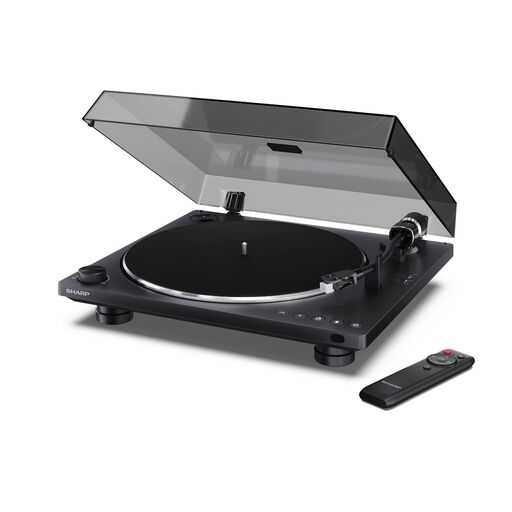
An option if you want automatic operation and Bluetooth for listening while you do other things.
The product name lists Bluetooth 5.4, USB-C recording, an Audio-Technica cartridge and a dust cover.
 No image available
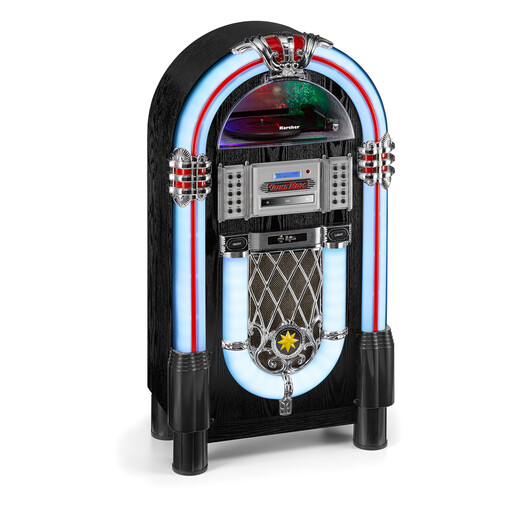
An option if you want a single device that plays more than just records.
The product name also lists CD playback, Bluetooth audio streaming, FM and DAB+ radio, and MP3 playback via USB or SD card.
 No image available
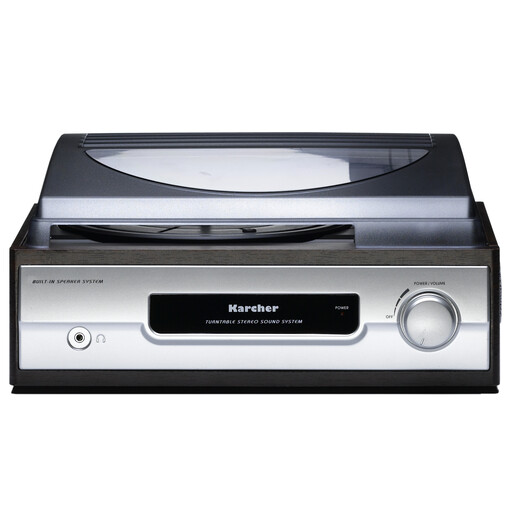
An option if you want to listen to LPs without a separate pair of speakers.
The product name lists built-in stereo speakers, playback at 33 and 45 rpm, auto-stop, a headphone socket and a line output.
 No image available
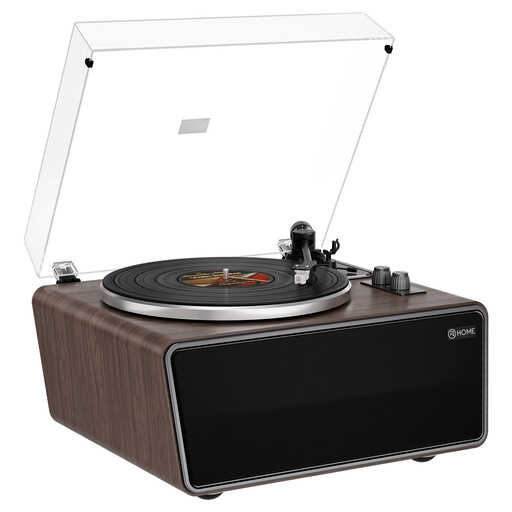
An option if you’re looking for a turntable with built-in speakers and a phono preamp.
The product name lists four built-in speakers and an AT-3600L (MM) cartridge.
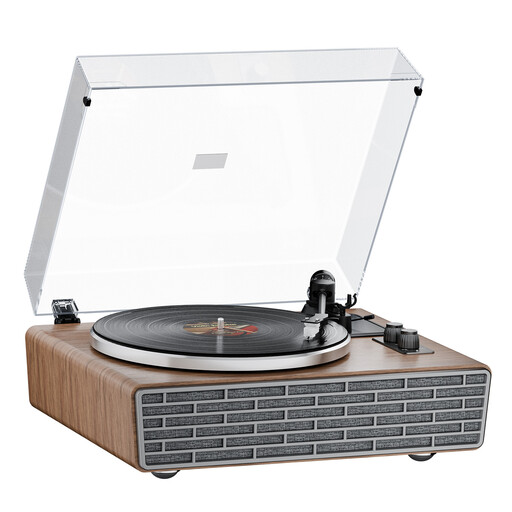 No image available
An option if you’re looking for a turntable with built-in speakers and Bluetooth.
The product name lists four built-in speakers, a transparent dust cover, belt drive and an AT cartridge.
Choose a spot where the turntable won’t be exposed to moisture, splashes or excessive heat. Audio-Technica’s manual specifically warns against moisture, dripping water and splashes for the AT-LP70XBT; that doesn’t mean every spot in a kitchen-diner is unsuitable.
Passive speakers need an amplifier; a phono preamp doesn’t do the same job. For its turntables, Audio-Technica recommends active speakers or an amplifier for playback. Also check that the phono or line output matches the input.
Follow the instructions for the specific stylus and cleaning product you’re using. For the brush method described, Audio-Technica advises against brushing across the stylus from side to side, as this could damage the cantilever.
Not necessarily. A manual turntable may suit you better if you want to handle the setup yourself; a fully automatic model takes some of the operating steps off your hands. Only compare speed-stability figures if the definitions and measurement methods match, and don’t assume one sounds better based on different manufacturer figures alone.
A fully automatic model can reduce the number of steps needed to start and stop playback, provided the specific model offers these features. Also check what you’ll still need to do when turning the record over, and whether the connections work with your existing system.