Loft listeners with an existing system
If you want to play your collection through existing speakers or an amplifier, you’ll need a suitable phono or line signal path and a suitable place to set up your turntable.


For a loft, the right turntable for your collection needs a level surface with as little speaker vibration as possible, and a phono or line signal that works with your existing system. Audio-Technica recommends this set-up in its AT-LP70XBT manual. If you want to make playing records more convenient, consider a model with confirmed fully automatic operation; a manual turntable such as the AT-LP120XUSB may suit you if you want to adjust settings yourself or make USB recordings. For 78 rpm records, you’ll also need a stylus specifically designed for them – the correct speed alone isn’t enough.
If you want to play your collection through existing speakers or an amplifier, you’ll need a suitable phono or line signal path and a suitable place to set up your turntable.
If you play records frequently, it’s important to choose between automatic and manual tonearm operation.
If your collection includes 78 rpm records, check that the stylus is suitable as well as confirming the turntable’s speed.
First, work out where your turntable can go and how it will connect to your system. Then consider ease of use and the record formats you play.
| What matters | What to check when buying | Who should pay particular attention? |
|---|---|---|
| A stable, vibration-resistant surface | Check the dimensions of the turntable, the space needed with the dust cover open and whether you have a level spot away from vibrating speakers. | If I need to fit my turntable into an open-plan loft, I need a suitable, preferably quiet surface. Around 34% of consumers prioritise where to place it. |
| Connecting to your system | Match the phono and line inputs on your existing equipment to the turntable’s output; passive speakers need an amplifier. | If you want to keep using your existing system, you’ll need to choose a compatible signal path. Around 33% of consumers focus first on connecting to their system. |
| Operation and maintenance | Check automatic start and return separately, and consider the cartridge and compatible replacement styli. | If I change records often, I want to know what the turntable will do for me and what I’ll need to do myself. Around 20% of consumers put ease of use first. |
| Record formats | Check the speeds of your records; for 78 rpm records, also make sure the stylus is specifically designed for them. | If you have records in different formats, the stylus needs to suit the type of record as well as the speed. Around 13% of consumers prioritise format compatibility. |
An incompatible signal level can make the sound too quiet or distorted. You should also avoid connecting two phono stages in series.
Make a note of the inputs and outputs on your equipment, then check the relevant manuals to see which settings to use for the connection.
Depending on your existing system, you may need an external phono preamp.
Vibrations and sound pressure can affect playback; feet designed to absorb vibration alone don’t guarantee a suitable set-up.
Choose a level spot as far away from the speakers as possible, and check the dimensions with the dust cover open too.
Supporting a particular speed and having a suitable stylus are two different requirements.
Check the record type and stylus compatibility together. Audio-Technica has a dedicated SP stylus in its VM95 series for compatible 78 rpm records.
The PS-LX310BT is worth considering if you want fully automatic operation and the choice of wired or Bluetooth output.
The CS 329 is an option if you want a fully automatic turntable with a phono or high-level connection.
The manual AT-LP120XUSB is a good fit if you want to adjust the tonearm and use USB and three playback speeds.
The TT-S303 is a classic, manually operated option for a compatible wired Hi-Fi system.
The SL-1500CEG-S may suit you if you want to combine direct drive, an integrated phono EQ and automatic tonearm lift.
These Joybuy turntables offer a range of connection options and speaker set-ups for playing your vinyl collection.
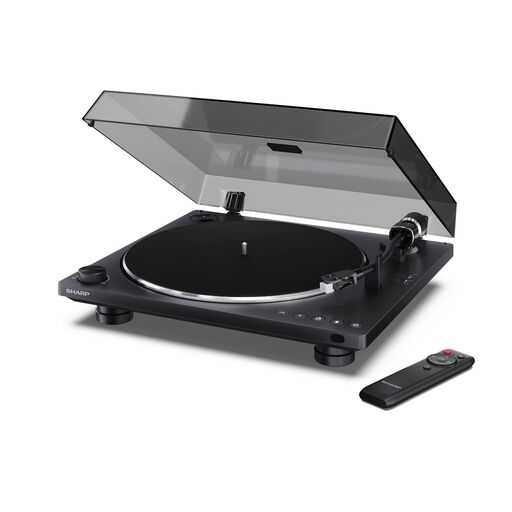 Image unavailable
An option if you want to keep the number of steps involved in playing a record to a minimum.
Features listed include fully automatic operation, Bluetooth 5.4 and USB-C recording.
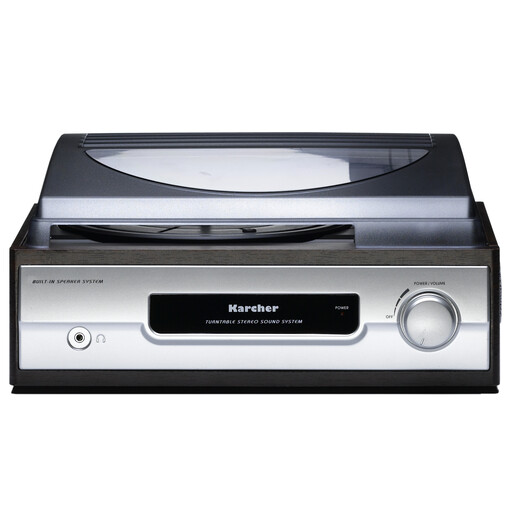 Image unavailable
An option if you want to listen without a separate pair of speakers.
The product title lists built-in stereo speakers, 33 and 45 rpm, auto-stop, a headphone socket and a line output.
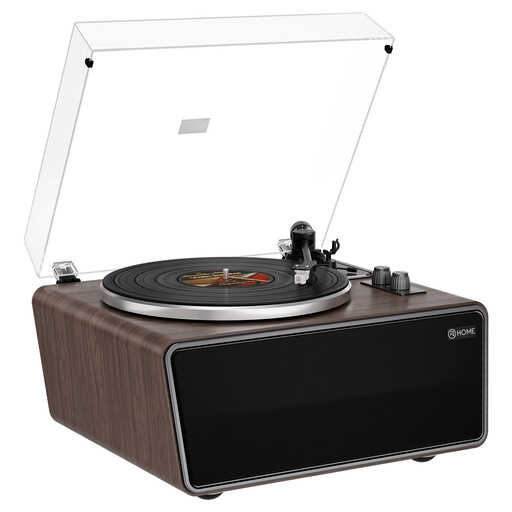 Image unavailable
An all-in-one option for listening without separate speakers.
Features listed include four built-in speakers, a phono preamp and an AT-3600L MM cartridge; the variant is described as Black Walnut.
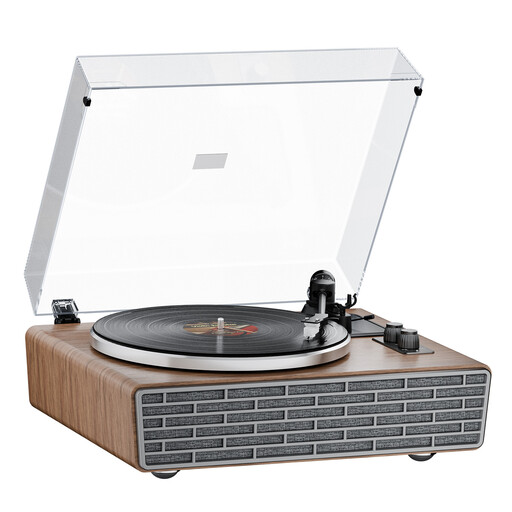 Image unavailable
An option if you’re looking for a turntable with built-in speakers and Bluetooth.
The product title lists four speakers, belt drive, an AT cartridge and a transparent dust cover.
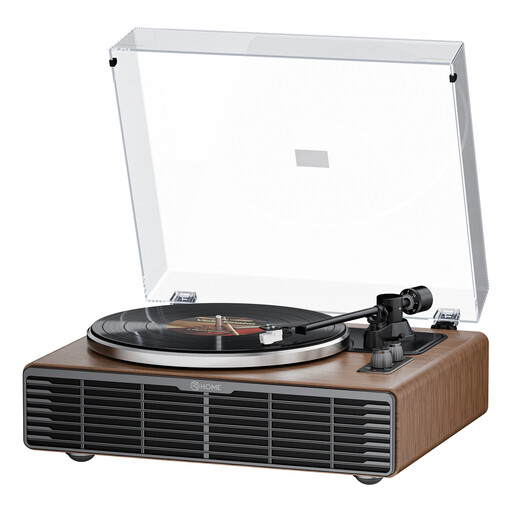 Image unavailable
An option if you want to combine built-in speakers with a connection to a compatible system.
The product title lists Bluetooth, four speakers, belt drive, an AT3600L cartridge, an RCA phono/line output and a clear dust cover.
For a suitable line or aux input, set any switchable preamp to line. For a phono input, select the phono setting. Passive speakers also need an amplifier. Check the manual for the specific equipment you’re using.
Choose a level surface and leave some distance from speakers whose vibrations could reach the turntable. Audio-Technica gives this set-up advice in its AT-LP70XBT manual. Also measure the available surface and allow room for the chosen model’s dust cover.
Follow the care instructions for your stylus and cartridge. For its cleaning fluid, Audio-Technica recommends brushing gently from back to front rather than moving the brush from side to side.
When you buy from a business as a consumer, you’re generally entitled to a statutory warranty for at least two years from receiving the goods; your point of contact is the seller. A voluntary manufacturer’s guarantee is separate. EU consumer rules don’t apply in the same way to private purchases.
No. The German Environment Agency explains that old electrical equipment must be collected separately from unsorted household waste. It lists local collection points among the disposal options.