Soundtrack fans with an existing audio system
If you want to keep using your amplifier, check whether it has a phono input or whether the turntable comes with a suitable phono stage.


The key is to choose a turntable with speeds and a phono or line signal path that suit your records and audio system. Then decide between fully automatic and manual operation. In a loft, place the turntable on a level surface away from your speakers. If you have shellac records that play at 78 rpm, check that the stylus is suitable for your cartridge too.
If you want to keep using your amplifier, check whether it has a phono input or whether the turntable comes with a suitable phono stage.
You’ll need a level surface away from your speakers. If you change records often, it’s also worth checking which steps the automatic functions handle for you.
Check the formats in your collection. Records played at 33⅓ and 45 rpm have different requirements from any shellac records you may own that play at 78 rpm, for which you’ll also need a suitable stylus.
Start by checking your record formats and signal path, then consider where you’ll put the turntable and how you want it to work day to day.
| Priority | What to check before buying | Who is it important to? |
|---|---|---|
| Connecting to your audio system | Audio-Technica lists a switchable phono stage for the AT-LP120XUSB; the Pro-Ject Debut Carbon EVO manual calls for a phono stage in the amplifier or a separate unit. Check that the inputs and outputs on both devices are compatible. | If I want to keep using my existing audio system, the signal path needs to be compatible. Around 36% of consumers cite connectivity as their main priority. |
| Finding a spot in your loft | Plan for a level surface and don’t place the turntable on or near speakers. This is recommended in the setup guidance from Pro-Ject and Audio-Technica. | If space is limited in my open-plan living area, I want to work out where to place the turntable and how far it needs to be from the speakers in advance. Around 29% of consumers put placement first. |
| Using the turntable when changing records | Check the specific model to see whether starting playback and lowering or raising the tonearm are automatic or manual. Dual describes the CS 329 as fully automatic, while Technics says the SL-1500C has an end-of-record lift. | If I want to keep handling to a minimum when starting or finishing a record, the individual automatic functions matter. Around 21% of consumers cite ease of use as their main priority. |
| Speed and stylus | Compare the speeds you need with those supported by your records. Audio-Technica lists 78 rpm for the AT-LP120XUSB; that alone doesn’t confirm that the supplied stylus is suitable for shellac records. | If my collection includes different formats, I want to be sure the speed and stylus are right for the records I actually own. Around 14% of consumers put record format first. |
A turntable with a phono output needs a suitable phono stage in the amplifier or a separate unit before its signal can be connected to a suitable line input.
Check the entire signal path from the turntable to the amplifier input you plan to use. If the phono stage can be switched on or off, check the setting on the device too.
According to the manufacturer, the Technics SL-1500C raises the tonearm at the end of a record. That doesn’t mean it also handles the start of playback entirely automatically. By contrast, Dual describes the CS 329 as automatically swinging, lowering and raising the tonearm.
Check the description of each model to see which steps it automates at the start and end of playback.
A supported speed on its own doesn’t tell you whether the fitted stylus is suitable for the particular shellac record.
Identify your records first, then check whether a suitable stylus is available for the cartridge system you’re using.
Audio-Technica notes that vibrations and sound pressure from speakers can affect a turntable where it is set up.
Before you buy, plan for a level surface away from the speakers, then set up the turntable according to the instructions.
The SL-1500C is a manually operated direct-drive turntable with an integrated phono stage and end-of-record lift.
According to Audio-Technica, the manual AT-LP120XUSB has a switchable phono stage and USB. The manufacturer also offers automatic models such as the AT-LP70XBT.
Dual describes the CS 329 as a fully automatic turntable for 33 and 45 rpm records, with phono and high-level outputs.
According to Pro-Ject, the Debut Carbon EVO is a manually set-up belt-drive turntable for use with an existing phono signal path or one you add separately.
The Planar 1 is a manual belt-drive turntable with a pre-fitted cartridge.
The Joybuy picks below are for shoppers looking for automatic operation or an all-in-one turntable to connect to an existing audio system.
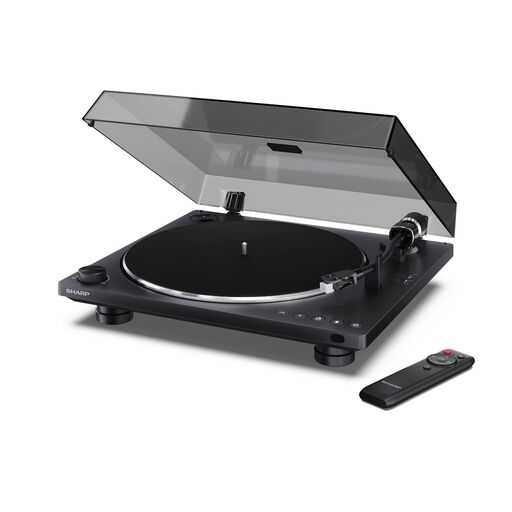 No image available
For shoppers looking for automatic operation and a built-in preamp for connecting to an audio system.
Bluetooth 5.4 and USB-C recording function.
Audio-Technica AT-3600L cartridge; built-in preamp with PHONO and LINE settings.
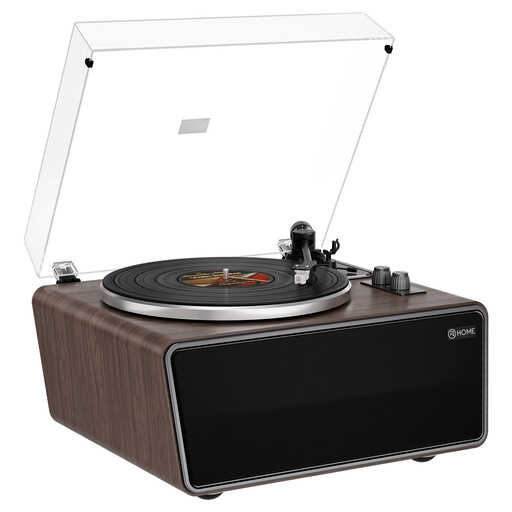 No image available
For shoppers considering a turntable with built-in speakers and phono or line outputs.
33⅓ and 45 rpm; belt drive and four built-in speakers.
AT-3600L cartridge; phono and line outputs.
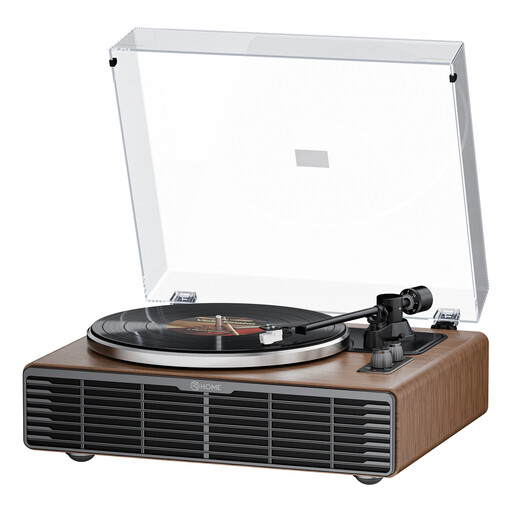 No image available
For shoppers looking to add a belt-drive turntable with built-in speakers and Bluetooth to their shortlist.
33⅓ and 45 rpm; belt drive and four built-in speakers.
AT3600L cartridge; RCA phono and line outputs.
Yes, if neither the turntable nor the amplifier provides a suitable phono stage in the signal path you’re using. Audio-Technica lists a switchable phono stage for the AT-LP120XUSB; according to Pro-Ject, the Debut Carbon EVO needs a phono stage in the amplifier or a separate unit.
Choose a level surface and don’t place the turntable on or near speakers. Pro-Ject and Audio-Technica recommend this in their setup guidance, but it doesn’t guarantee that every vibration in your room will disappear.
No. You should also check the record material and make sure the stylus is suitable for the cartridge you’re using. Audio-Technica lists a 3.0 mil replacement stylus for the AT-VM95SP version; the AT-LP120XUSB’s 78 rpm speed doesn’t mean its supplied stylus is intended for shellac records.
No. According to the manufacturer, the Technics SL-1500C raises the tonearm at the end of a record. On the fully automatic Dual CS 329, the automatic functions also swing and lower the tonearm, according to Dual. Check which steps your chosen model actually handles automatically.