What should you look for when buying?
First check which records you want to play, then look at how the turntable will connect to your audio system, and finally consider how easy it will be for different people to use.
| Consideration |
What to check before buying |
Who will find this especially important? |
| Connecting to your audio system |
Check the inputs on your system, along with the phono/line setting and outputs on the specific turntable. |
If I want to connect the turntable to my existing system, I need a compatible signal path. Around 31% of consumers put this connection first. |
| Ease of use |
Check for automatic start, tonearm return and any setup required. |
If several people will be using the turntable, I want the start and return functions to be as straightforward as possible. Around 31% of consumers place the greatest importance on simple operation. |
| Record format and speed |
Check the record material and stated speed; for shellac, also make sure you have a suitable SP stylus. |
If my collection might include shellac, I need to check the record and the stylus it requires. Around 23% of consumers prioritise compatibility with the specific older records they own. |
| Placement and consideration for others |
Check for a level surface, space from speakers, and any house rules or local noise regulations. |
If the turntable will be in a shared room, I need a practical place for it and want to be considerate of others. Around 15% of consumers put this first. |
Turntables at Joybuy
The Joybuy models below include automatic turntables and all-in-one options; one model is listed as supporting 78 rpm. Before choosing, check that the speed, stylus and connections suit your records and audio system.
 No image available
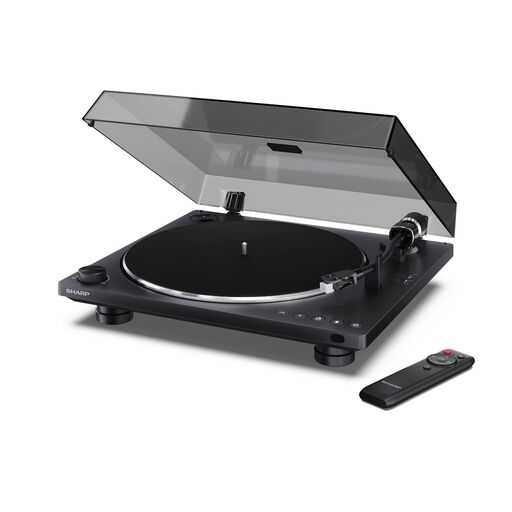
SHARP RP-TT95
For shared use when your audio system has compatible RCA inputs and you want automatic operation.
- Fully automatic turntable
- Bluetooth 5.4 and USB-C recording function
- RCA outputs and built-in preamp with PHONO and LINE settings
- Audio-Technica cartridge
View at Joybuy
 No image available
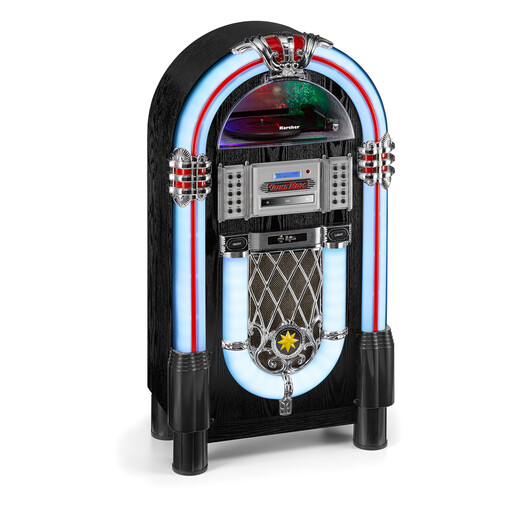
KARCHER 6608D jukebox
For a shared room where you want to use other playback sources as well as records.
- Built-in turntable listed as supporting 33, 45 and 78 rpm in the product description
- CD, Bluetooth, FM/DAB+ and playback via USB or SD card
- Two speakers and remote control, according to the product description
For 78 rpm shellac, also check that you have a suitable SP stylus.
View at Joybuy
 No image available
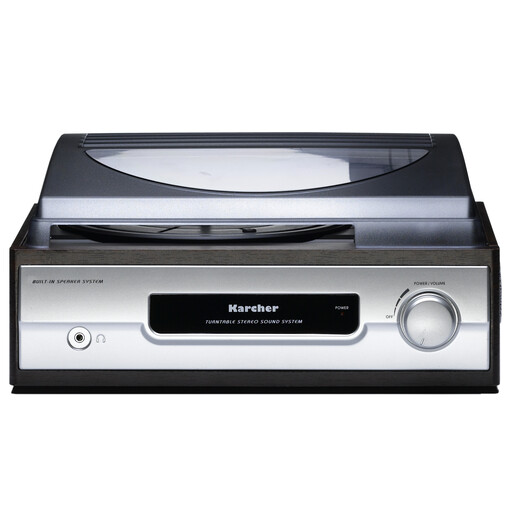
Karcher KA 8050
For a listening space where you’d rather use built-in speakers than connect separate ones.
- Playback at 33 and 45 rpm
- Built-in stereo speakers and auto-stop function
- Headphone socket and line output
View at Joybuy
 No image available
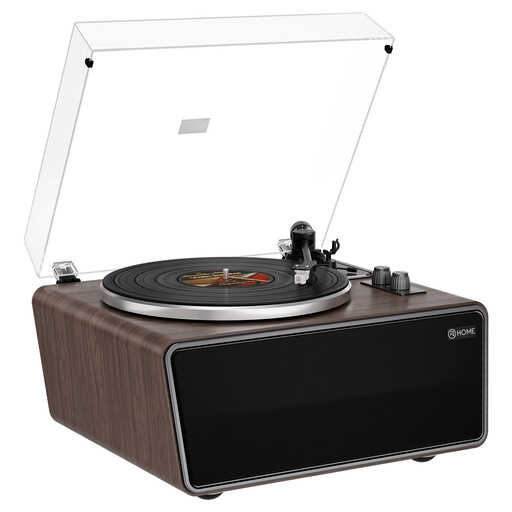
XJ-HOME XJ-H01
For a room where you want an all-in-one system with built-in speakers and connections for an existing audio system.
- Playback at 33⅓ and 45 rpm
- Four built-in speakers and AUX input
- Phono/line RCA outputs and built-in phono preamp
- AT-3600L (MM) cartridge
View at Joybuy
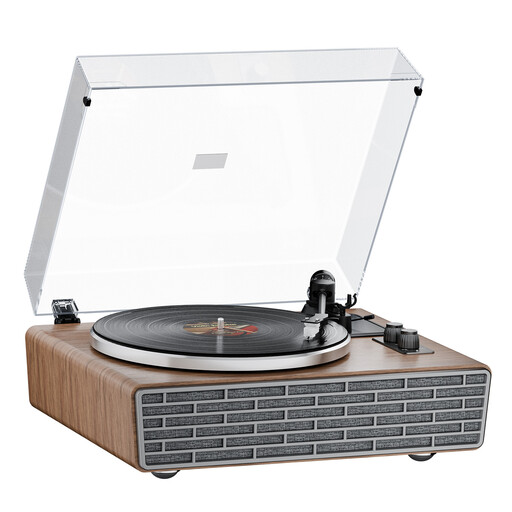 No image available
XJ-HOME XJ-H02
For 33⅓ or 45 rpm records and a listening space where you want to use built-in speakers.
- Bluetooth, AUX input and four built-in speakers
- Phono and line RCA outputs
- Belt drive and AT cartridge
View at Joybuy
Frequently asked questions
Do I always need a 78 rpm turntable for old soundtracks?
No. The speed of the individual record is what matters. Turntables that play at 33⅓ and 45 rpm are designed for LPs and singles marked with those speeds. For 78 rpm shellac records, you’ll also need a suitable SP stylus.
Can I connect a turntable directly to the speakers I already own?
It depends on the inputs on your speakers or connected audio system, and on their amplification. According to Audio-Technica and Denon, a turntable with a switchable phono preamp can be connected to a compatible line or AUX input. If you’re using a phono input, select the matching setting. Check the connections on both devices before buying.
What should I consider when setting up a turntable in a shared room?
Choose a level surface that’s as free from vibration as possible, and think about where to place the speakers. The Federal Environment Agency points out that rules on neighbourhood noise may also appear in local regulations and house rules, so check the requirements for the specific room.
Can I play soundtracks in a shared room without permission?
There’s no general answer without knowing how the music will be used. Under Section 15 of the German Copyright Act (UrhG), the relevant factors include whether the music is intended for a number of members of the public and what personal relationships exist between the listeners. For public use, check which rights and arrangements are required; GEMA publishes tariffs for public music use. You should also follow house rules and local noise regulations.
When buying in Germany, what’s the difference between statutory rights and a guarantee?
Statutory consumer rights are separate from a voluntary guarantee. The Verbraucherzentrale (German consumer advice centre) generally states that the statutory period is two years, and explains that this period is extended if a repair is carried out for purchase contracts from 31 July 2026 onwards. According to the Verbraucherzentrale, this extension doesn’t apply to earlier purchases.


