For quiet headphone listening
If you want to listen to older soundtracks without using the room’s speakers, look for a suitable headphone connection and adjustable volume. Audio-Technica and Sony list Bluetooth output on selected turntables.


For quiet listening, choose either a turntable with Bluetooth output for compatible headphones or a model that can connect to a hi-fi system with a headphone socket. Audio-Technica and Sony describe Bluetooth listening options for selected models. Then check whether your records need to play at 33⅓, 45 or 78 rpm: for 78 rpm shellac records, the correct speed alone isn’t enough — the stylus must also be suitable and compatible with the cartridge.
If you want to listen to older soundtracks without using the room’s speakers, look for a suitable headphone connection and adjustable volume. Audio-Technica and Sony list Bluetooth output on selected turntables.
Before choosing a turntable, check whether your soundtracks are on LPs, singles or 78 rpm shellac records. Audio-Technica and Dual document models or cartridge options for different requirements.
If you want to keep using your existing active speakers or amplifier, make sure the phono or line signal matches the system’s inputs. Audio-Technica and Denon describe switchable or selectable phono preamps on selected models.
First decide how you want to listen, then check that the record formats and connections are right for you. Ease of use and care are also worth considering.
| What to consider | What to check before buying | Who is it important for? |
|---|---|---|
| Quiet listening | Check for Bluetooth output rather than Bluetooth input alone, headphone compatibility and volume control. | If I want to listen on my own without filling the room with sound from speakers, a suitable headphone connection is essential; around 36% of consumers cite this as their main concern. |
| Record format and stylus | Check the material and speed of your records; for shellac, check separately for 78 rpm playback and a compatible SP stylus. | If reliable playback of my existing collection matters most, I’ll carefully match the record material to the stylus; around 29% of consumers have this as their main concern. |
| Connecting to your system | Check the inputs on your amplifier or active speakers, then choose the appropriate phono or line output. | If you want to keep using your existing hi-fi equipment, you’ll need a signal path that matches its inputs; around 21% of consumers make this their priority. |
| Ease of use and care | Check the automatic functions, whether the specific stylus can be replaced and what care it requires. | If I want to keep handling to a minimum when playing a record, while still taking care of my equipment, I’ll compare the automatic functions and replacement parts; around 14% of consumers put this first. |
The age of a soundtrack doesn’t tell you what type of record it was released on. Equally, a 78 rpm setting alone doesn’t mean the stylus is suitable.
First check the material and speed of the specific records you own. If you have shellac records, make sure the turntable, SP stylus and cartridge are all compatible with one another.
A turntable needs to send its signal to compatible headphones, active speakers or an amplifier. Phono and line connections aren’t interchangeable.
Before you buy, map out the entire signal path from the turntable to your headphones or speakers, and check which inputs you’ll need.
According to the manufacturer, the VM95 stylus on the Audio-Technica AT-LP70XBT can be replaced, but the cartridge is integrated into the tonearm. Sony states that the cartridge holder on the PS-LX310BT cannot be replaced.
Check the stylus, cartridge and headshell separately to see which parts can be replaced on the specific model.
The documented models range from fully automatic turntables with Bluetooth output to manual models with additional speed and adjustment options.
According to Sony, the PS-LX310BT combines automatic operation with Bluetooth output and phono/line output for records at 33⅓ and 45 rpm.
According to the manufacturer, the DP-300F is a fully automatic turntable with a switchable phono preamp.
The manual CS 418 is an option for buyers who need 33, 45 or 78 rpm playback and a switchable MM phono preamp.
The Planar 1 is a manual option for use with a system that has a suitable phono stage.
The models below offer different ways to listen privately or connect to a hi-fi system. Before you buy, check the speed of your records and the inputs and outputs on the specific model.
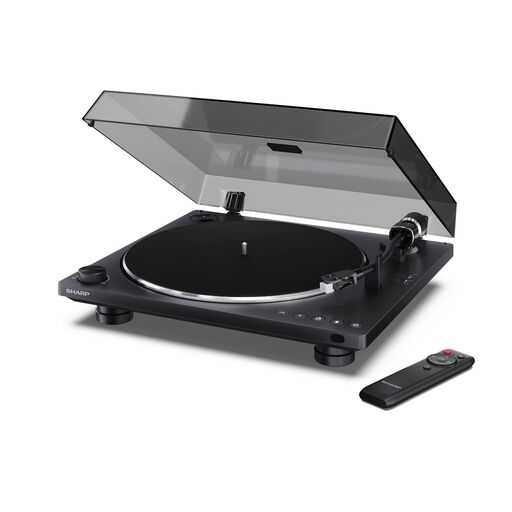 No image available
For private listening with compatible Bluetooth headphones or connecting to a suitable hi-fi system.
The product name lists Bluetooth 5.4, USB-C recording and an Audio-Technica cartridge. The description also mentions the AT-3600L, RCA outputs and a switchable phono/line signal path.
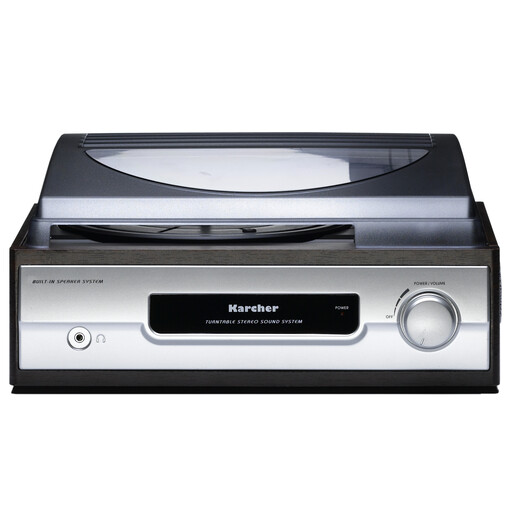 No image available
For listeners who want to use a headphone socket or the line output.
The product name lists 33/45 rpm, auto-stop, a headphone socket and line-out. The description also mentions built-in stereo speakers.
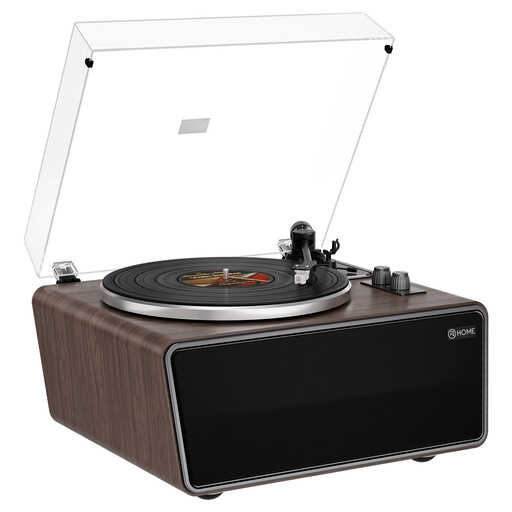 No image available
For listeners who want a choice of playback options, including the built-in speakers or a connected hi-fi system.
The description lists four built-in speakers, an AUX input, phono/line RCA outputs, USB recording and an AT-3600L cartridge.
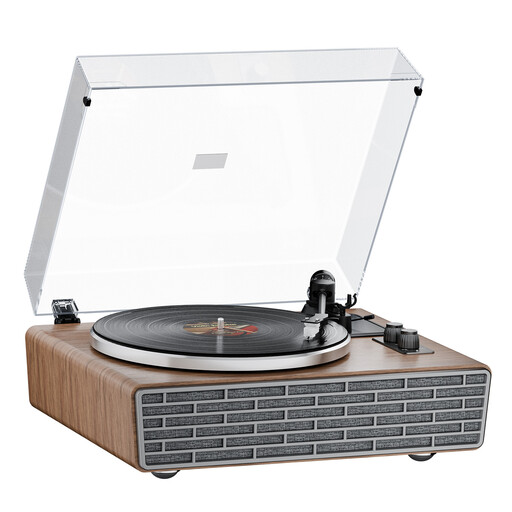 No image available
For listeners considering a model with built-in speakers and additional connections.
The product name lists Bluetooth, four built-in speakers, belt drive and an AT cartridge. The description also mentions phono and line RCA outputs. Check whether Bluetooth on the specific model is designed for output to headphones or as an input.
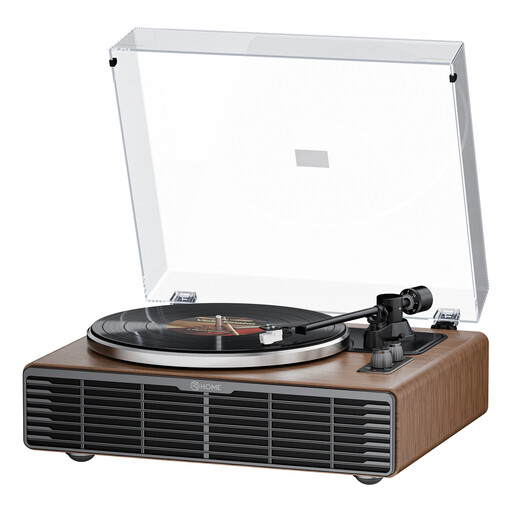 No image available
For listeners who want to use the built-in speakers or connect via the RCA outputs.
The product name lists belt drive, an AT3600L cartridge and RCA phono/line output. The description lists 33⅓ and 45 rpm, as well as four built-in speakers.
No. According to their manufacturers, the Audio-Technica AT-LP70XBT and Sony PS-LX310BT can send audio to Bluetooth headphones. Alternatively, you can use a suitably connected turntable with a hi-fi system that has a headphone socket; check its inputs and volume control.
Yes, if the active speakers have a suitable line input and the turntable is set to line output. For phono output, you’ll need a suitable phono input or a separate phono stage.
Carefully remove dust and follow the instructions for your specific cartridge. Ortofon recommends using a fine fibre brush on its styli, brushing towards the stylus tip, and advises against using solvents on the stylus or record surface.
The statutory guarantee is the seller’s responsibility and is separate from any voluntary warranty. According to Verbraucherzentrale, online purchases generally come with a 14-day right to cancel; check the terms and conditions for your specific purchase.
For its market surveillance of electronic products, the Bundesnetzagentur lists details including the CE marking, manufacturer information and German-language instructions with any required warnings. Check these details on the specific product and listing.