Shared spaces with different users
If different people will be playing records, automatic start and return make the turntable easier to use. Sony and Dual list these features for their respective models.


If several people will be using the turntable, a fully automatic model with a connection that matches your existing audio setup is a good place to start. Also check the playback speeds you need, the availability of a suitable replacement stylus and where you’ll put it. If you have specialist record formats or want an adjustable tonearm, a manual model may be a better fit.
If different people will be playing records, automatic start and return make the turntable easier to use. Sony and Dual list these features for their respective models.
If your collection includes records in varying condition, record care and a suitable replacement stylus are important considerations. Ortofon recommends removing dust before playing records and avoiding any that are visibly damaged.
If you want to connect an existing hi-fi system or active speakers, check that the available inputs match the phono, line or Bluetooth connection. Sony, Audio-Technica and Denon describe the relevant connection options for the models mentioned here.
First, work out who will be using the turntable and which record formats they’ll actually play. Then check the connections and the space available for it.
| Buying consideration | What to check before buying | Who it matters most to |
|---|---|---|
| Ease of use | Check automatic start, return and stop separately; features vary by model. | If you don’t want different users to have to position the tonearm themselves each time, straightforward controls are important. Around 36% of consumers put ease of use by multiple people first. |
| Record and stylus care | Check the condition and format of your records, as well as which replacement styli are suitable for the specific model. Don’t play records that are visibly damaged without checking them first. | If you play pre-owned records in varying condition, you’ll want to be able to care for both the stylus and records appropriately. Around 29% of consumers rank this as their most important buying requirement. |
| Connection to your audio system | Check the input on your amplifier or speakers and match it to the turntable’s phono or line output, or Bluetooth connection. | If you already have speakers or an audio system, you’ll want to connect the turntable without using an incompatible signal path. Around 21% of consumers prioritise compatibility with their existing audio equipment. |
| Space in the room | Measure the space available and allow room for the dust cover to open. If the cover is removable, plan a safe place to put it too. | If you’re setting up the turntable in a shared space, you’ll need room for the unit, dust cover and cables. Around 14% of consumers focus primarily on how it will fit in the room. |
Phono and line signals need different inputs. A switchable phono preamp can let you connect to a suitable line input.
Check the inputs on your existing system and the output mode of the specific turntable before you decide.
If your chosen connection needs a preamp that isn’t built in, you may need a separate phono preamp.
The correct speed alone doesn’t mean the stylus is suitable for shellac records. Audio-Technica lists a separate SP stylus solution.
If you want to play shellac records, check both the speed and the suitability of the stylus.
Depending on the equipment you already have, you may also need a suitable SP stylus or cartridge.
According to the manufacturer, the VM95 Series stylus on the Audio-Technica AT-LP70XBT is replaceable, but the cartridge is built in. Sony describes the cartridge on the PS-LX310BT as non-replaceable; this doesn’t mean the stylus can’t be replaced.
For the specific model, check separately whether the stylus and cartridge can be replaced and what adjustment options are available.
The details below refer to the product models mentioned and their manufacturers’ descriptions. They aren’t based on an independent sound comparison.
The AT-LP70XBT combines fully automatic operation with Bluetooth and a switchable phono preamp. The AT-LP120XUSB is a manual alternative with adjustable settings and three speeds.
According to Sony, the PS-LX310BT offers automatic start and return, Bluetooth, and phono and line outputs.
According to the manufacturer, the CS 329 is a pre-assembled, fully automatic turntable with an analogue connection for a phono or high-level input.
According to the manufacturer, the DP-300F combines fully automatic operation with adjustable balance and anti-skating, as well as a switchable phono preamp.
This selection includes turntables for shared spaces, from fully automatic models to units with built-in speakers. Before buying, check that the controls, connection and stylus are suitable for your audio system and the records you’ll be playing.
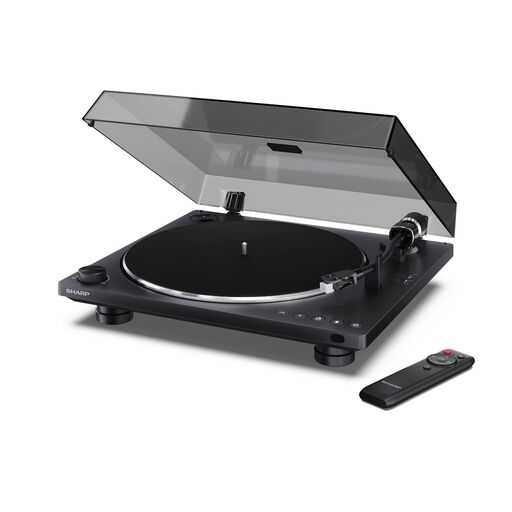 No image available
For several users who want automatic operation and a choice of connection options.
Specifications list Bluetooth 5.4, USB-C recording, RCA outputs with phono/line settings, and an Audio-Technica AT-3600L cartridge.
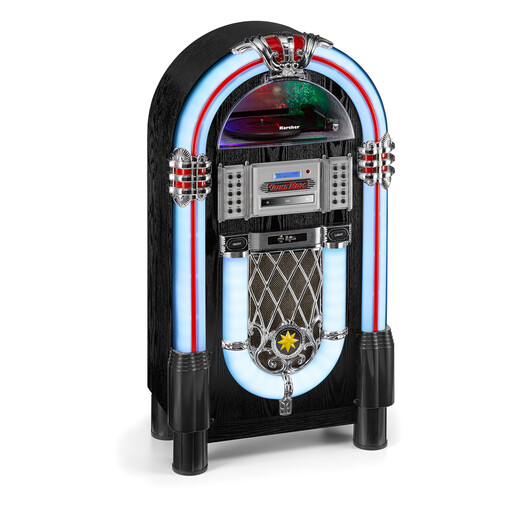 No image available
For a shared space where you want to play other formats as well as records.
Specifications list built-in stereo speakers, record playback at 33, 45 and 78 rpm, CD, Bluetooth, FM/DAB+, USB and SD. Check the stylus is suitable separately if you want to play shellac records.
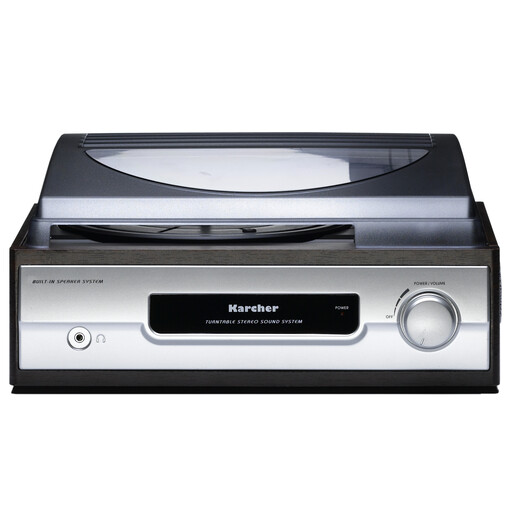 No image available
For listeners who want to play records without a separate speaker system and would like the turntable to stop automatically at the end of a record.
Specifications list built-in stereo speakers, 33/45 rpm, auto-stop, a headphone socket and a line output.
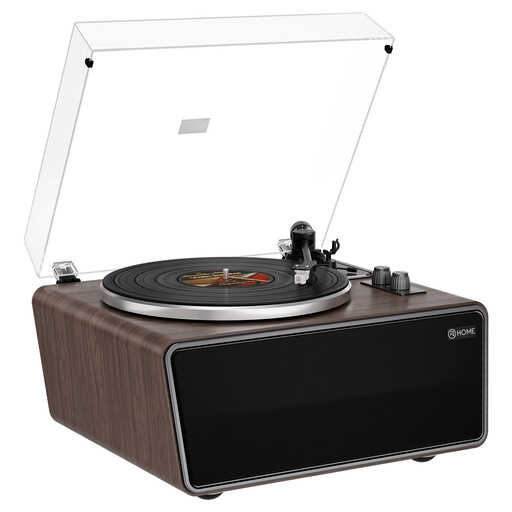 No image available
For shared listening without a separate speaker system, with the option to connect external audio devices.
Specifications list four built-in speakers, 33⅓ and 45 rpm, an AT-3600L cartridge, Bluetooth, USB recording and phono/line RCA outputs.
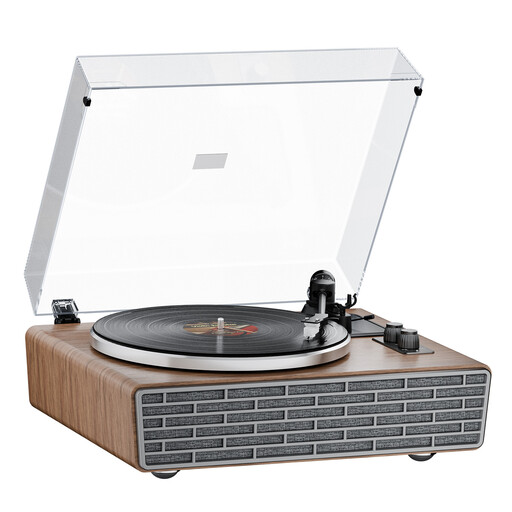 No image available
For listeners who want built-in speakers and the option to connect an existing audio system or Bluetooth playback device.
Specifications list four built-in speakers, 33⅓ and 45 rpm, an AT-3600L cartridge, Bluetooth and RCA outputs with phono/line connections.
Only if the signal path matches the input. A switchable phono preamp can provide the right connection for a suitable line input; a phono input needs a phono signal. Check the labels on both devices.
Ortofon recommends removing dust from records before playing them and gently cleaning the stylus with a suitable dry brush, moving towards the stylus tip. Don’t play records that are visibly damaged. These manufacturer recommendations aren’t a guarantee against damage.
No. If you want to play shellac records, also check whether you can use a suitable SP stylus or cartridge. Audio-Technica lists a compatible stylus solution separately from the turntable.
For a faulty purchase, your statutory rights are generally against the seller. A manufacturer’s guarantee is separate and voluntary. The Verbraucherzentrale recommends checking the terms of the specific offer when making a complaint.
You can’t tell from the term ‘shared space’ alone. GEMA distinguishes private listening within a personally connected group from public use, and has a separate tariff for common rooms in certain social care facilities. Before assuming a licence is or isn’t required, check who has access and which organisation runs the space.