For listeners with pre-loved vinyl finds
If you play LPs and singles in varying condition, look for a suitable, easy-to-maintain stylus and handle your records with care. Ortofon recommends gently removing dust before playing a record.


For standard LPs and singles, an easy-to-use turntable with 33⅓ and 45 rpm may be all you need, provided its phono or line output is compatible with your existing setup. If you want to adjust the tonearm and tracking force yourself, record music to a computer or play shellac records, look for the specific features and a suitable stylus. You should also choose a level spot away from your speakers and take care when handling used records.
If you play LPs and singles in varying condition, look for a suitable, easy-to-maintain stylus and handle your records with care. Ortofon recommends gently removing dust before playing a record.
If you want to use speakers or an amplifier you already have in your hobby room, check that their inputs match the turntable’s phono, line or, where applicable, Bluetooth connection. Audio-Technica, Denon and Sony offer different connection options depending on the model.
If your collection includes 78 rpm shellac records or you want to save recordings to a computer, check which speeds are supported and look for a suitable stylus and USB output. Audio-Technica specifically lists the VM95SP as a stylus for 78 rpm shellac records.
A good fit if: Your collection consists of records played at 33⅓ and 45 rpm and you want automatic operation.
The trade-off: Audio-Technica says the AT-LP70XBT has replaceable VM95-series styli but an integrated cartridge that cannot be removed; connection options vary by model.
A good fit if: You want to adjust the tonearm and tracking force yourself, or record your vinyl to a computer via USB.
The trade-off: According to the manufacturer, the Audio-Technica AT-LP120XBT-USB offers USB and 78 rpm playback; its extra adjustability means you’ll need to set it up carefully.
A good fit if: You actually have historic shellac records in your collection.
The trade-off: Support for 78 rpm alone does not mean a turntable is suitable for shellac records. Also check for a compatible cartridge and an SP stylus specifically designed for them; Audio-Technica lists the VM95SP for this purpose.
| Buying criterion | What to check | Who it matters most to |
|---|---|---|
| Looking after records and the stylus | A replacement stylus that fits the exact model and the condition of the existing stylus; for an adjustable tonearm, the recommended tracking force and anti-skating settings. | If I play used records, finding a suitable, easy-to-maintain stylus is my priority. Around 36% of consumers prioritise protecting their records and stylus. |
| Connecting to your setup | The inputs on your amplifier or active speakers, as well as phono/line switching and, where relevant, Bluetooth compatibility. | I want to connect my turntable to the amplifier or active speakers already in my hobby room. Around 29% of consumers prioritise a signal path that works with their existing setup. |
| Space and ease of use | Room for the turntable and its open lid, a level surface away from speakers, and the start, stop and tonearm return functions you need. | When I listen in my hobby room, I need a suitable spot for my turntable and want to keep operating steps to a minimum. Around 21% of consumers put placement and ease of use first. |
| Specialist formats or USB | Record speeds, a compatible SP stylus for shellac records and a USB output if you plan to record to a computer. | If I want to play shellac records or save music to a computer, I check for a suitable stylus or USB connection. Around 14% of consumers prioritise specialist formats or computer recording. |
Playback speed alone does not tell you whether the supplied stylus is suitable for shellac records. Audio-Technica specifically lists the AT-VM95SP for 78 rpm shellac records; the AT-VM95E is not listed as an SP stylus.
If you do need to play shellac records, check the speed, cartridge and specifically compatible stylus together.
The right signal path depends on your equipment’s connections and the turntable’s preamp setting. Denon says the DP-300F should be connected to AUX with its phono preamp switched on, or to a phono input with the preamp switched off.
Before choosing a turntable, make a note of your setup’s inputs and check that they match the connections on the specific model.
The lid needs extra clearance when it’s open. Audio-Technica also notes that placing a turntable near speakers can affect vibration.
Measure the space needed for both the turntable and its open lid, then place it on a level surface away from your speakers.
The AT-LP70XBT and AT-LP120XBT-USB cater to different preferences for operation and connectivity.
According to the manufacturer, the CS 329 is a pre-assembled, fully automatic belt-drive turntable with connections for phono and high-level inputs.
Denon says the DP-300F combines fully automatic operation with a switchable phono preamp.
According to Sony, the PS-LX310BT offers fully automatic operation, phono/line output and Bluetooth.
The Joybuy products below include turntables and all-in-one systems for LPs and singles; one model also supports 78 rpm. Before choosing, check your record formats, preferred type of operation and the connections on your existing setup.
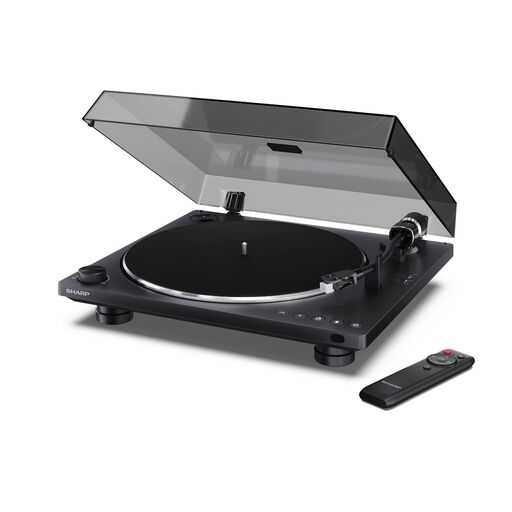 No image available
An option if you’re looking for automatic operation and USB-C recording.
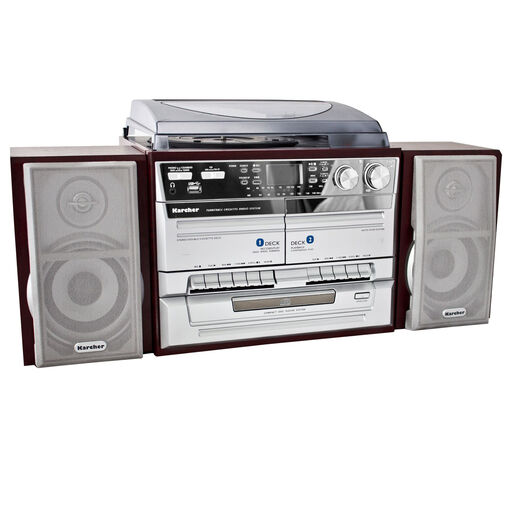 No image available
An option if you want to enjoy other media as well as vinyl through one system.
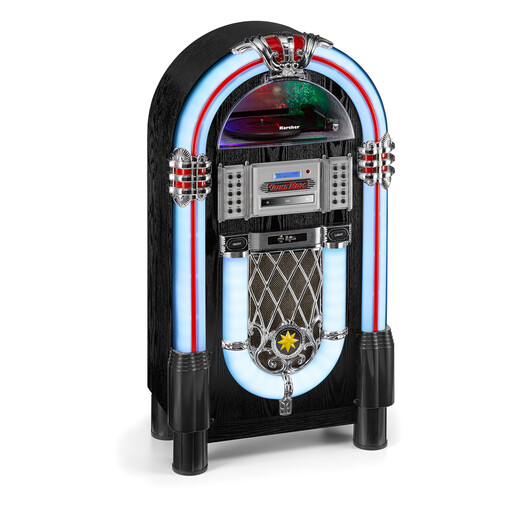 No image available
An option if you want a turntable with additional playback features.
78 rpm playback alone does not mean a turntable is suitable for shellac records; check that it has the right stylus too.
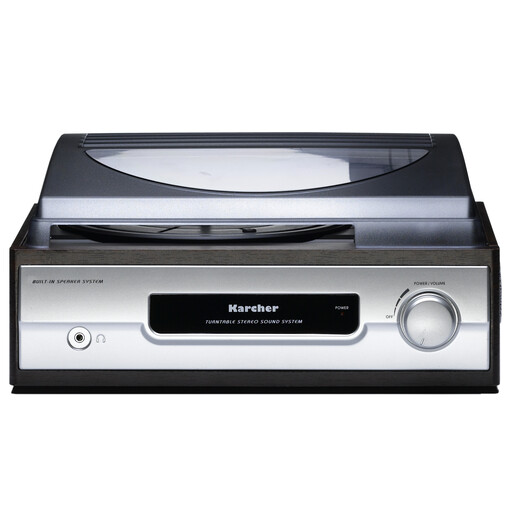 No image available
An option if you want to listen to LPs or singles through built-in speakers.
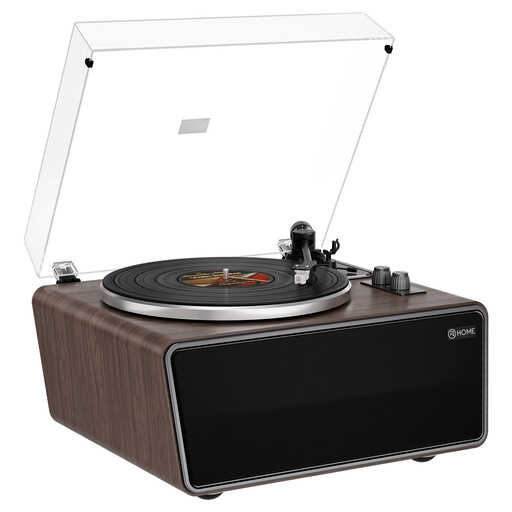 No image available
An option if you want built-in speakers and a choice of connection options.
That depends on the inputs on your setup and the turntable’s output. For the DP-300F, Denon describes connecting it to AUX with the phono preamp switched on, or to a phono input with the preamp switched off. Check the connections on both devices before you buy.
Place it on a level surface away from your speakers; Audio-Technica recommends this for the AT-LP120XUSB to help prevent vibration. Ortofon recommends gently removing dust from records before playing them and cleaning the stylus according to its care instructions. If the tonearm is adjustable, set the tracking force and anti-skating according to the cartridge’s recommendations.
No. As well as the right speed, you need a stylus that’s suitable for both the cartridge and shellac records. Audio-Technica specifically lists the AT-VM95SP for 78 rpm shellac records.
Allow for a suitable replacement stylus and, if your setup needs one, a phono preamp or compatible speakers; the equipment you need depends on what you already own. In Germany, your statutory rights against the seller are separate from any voluntary guarantee. For a typical online purchase from a retailer, you generally have a 14-day right to cancel; check the terms of your specific purchase.