First, check that the speed and centre hole of your jazz singles are compatible with the turntable and the adapter you need. Then make sure its signal path will work with your existing equipment. If you change records often, a fully automatic model can save you a few steps; a manual turntable requires more input, but depending on the model, may offer different adjustment options. For historic shellac records, a 78 rpm setting alone isn’t enough: you’ll also need a suitable stylus.
Which type of turntable is right for you?
Listeners with a collection of jazz singles
Check the speed and centre hole of your records. If you have shellac records, also make sure the material and stylus are compatible. Audio-Technica distinguishes between its models for vinyl singles and the suitable SP stylus for shellac records.
Listeners with an existing stereo system
If you want to keep using your amplifier or speakers, check that their inputs match the turntable’s phono or line signal. For Bluetooth, the intended playback device must also be compatible.
Listeners who change singles often
If you often play short records, check whether the turntable starts automatically and returns the tonearm, or whether you’ll need to operate it manually. An automatic end-of-record lift raises the tonearm at the end of a record, but doesn’t automatically start playback or return the arm.
What should you look for when buying?
| Buying consideration |
What to check |
Who is it important for? |
| Record format |
Check the speed, record material and centre hole, and make sure you have the right adapter. |
If you own different types of singles, choosing a turntable that plays them correctly is essential. Around 36% of shoppers say compatibility with their record collection is their top priority. |
| Connection to your system |
Check the inputs, phono/line setting and, where applicable, Bluetooth reception. |
If you want to use your existing speakers or amplifier, the signal path needs to be compatible. Around 29% of shoppers say connecting to their existing system is their top priority. |
| Ease of use when changing records |
Check whether the specific model has automatic start, an end-of-record lift and automatic return. These are separate functions. |
If you often change short singles, automatic features can reduce the number of steps involved. Around 21% of shoppers say ease of use is their top priority. |
| Set-up and care |
Consider the space available, distance from speakers and options for replacing the stylus. |
If you’re setting up your turntable in a listening room and want to maintain it over time, placement and the availability of suitable replacement parts matter. Around 14% of shoppers say set-up and care are their top priority. |
Avoid common buying mistakes
-
Assuming that 45 rpm makes a turntable suitable for every historic jazz record
The right speed alone doesn’t make a turntable suitable for shellac records. Audio-Technica specifies a special SP stylus for playing these records.
Check the record material and speed. For shellac, choose the turntable and stylus together.
-
Assuming Bluetooth or RCA sockets are all you need to check
Phono and line signals have different requirements, while Bluetooth needs a compatible receiving device.
Check your system’s inputs against the turntable’s phono/line switch and the signal path specified for the particular model.
-
Confusing an automatic end-of-record lift with fully automatic operation
Technics describes the SL-1500C as having a lift at the end of a record. Denon says the DP-300F also places and returns the tonearm automatically.
If you often change singles, compare automatic start, end-of-record lift and automatic return as separate features.
-
Placing the turntable right next to speakers that vibrate
For the AT-LP70XBT, Audio-Technica recommends a level surface away from speakers that may cause vibrations.
Decide where you’ll put the turntable before you buy, and follow the set-up guidance for your chosen model.
Brands and relevant model ranges
Audio-Technica
The range includes fully automatic turntables for 45 rpm vinyl singles, as well as manual models with extra speed and stylus options.
- According to the manufacturer, the AT-LP60X includes a single adapter and a switchable phono stage; its stylus is replaceable.
- The AT-LP60X doesn’t play at 78 rpm. The AT-LP5X’s 78 rpm setting doesn’t replace the need for a suitable SP stylus for shellac.
Sony
According to Sony, the PS-LX310BT combines automatic operation at 33⅓ and 45 rpm with a phono/line output and Bluetooth.
- Sony lists a 45 rpm adapter and automatic start for this model.
- According to Sony, the PS-LX310BT’s cartridge head isn’t replaceable; Bluetooth also requires a compatible receiving device.
Denon
The DP-300F is a wired, fully automatic model option for 33⅓ and 45 rpm.
- Denon describes automatic start and return, plus a switchable phono preamplifier.
- These specifications don’t prove an independently measured sound advantage.
Rega
The Planar 1 is aimed at listeners who are happy to operate the tonearm manually and use a suitable phono stage.
- The instructions describe how to switch manually to 45 rpm by moving the belt.
- This requires an extra step if you often switch between 33⅓ and 45 rpm. The Planar 1 Plus is a different version with an integrated phono stage.
Technics
According to the manufacturer, the SL-1500C features direct drive, built-in phono equalisation and an automatic end-of-record lift.
- The end-of-record lift raises the tonearm at the end of a record.
- An end-of-record lift isn’t evidence of automatic start or return; manufacturers’ sound claims aren’t independent measurements.
Dual
The CS 518 is a manual model with an Ortofon 2M Red cartridge and a switchable MM phono preamplifier.
- Dual describes a manually operated signal path with a switchable phono stage.
- These features apply to the CS 518 and shouldn’t be assumed to apply to all fully automatic Dual models.
Joybuy products for jazz singles in your listening room
Joybuy product options for playing jazz singles in your listening room. For each model, check the speed you need, whether an adapter is required and how it connects to your existing system.
 No image available
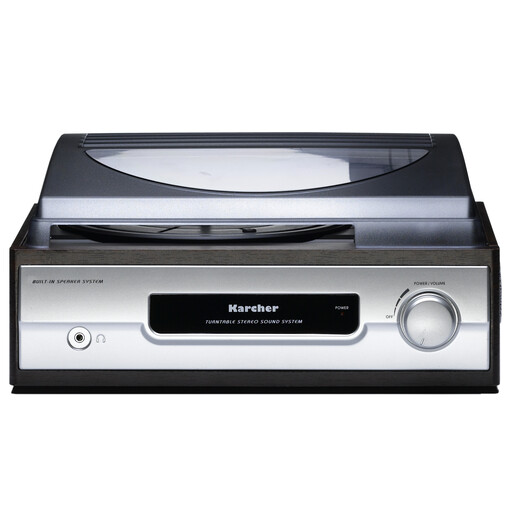
Karcher KA 8050
The built-in speakers could be a good fit if you want to listen in your room without separate speakers.
- 33/45 rpm and 45 rpm adapter
- Built-in stereo speakers and RCA line out
- Auto-stop function and headphone socket
View at Joybuy
 No image available
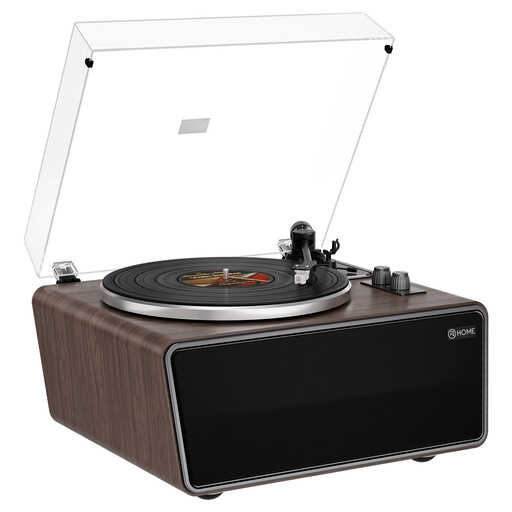
XJ-HOME XJ-H01
Four built-in speakers could be useful in a listening room if you’re not planning to use separate speakers.
- Built-in phono stage
- AT-3600L (MM) cartridge
- Black Walnut colour option
Before buying, check that the speed and adapter are right for your singles.
View at Joybuy
 No image available
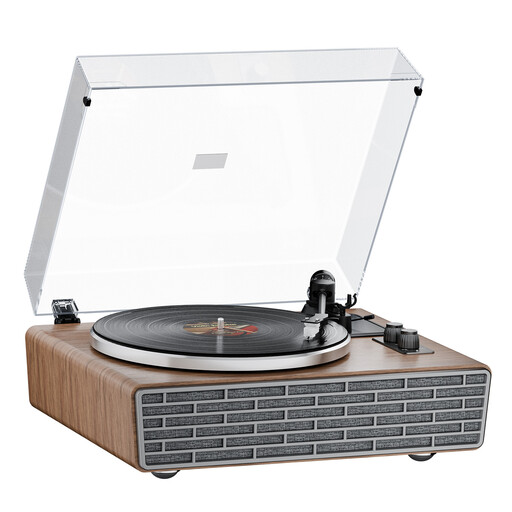
XJ-HOME XJ-H02
The built-in speakers could be handy for listening in your room without separate speakers.
- Bluetooth
- Belt drive and transparent dust cover
- AT cartridge
Check the speed you need, whether an adapter is required and whether your Bluetooth receiver is compatible.
View at Joybuy
 No image available
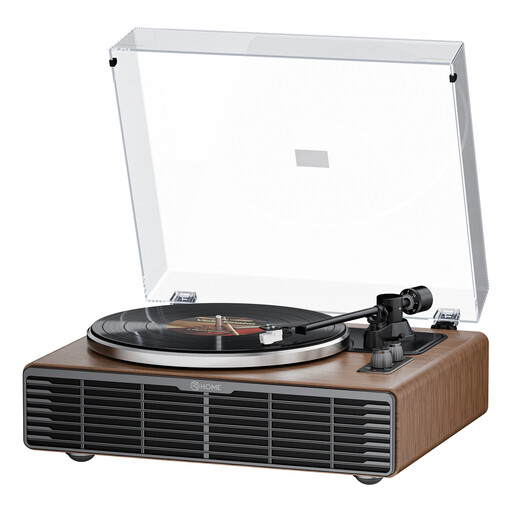
XJ-HOME XJ-H03
The built-in speakers are a good option if you don’t necessarily want to listen through external speakers.
- Four speakers and belt drive
- AT3600L cartridge
- RCA phono/line output and transparent dust cover
Before buying, check that the speed and adapter you need are compatible with your record collection.
View at Joybuy
Frequently asked questions
Do I need an adapter for every jazz single?
No, it depends on the centre hole of each record. Singles with a large centre hole need a suitable adapter. Audio-Technica lists one for the AT-LP60X, and Sony does the same for the PS-LX310BT.
Can I connect the turntable directly to my active speakers?
Yes, provided the output and input are compatible and, for a line input, the turntable’s built-in phono stage is designed for that connection and switched on. Audio-Technica lists a switchable phono stage for the AT-LP60X, and Denon does the same for the DP-300F. According to its instructions, the Rega Planar 1 needs a suitable phono stage.
Where should I set up my turntable in my listening room?
Choose a level surface and keep in mind that speakers can cause vibrations. Audio-Technica gives this set-up advice for the AT-LP70XBT; you should also follow the instructions for your own model.
Do I need to replace the whole cartridge when it wears out?
It depends on the model and cartridge system. Audio-Technica describes the VM95 series as having replaceable styli, and also lists a replaceable stylus for the AT-LP60X, despite its integrated cartridge. Before buying, check which replacement stylus is right for your model.


