Both fully automatic and manual turntables can work well for pre-owned LPs and singles in your hobby room. The key factors are your record formats, how the turntable connects to your audio system and how much convenience you want. If you have 78 rpm shellac records, you’ll need the right speed as well as a suitable cartridge. Also consider whether you’d prefer a simple start-up or the option to adjust and change cartridges.
Which turntable is right for you?
Listeners with pre-owned vinyl collections
If you regularly play pre-owned LPs and singles, keep an eye on the condition of your records and check whether the stylus can be replaced. Audio-Technica and Dual list options for changing the stylus or cartridge on their respective models; Ortofon advises against playing visibly damaged records.
Listeners with an existing audio system
If you already have an amplifier, active speakers or Bluetooth speakers, check that their inputs match the outputs on the specific turntable. Depending on the model, Audio-Technica and Sony document phono or line connections and Bluetooth features.
Listeners who prioritise convenience
If you often change records in your hobby room, a fully automatic turntable may be worth considering if you want the tonearm to start and return automatically. Audio-Technica and Sony document these features on certain models. An automatic end lift, such as the one on the Technics SL-1500C, only lifts the tonearm at the end of a record.
What should you look for when buying?
| Buying priority |
What to check |
Who is this important to? |
| Tracking and record condition |
Check the condition of your records and whether the stylus, or the cartridge or headshell as well, can be changed on the specific model. |
If I regularly listen to pre-owned records, I want to maintain the stylus properly and replace it when needed. Around 36% of consumers prioritise this. |
| Connecting to existing audio equipment |
Match the phono or line output and switch setting to the inputs on your audio system; check that Bluetooth supports the specific device connection you want. |
If you want to use a turntable with existing active speakers or an audio system, you’ll need a compatible signal path. Around 29% of consumers prioritise connectivity. |
| What you need to do when playing a record |
Check the specific model for automatic start, tonearm placement, end lift, stopping and tonearm return separately. |
If I play records often, I want to know which steps I’ll need to do myself and whether the tonearm returns automatically. Around 21% of consumers place the greatest importance on fewer manual steps. |
| 78 rpm shellac records |
Check the record material and speed, as well as the suitability and fitting of an appropriate SP cartridge on the specific turntable. |
If you actually own shellac records that play at 78 rpm, you should consider the speed and the right stylus profile together. Around 14% of consumers prioritise this record format. |
Which buying pitfalls should you avoid?
-
78 rpm doesn’t automatically mean it’s suitable for shellac
The speed alone doesn’t tell you whether the supplied stylus profile is suitable for shellac. Ortofon specifies a larger stylus profile for these records.
Only if you actually own shellac records, check both that the turntable supports 78 rpm and that the cartridge is suitable for the specific model.
Shellac records may also require a suitable SP cartridge.
-
A replaceable stylus isn’t the same as a replaceable cartridge
Audio-Technica lists a replaceable stylus for the AT-LP60X. Sony, on the other hand, doesn’t list a replaceable cartridge for the PS-LX310BT.
Before buying, check which part you may want to replace later and whether it’s compatible with the specific model.
-
An end lift isn’t the same as full automation
On the Technics SL-1500C, the automatic end lift raises the cartridge at the end of a record. Sony also documents automatic start and return for the PS-LX310BT.
Compare starting, lowering, lifting and returning separately rather than relying on the word ‘automatic’.
-
Don’t connect a turntable and speakers without checking the signal path
A phono output and a line input won’t automatically provide a complete signal path without a suitable phono stage.
Match the outputs to the inputs and check the switch setting. Don’t assume Bluetooth will work just because your speaker has Bluetooth.
Depending on the connections you already have, you may need an additional phono stage or another compatible audio component.
Which brands are worth considering?
Audio-Technica
The AT-LP60X and AT-LP120XBT-USB differ in their operation, speeds and adjustment options.
- Audio-Technica lists fully automatic operation, 33⅓/45 rpm, a switchable phono stage and a replaceable stylus for the AT-LP60X.
- According to Audio-Technica, the manual AT-LP120XBT-USB supports 33⅓/45/78 rpm, USB and Bluetooth. The supplied AT-VM95E isn’t the same as an SP cartridge specifically chosen for shellac.
Dual
The manual CS 418 and CS 518 models are worth considering if their documented adjustment and connection features suit your record collection.
- Dual lists adjustable anti-skating, a switchable MM phono stage and 33/45/78 rpm for both models. A detachable headshell is also specified for the CS 418.
- Having three speeds doesn’t automatically make the supplied cartridge suitable for shellac. Both models are operated manually.
Sony
According to Sony, the PS-LX310BT combines fully automatic operation with phono/line output and Bluetooth.
- Sony documents automatic start and return, as well as 33⅓/45 rpm.
- Sony doesn’t list a replaceable cartridge or a 78 rpm setting for the PS-LX310BT.
Technics
The SL-1500C is a manually started option with integrated phono equalisation and an automatic end lift.
- Technics lists a supplied cartridge and a feature that lifts the tonearm at the end of a record.
- The end lift doesn’t make it fully automatic: you start the turntable and lower the tonearm yourself.
Pro-Ject
The Debut Carbon EVO is a manual belt-drive model with electronic speed switching.
- Pro-Ject lists a pre-fitted Ortofon 2M Red; the product information also includes an additional round belt for 78 rpm.
- For shellac, you’ll need to check the suitability of the cartridge separately. Don’t assume the Debut Carbon EVO and other Debut versions with different names have the same specifications.
Joybuy turntables for LPs and singles
The models shown here are designed for LPs and singles at the speeds listed for each, and have built-in speakers. Before buying, check that the connections are compatible with your audio system.
 No image available
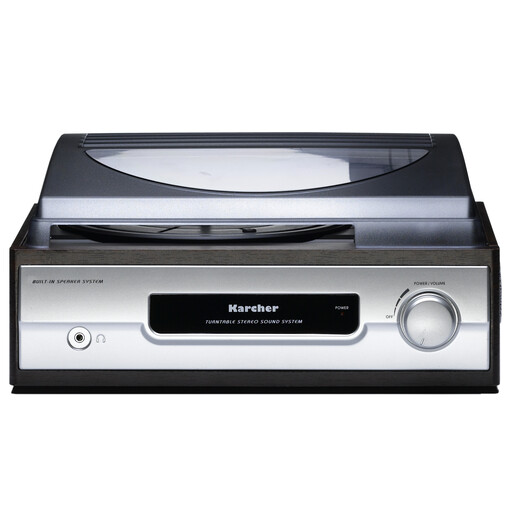
Karcher KA 8050 retro turntable
For LPs and singles, if 33/45 rpm suits your records and you’d like to listen without separate speakers.
- 33/45 rpm
- Built-in stereo speakers
- Line out and headphone socket
- Auto-stop function
View at Joybuy
 No image available
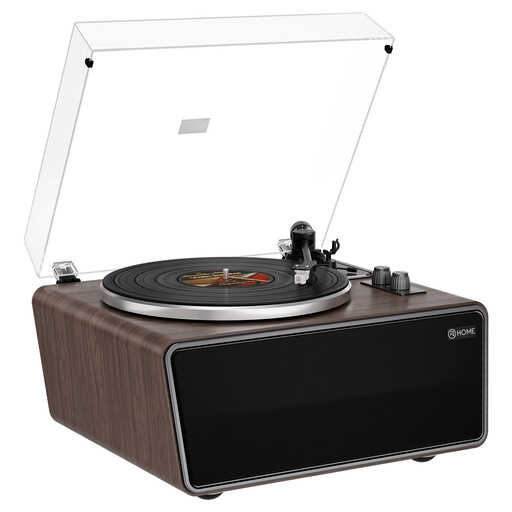
XJ-HOME XJ-H01 all-in-one turntable
For LPs and singles at 33⅓/45 rpm; the built-in speakers let you listen without separate speakers.
- 33⅓/45 rpm
- Built-in stereo speakers
- Phono/line outputs and USB recording
- AT-3600L (MM) cartridge
View at Joybuy
Frequently asked questions
Do I need a separate phono preamp?
It depends on the whole signal path. If the turntable has a line output with an integrated phono stage, set to the right mode, you can connect it to a suitable line input. If it only has a phono output, you’ll need a compatible phono input or a separate phono stage. Before buying, check the output, switch setting and input.
Can I play an old 78 rpm record with the supplied vinyl stylus?
For shellac, the 78 rpm setting alone isn’t enough. Ortofon specifies a larger stylus profile for these records, so check the record material and whether the specific cartridge is compatible before playing it.
Where should I place the turntable, and how should I care for pre-owned records?
Following Audio-Technica’s guidance for the AT-LP120XUSB, place the turntable on a level surface, away from or not on top of speakers, to reduce vibration and sound pressure. Ortofon advises against playing visibly damaged records. Follow the instructions for your specific model when cleaning records and caring for the stylus.
What rights apply when buying a turntable online in Germany?
According to Verbraucherzentrale, consumers who buy online generally have a 14-day right to cancel. If a product is faulty, your statutory rights apply against the seller and are separate from any voluntary guarantee. Whether a particular contract falls under an exception must be checked separately.
What should I look for in terms of product safety in Germany?
The Bundesnetzagentur lists a correctly applied CE mark, an identifiable product and manufacturer details, as well as German-language instructions and safety warnings, among the points checked during market surveillance. The CE mark alone isn’t an independent seal of approval for sound or quality.


