What should you look for when buying?
First, check your record formats and the signal path to your speakers. Then compare the controls and the options for replacing the stylus or cartridge.
| What matters to you |
What to check |
Who is it important for? |
| Connections and placement |
Check whether your speakers are active or passive, whether you have a phono or line input, how much amplification you need, and whether you have a level surface away from the speakers. |
If I want to use the speakers I already have in a large living room, the signal path and placement need to work. Around 33 % of consumers put connections and placement first. |
| Vintage record formats |
Check the speed of your records and, for shellac, whether the SP stylus is compatible with the cartridge. |
If my collection might include vintage shellac records, I want to check the format and stylus together. Around 27 % of consumers prioritise compatibility with vintage record formats. |
| Automatic operation |
Distinguish between fully automatic operation, auto-lift or auto-stop, and fully manual operation. |
If I want to handle the tonearm as little as possible while a record is playing, the exact level of automation matters. Around 20 % of consumers particularly value easy start-up and stopping. |
| Adjustability and ongoing costs |
Check the replacement stylus, cartridge mounting, adjustment options and required phono signal path for the specific model. |
If I want to replace or adjust components later, I’ll need compatible spares and a suitable signal path. Around 20 % of consumers prioritise adjustability and ongoing costs. |
Turntables at Joybuy
This selection includes turntables and compact systems for a range of connection and playback needs. If you’re listening to vintage soundtracks, pay particular attention to the listed speeds and, for shellac, check that the stylus is suitable too.
 No image available
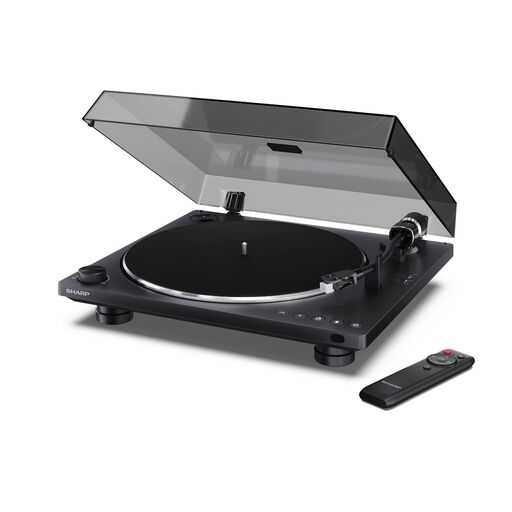
SHARP RP-TT95
For anyone looking for automatic playback and a choice of connections.
Bluetooth 5.4, USB-C recording, built-in preamp and RCA outputs.
View at Joybuy
 No image available
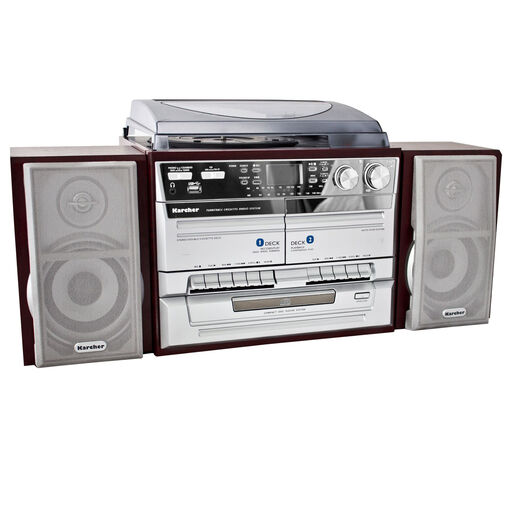
Karcher KA 320
For listeners who want to enjoy formats beyond vinyl records on one system.
Turntable with 33/45 U/min, two separate speakers, line-out, headphone socket and remote control. CD, cassette, radio and MP3 playback are also listed.
View at Joybuy
 No image available
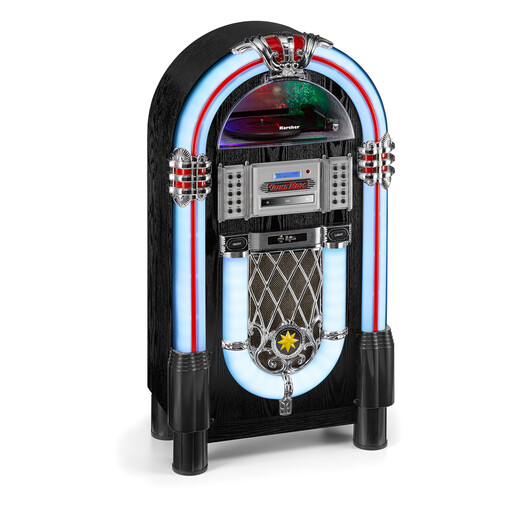
KARCHER 6608D
For listeners looking for a jukebox with a turntable and other playback options.
Listed speeds: 33, 45 and 78 U/min. It also features two speakers, Bluetooth, CD, DAB+/FM radio, and USB and SD card playback. If you plan to play shellac records, check that the stylus is suitable.
View at Joybuy
 No image available
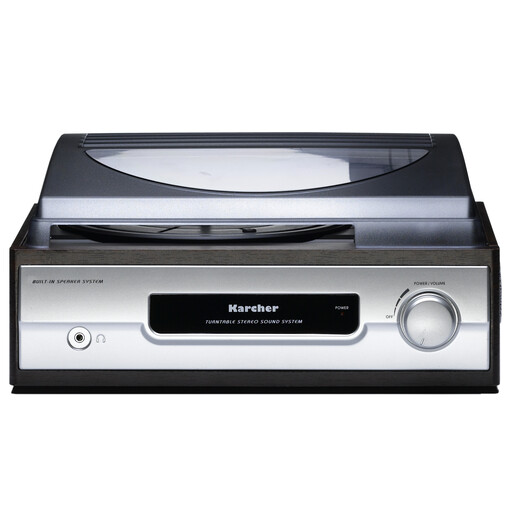
Karcher KA 8050
For listeners who want to play records through built-in speakers or an external setup.
Supports 33/45 U/min and features auto-stop, a headphone socket and line-out.
View at Joybuy
 No image available
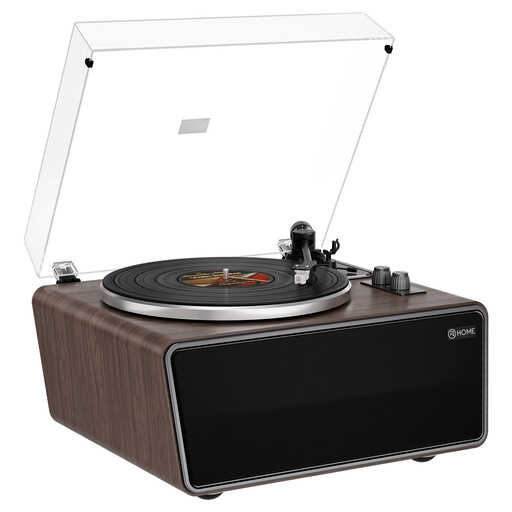
XJ-HOME XJ-H01
For listeners looking for built-in speakers and connections for an external setup in one device.
Features include four built-in speakers, an AT-3600L-MM cartridge, 33 1/3 and 45 RPM, and phono/line outputs. Bluetooth and USB recording are also listed.
View at Joybuy
Frequently asked questions
Can I connect a turntable directly to my existing speakers?
With active speakers, the output and input need to be compatible; you may also need phono preamp amplification, depending on the signal path. Passive speakers need an amplifier between the turntable and the speakers. Set the line or phono switch to match the connection you’re using.
Where should I place the turntable in a large living room?
Place it on a level surface, away from the speakers. In its AT-LP70XBT instructions, Audio-Technica notes that nearby speakers can cause vibrations; it doesn’t specify a minimum distance in metres.
Is 78 U/min enough for shellac records?
No. For shellac records, both the speed and the stylus need to be suitable. Audio-Technica offers a compatible SP stylus for shellac records at 78 U/min; also check that it works with the specific cartridge.
How should I care for second-hand soundtrack LPs and the stylus?
Use brushes designed for the purpose to remove dust from vinyl LPs and lint from the stylus, and follow the relevant equipment and accessory instructions. The information about the brushes mentioned applies to vinyl and doesn’t establish a cleaning method for shellac.
What extra equipment might I need?
Depending on your existing setup, you may need active speakers or an amplifier, as well as a suitable phono signal path. Shellac records may also require a suitable SP stylus; check that it’s compatible with the specific cartridge.


