What should you look for when buying?
Start by measuring your viewing distance and the space available. Then compare picture performance in your living room’s lighting and from your usual seating positions, and check that the reception options and running costs suit your needs.
| What matters when buying |
What to look for |
Who is this important to? |
| Screen size for viewing from a distance |
Measure the distance from the screen, take the picture quality of the programmes into account and check the TV’s overall dimensions. The Verbraucherzentrale notes that viewing distance and resolution work together. |
If I want to make out floor plans and façades from my usual seat, I want to consider viewing distance and screen size together. Around 34% of consumers put screen size first. |
| Picture performance in different lighting |
Compare the room lighting, reflections and picture performance of the specific model rather than relying on a technology label alone. The Verbraucherzentrale lists lighting conditions as a factor when choosing a TV. |
If you want to see bright façades and dark interiors in daylight, consider how the picture will look in your own room. Around 27% of consumers put picture quality first. |
| Picture quality from the side |
Consider the outermost seating positions and viewing-angle tests for the specific model. RTINGS.com explains that viewing angles matter in living rooms with several seating positions. |
If we’re watching together and not everyone is sitting in the middle, picture quality from the side matters to me. Around 13% of consumers say side viewing is their top priority. |
| Reception of the programmes you want to watch |
Check which channels you want and how you’ll receive them. For aerial reception, check for DVB-T2 HD with HEVC or a compatible receiver. The Verbraucherzentrale and the DVB-T2 HD information portal explain the requirements for aerial reception. |
If I want to watch architecture programmes using my existing reception setup, I first check that my TV or receiver is compatible. Around 13% of consumers put access to the programmes they want first. |
| Power use and installation |
Compare the EU energy label’s figures for SDR and HDR, and check the TV’s width, stand and weight against the space where you plan to put it. The European Commission explains the consumption figures in kWh per 1,000 hours. |
If I need to consider running costs and space, I look beyond the purchase price at power consumption and installation. For around 13% of consumers, ongoing costs and practical installation requirements come first. |
A look at relevant brands
The following brands and model ranges are included as a guide. The features mentioned relate to the specific models and aren’t a blanket assessment of the entire brand.
TCL
The 75C7K is a large-format QD Mini LED option to consider when comparing TVs for longer viewing distances.
- TCL lists Mini LED and a native 144 Hz refresh rate for this model range.
- Manufacturer figures for brightness and contrast aren’t independent measurements and can’t be applied to other TCL models.
Hisense
The 75U7Q is a 75-inch Mini LED option with a VIDAA interface.
- Hisense lists 4K resolution and Mini LED for this model.
- The model specifications are no substitute for comparing reflections and picture quality from side seats in your own room.
Samsung
The GQ85QN90FATXZG is an 85-inch Mini LED option if your viewing distance and available space point towards a larger screen.
- Samsung lists a resolution of 3,840 × 2,160 pixels for this model and uses the term “Glare Free”.
- The manufacturer’s claim about reflections doesn’t guarantee the same performance in every lighting condition or on other Samsung TVs.
LG
The OLED77C57LA is a 77-inch OLED alternative.
- LG lists 4K OLED and a native 120 Hz refresh rate for this model.
- LG notes that displaying static images for long periods can cause image retention on OLED TVs.
Sony
The dimensions of the K-75XR5 can help when planning where to put a 75-inch TV.
- Sony lists a width of 167,1 cm and a weight of 36,2 kg for the TV without its stand.
- These dimensions don’t confirm picture performance or whether your existing wall mount is suitable.
Joybuy products
This selection includes large-screen TVs listed as 75 or 85 inches, including QD Mini LED, Mini LED and Direct LED models. The right screen size still depends on your viewing distance and the space available.
 No image available
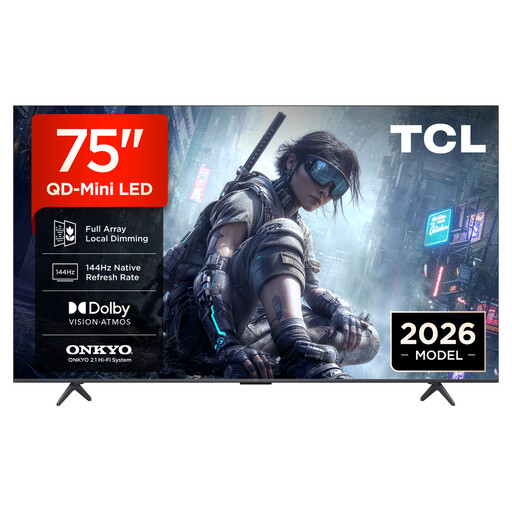
TCL 75T8D QLED TV
The listed 75-inch screen size may suit a longer viewing distance. Compare it with your actual distance and the quality of the programmes you watch.
The product name lists QD Mini LED, 4K HDR and Google TV. It also mentions Dolby Vision, HDR10+, 144 Hz VRR and Dolby Atmos.
View at Joybuy
 No image available
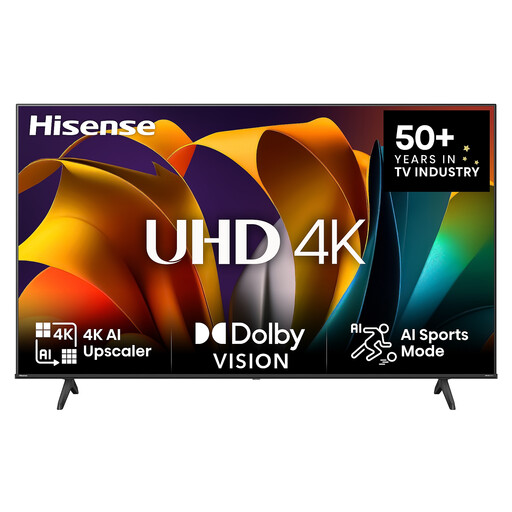
Hisense 75E6NT 4K UHD Smart TV
The 75-inch screen size and 4K UHD resolution make for a large picture, but you should judge whether it’s right for you based on your viewing distance.
The product name lists HDR, Dolby Vision, 60 Hz and a triple tuner. Check that the listed dimensions of 167,6 × 104,4 × 37 cm will fit where you plan to put it.
View at Joybuy
 No image available
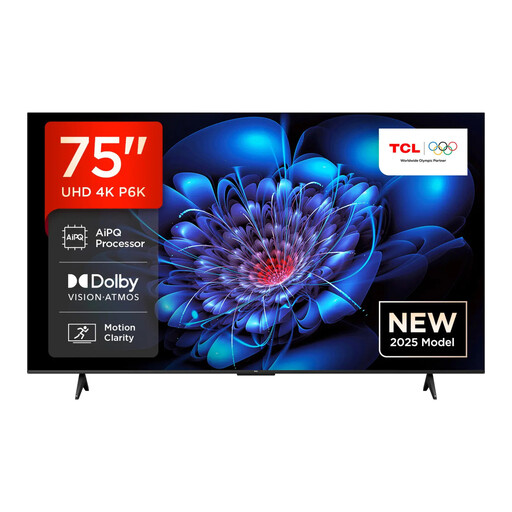
TCL 75P6K Direct LED TV
The product name lists 75 inches and 4K HDR. Compare the screen size with your viewing distance and the space available for the TV.
The title lists Direct LED and Google TV. For wall mounting, the product information specifies a 300 × 300 mm VESA mount, which isn’t included.
View at Joybuy
 No image available
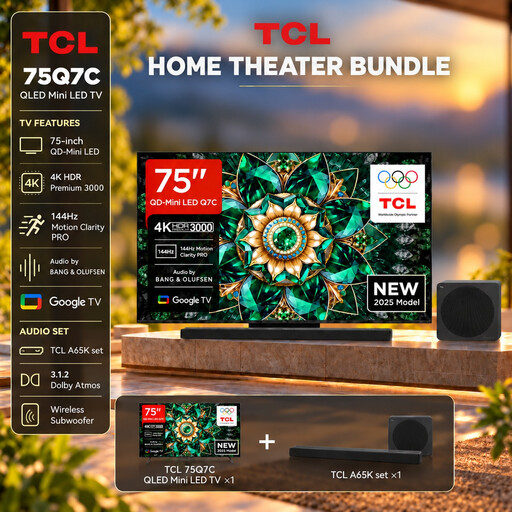
TCL 75Q7C with A65K soundbar set
The product name lists a 75-inch TV in this set. Check that the screen size and space it takes up suit your viewing distance and living room.
The name lists QLED Mini LED, 4K HDR, Dolby Vision IQ and 144 Hz VRR. The A65K soundbar set is included in the product package.
The listed width with the stand is 166,6 cm. Check that you have enough space.
View at Joybuy
 No image available
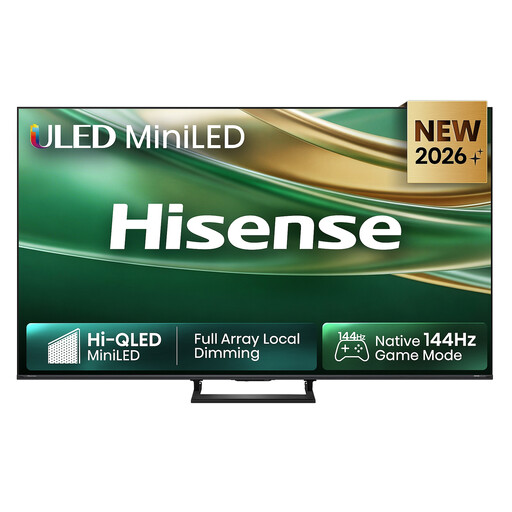
Hisense 85E8S 4K Ultra HD Mini LED Smart TV
The 85-inch screen offers a large picture, but you’ll need enough space and should check that it suits your measured viewing distance.
The product name lists 4K Ultra HD, Mini LED, 144 Hz, VIDAA, Dolby Vision IQ and Dolby Atmos. It also gives a weight of 27,5 kg, which you should factor in when placing or wall-mounting the TV.
View at Joybuy
Frequently asked questions
Is a 75-inch TV automatically big enough if I sit a long way from the screen?
No. The right screen size also depends on your actual viewing distance and the picture quality of the programme. The Verbraucherzentrale gives different recommended viewing distances for 75-inch TVs showing HDTV and SDTV. Also check the TV’s overall dimensions and your seating positions.
Do I definitely need a new TV to watch architecture programmes via an aerial?
No. You can keep using an existing TV with a compatible DVB-T2 HD receiver. For aerial reception in Germany, the key requirement is support for DVB-T2 HD with HEVC. Cable, satellite and internet use different reception methods.
What should I consider when setting up and looking after a large TV?
Check the TV’s width, stand and weight against your furniture or the wall mount you plan to use. LG notes that displaying static images for long periods can cause image retention on OLED TVs. Also follow the guidance in the manual for your specific model.
How do I compare power consumption, and what should I know about buying online?
The European Commission’s energy label shows consumption in kWh per 1,000 hours for SDR and HDR. Your actual electricity costs also depend on how long you use the TV and your tariff. According to the Verbraucherzentrale, online purchases generally come with a 14-day right to cancel. This is separate from your statutory rights if a product is faulty and from any voluntary guarantee.
Do I need to register a newly bought TV separately for the broadcasting fee in Germany, and what should I do with my old TV?
The broadcasting fee generally applies per home, not per TV. The Umweltbundesamt explains that large electrical items such as TVs can be returned free of charge when you buy a new equivalent item, subject to the stated return conditions. This also applies when the new item is delivered following an online purchase. Electrical waste must not be put in household rubbish.


