For art documentaries in a shared house, your TV should suit your actual seating positions and the room’s usual lighting. OLED may be a good choice for darker film scenes, while a suitable Mini-LED LCD could be worth considering in a room with lots of daylight. Measure viewing distances and available space before choosing, then compare the TVs using the same scene from a documentary. Neither resolution nor a matte screen surface alone proves that colours will be accurate or reflections minimal, as guidance from the Verbraucherzentrale and RTINGS.com on choosing a screen and display technology makes clear.
Which option is right for you?
Shared houses with seats to the side
If you watch together from the sofa and other seats, compare the picture from the angles you usually watch from. The Verbraucherzentrale lists lighting conditions and viewing angles as factors when choosing a screen size and where to position it.
Art lovers who care about picture detail
If you want to judge details and subtle colour variations, compare picture modes using a documentary scene you know well, and consider the source too. An HDR or colour-related label alone doesn’t prove that the picture is true to the original.
Shared houses with a bright living room
If you often watch during the day or opposite windows, check for reflections and see how the picture looks in your usual room lighting. RTINGS.com points out that how a screen handles reflections depends on more than whether its surface is matte or glossy.
What should you look for when buying as a household?
First measure your viewing distances and available space, then check the picture, access to documentaries and energy use on the specific TV.
| What matters |
What to check before buying |
Who is it most important for? |
| Picture from different seats |
Watch the same scene from the sofa and seats to the side; assess the picture on the specific model. |
If I want us to watch together from different seats, the picture should still be clear from the side. Around 25% of consumers say viewing angle is their most important consideration when buying. |
| Picture detail and colour |
Compare the same documentary scene in the available Film or Filmmaker picture modes, and consider the source. |
If art and fine picture details matter to me, I want to judge the picture using familiar content rather than relying on labels. Around 25% of consumers prioritise picture quality. |
| Picture visibility in daylight |
Consider windows and when you usually watch; check reflections and dark scenes in similar room lighting. |
If we watch during the day in a bright shared living room, the picture should remain clear despite the incoming light. Around 19% of consumers put daylight performance first. |
| Access to documentaries and clear dialogue |
Check your preferred streaming service, reception method, subtitles and dialogue clarity on the TV you plan to buy. |
If I want easy access to the documentary service I’m used to and to follow conversations at moderate volume, the right features matter for everyday life in a shared house. Around 19% of consumers prioritise access to documentaries and clear dialogue. |
| Size and energy use |
Measure viewing distances and available space; for suitable sizes, compare the SDR and HDR figures on the EU energy label. |
If the TV needs to fit in our shared room and its energy use needs to be affordable for the household, I’ll compare the size and energy label. Around 12% of consumers focus on space requirements and electricity costs. |
Avoid common buying mistakes
-
Assuming a matte screen means accurate colours
A matte or glossy finish alone doesn’t tell you how a particular TV handles direct reflections or raised black levels. It also doesn’t prove colour accuracy, as RTINGS.com points out in its guidance on screen surfaces.
Check reflections and documentary playback separately, ideally in the kind of light you usually have in your living room.
-
Choosing a size based only on the screen measurement
The screen diagonal needs to suit your viewing distance and available space. If you’ll be watching from the side, the picture at that angle matters too. Larger TVs tend to use more electricity, as the Umweltbundesamt explains in its guidance on TVs.
Note down your viewing distances and the space available before comparing models, then compare energy labels for TVs of a suitable size.
An unnecessarily large TV can increase energy use.
-
Confusing Art Mode with picture quality for documentaries
An art mode displays pictures when you’re not watching TV, but it doesn’t tell you how documentaries will look. Samsung distinguishes between free artworks and full access to the Art Store, which requires a paid subscription.
Only consider art mode if you’ll actually use it, and assess documentary playback separately.
A guide to popular TV brands
LG
The OLED C Series is one example of a 55-inch TV designed with films in mind.
- For the OLED55C56LB, LG lists Filmmaker Mode, Dolby Vision and webOS.
- LG marks this exact variant as no longer available on its German product page. This doesn’t tell you anything about other C variants or other retailers; the features listed are manufacturer claims, not independent proof of colour accuracy.
TCL
The TCL 55C7K is a QD Mini-LED LCD option that may be worth considering in a room with lots of daylight.
- For the 55C7K, TCL lists dimming and an HVA panel.
- These manufacturer claims don’t replace checking viewing angles in your own room; try the TV from your usual seats.
Samsung
According to Samsung, The Frame combines a 55-inch QLED TV with Art Mode and a frame-like design.
- Art Mode is worth considering if you’d like to display art on the screen when you’re not watching documentaries.
- Art Mode doesn’t prove a particular level of colour accuracy when watching documentaries. Samsung says full access to the Art Store requires a paid subscription, although free artworks are also available.
Philips
The 55OLED810/12 combines OLED with Ambilight, which may appeal to shared houses looking specifically for ambient lighting.
- Philips lists OLED, screen size and Ambilight among the model’s features.
- A marketing claim about particularly lifelike pictures isn’t an independent measurement and doesn’t prove that the TV is especially suitable for art documentaries.
Sony
The BRAVIA 5 K-55XR5 is another 55-inch LCD option.
- Sony lists Mini-LED, 4K Ultra HD, HDR and Google TV among the model’s features.
- These details don’t prove superior performance with reflections, sound or side seating; check these points against your room and seating arrangements.
Suitable TVs at Joybuy
The Joybuy models below include a Mini-LED LCD TV and a TV with Art Mode.
 No image available
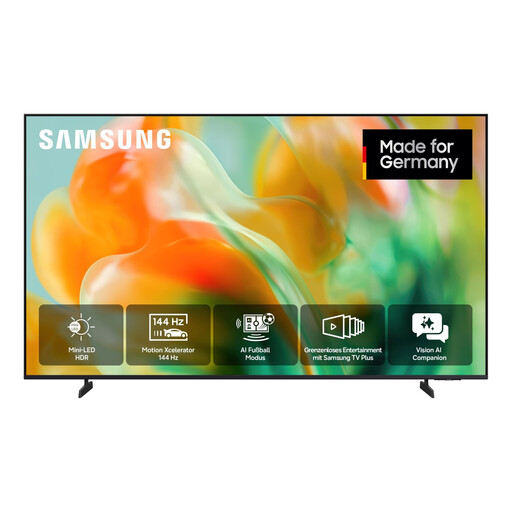
Samsung GU55M80H M80H Mini-LED 4K Smart TV, 55-inch
A good fit if you’re looking for a 55-inch Mini-LED TV with smart features for streaming documentaries.
55 inches, 4K, Mini-LED and Tizen with streaming apps.
View at Joybuy
 No image available
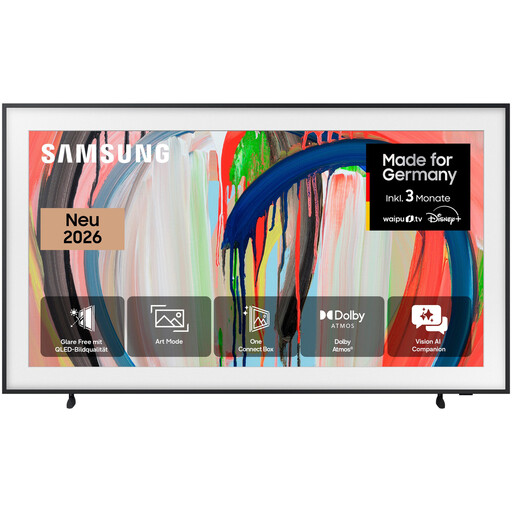
The Frame GQ55LS03HAU, 55-inch, 4K QLED Smart TV
A good fit if you’d like an art mode for the screen when it’s not in use, as well as a TV for documentaries.
55 inches, 4K, QLED and Art Mode; the description also mentions Tizen and Filmmaker Mode.
View at Joybuy
Frequently asked questions
Is the ARTE app available on every smart TV?
No, that can’t be guaranteed for every model. ARTE lists Google TV, Tizen and webOS among its supported systems and also mentions HbbTV. Check the app and how it works on the specific TV, as well as your internet connection and reception method.
What should you check before setting up the TV?
First measure the available space and viewing distances, then choose a suitable screen size. If you need delivery or installation, check what’s included and what it will cost before you buy.
How can you compare the energy costs of TVs?
For TVs of a similar size, compare the SDR and HDR figures on the EU energy label. Actual energy use also depends on how your household uses the TV.
Will your household need to pay an additional TV licence fee because of a new TV?
No. According to the Beitragsservice, there is generally one fee per home or shared house, regardless of how many devices or housemates there are. One person registers the home; any personal exemptions don’t automatically apply to all housemates.
What are your rights if a TV bought online is faulty?
For a consumer purchase from a business seller, EU rules provide at least two years of legal protection from the date you receive the TV. This is separate from any additional manufacturer’s guarantee. The EU also sets a 14-day cooling-off period for online purchases that are eligible for cancellation; the terms of the specific contract apply.


