
Lieferung heute & morgen

Qualitätsgarantie

Willkommens-Angebote freischalten: KOSTENLOSE Lieferung | Bis zu 80 % RABATT | Kostenlose 30-Tage-JoyPlus-Testphase
App herunterladen
An immersive TV backlight can fundamentally transform your viewing experience, whether for a movie night in your home cinema or during intense gaming sessions. However, the market is flooded with products whose marketing promises often don't align with reality. Before you invest, it's crucial to understand the most common pitfalls that lead to disappointment and unnecessary expense.
Many buyers report three central problems:
This guide will help you avoid these issues and make an informed decision.
To find a suitable solution that you'll enjoy for the long term, you should examine three core technical aspects. These largely determine the quality and functionality of your new home cinema lighting.
The method the lighting uses to capture the screen's colours is critical to the final result.
For most users looking for a flexible solution to retrofit an Ambilight-style system, a camera-based system is the more practical choice.
Not all LED strips are created equal. The technology used has a direct impact on the visual effects.
Good smart TV lighting is characterised by stable and intuitive control. Look for a well-developed manufacturer app (e.g., Govee Home, Yeelight) that receives regular updates. Also, check for compatibility with voice assistants like Amazon Alexa or Google Assistant to seamlessly integrate the TV lights into your smart home. Connectivity is usually via 2.4 GHz Wi-Fi, which is sufficient for a stable connection in most households.
Based on the criteria above, we have identified several products suitable for different user profiles and requirements.
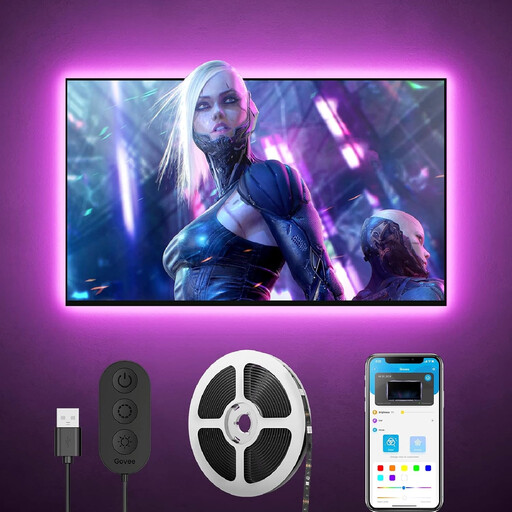
Why This Fits Their Persona: Ideal for users seeking a simple and effective solution to create atmospheric, static, or music-driven backlighting without the complexity of camera synchronisation. Perfect for enhancing the room's ambience.
This system intentionally omits camera synchronisation, thus bypassing the pitfall of inaccurate colour matching. It focuses on stable app control and simple installation.
Simple installation and control via the Govee Home app; music sync mode via a built-in microphone.
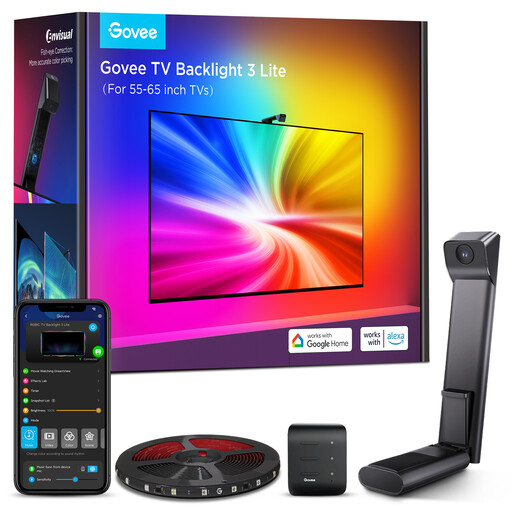
Why This Fits Their Persona: For anyone seeking immersive, dynamic lighting that precisely adapts to the on-screen content. This is a sophisticated solution for retrofitting an Ambilight-like experience on any TV.
Thanks to its enhanced camera technology and RGBICW LEDs, it avoids the trap of inaccurate colour sync. The colours are precise and the effects are fluid, ensuring true immersion.
Precise colour capture via camera for all video sources; RGBICW technology for vibrant, segmented colours and additional white light.
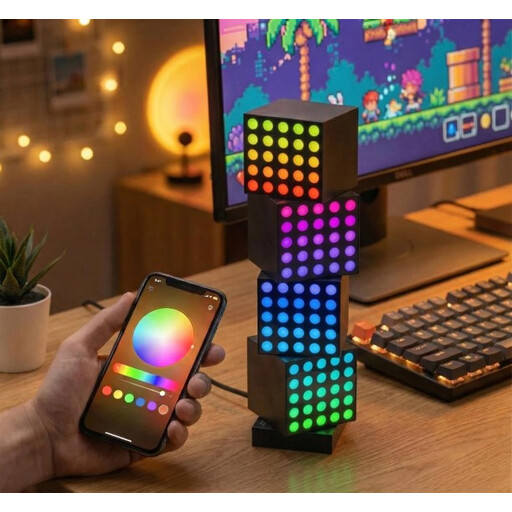
Why This Fits Their Persona: Perfect for gamers and creatives looking for a modular and expandable lighting solution. The cubes can be arranged individually to create unique light installations as gaming room decor, going far beyond simple TV backlighting.
This system isn't limited to the TV, thereby avoiding the pitfall of poor adhesion. As a modular system, it offers maximum creative freedom and isn't dependent on the shape or heat of a television.
Modular, magnetic design for countless configurations; syncs with PC games (via Razer Chroma & Overwolf) and music.
We have compiled a complete, up-to-date list of products that fully meet these strict selection criteria.
1. Does TV backlighting really reduce eye strain? Indirect light behind the television can reduce the perceived contrast between the bright screen and the dark surroundings. Many people find this more comfortable, and it can help your eyes feel less strained during long movie or gaming nights. However, this is a comfort feature and not a medical solution.
2. How do I install an LED strip for a TV correctly? For long-lasting adhesion, preparation is key. Thoroughly clean the back of the TV with a cloth to remove dust and grease. Plan the placement of the strip before peeling off the protective film from the adhesive tape. After applying, press the strip down firmly for a few seconds, especially at the corners, to ensure a stable bond.
3. What is the difference between RGB and RGBIC in TV lights? An RGB LED strip can only display a single colour across its entire length at one time. While you can change the colour, you cannot display multiple colours simultaneously. An RGBIC strip, on the other hand, has special IC (Independent Control) chips that allow different sections of the strip to light up in different colours. This is the prerequisite for dynamic effects like rainbows or flowing colour transitions that adapt to the on-screen picture.