
Lieferung heute & morgen

Qualitätsgarantie

Willkommens-Angebote freischalten: KOSTENLOSE Lieferung | Bis zu 80 % RABATT | Kostenlose 30-Tage-JoyPlus-Testphase
App herunterladen
A dynamic backlight can fundamentally transform a home cinema experience. It extends the picture beyond the screen, creating an immersive atmosphere. However, the market is filled with products whose promises often don't match reality. Before you make a decision, it's important to know the most common pitfalls to avoid a poor investment.
As your Joybuy Product Recommendation Officer, I'll help you understand the technical details and make an informed choice based on facts, not marketing hype.
Many buyers are disappointed with their new lighting after a short time. This is often due to overlooked flaws that are rarely mentioned in advertising.
To avoid these problems, you should check three core technical parameters before buying. These significantly determine the quality and longevity of your system.
The method by which the system captures image information is fundamental.
For the most flexible home cinema lighting, a high-quality camera system is usually the more practical solution.
The type of LEDs used has the greatest impact on visual quality.
Ensure the kit is designed for your TV size. A kit for a 55-65 inch TV will leave dark corners on a 75-inch model. An intuitive app for the TV LED strip is also essential. It allows for camera calibration, brightness adjustment, and the selection of different modes (e.g., Film, Gaming, Music Sync). Also, look for compatibility with voice assistants like Alexa or Google Assistant for seamless integration into your smart home.
Based on these criteria, we have identified products that represent a suitable solution for specific user groups.
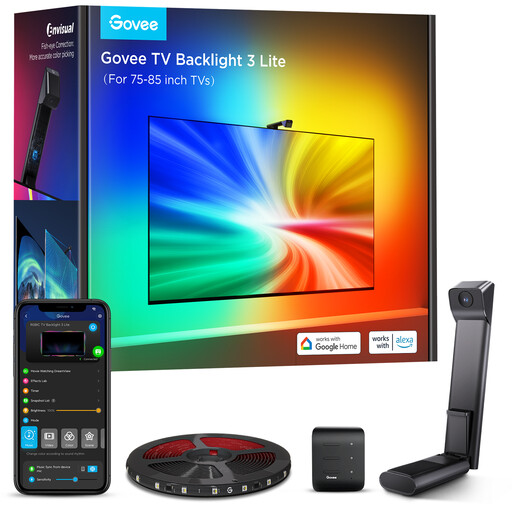
Why This Fits Their Persona: Ideal for users seeking precise and immersive colour synchronisation for large screens to maximise the cinema experience. This system is specifically designed for the demands of films and games on large diagonals.
The improved fisheye camera and Govee algorithm directly address the problem of inaccurate colour capture. The RGBICW technology prevents the flat colours of simple RGB strips.
RGBICW 4-in-1 LEDs: Offers segmented colours and a dedicated white chip for high colour accuracy. Gravity-Based Camera Mount: Simplifies installation on ultra-thin TVs.
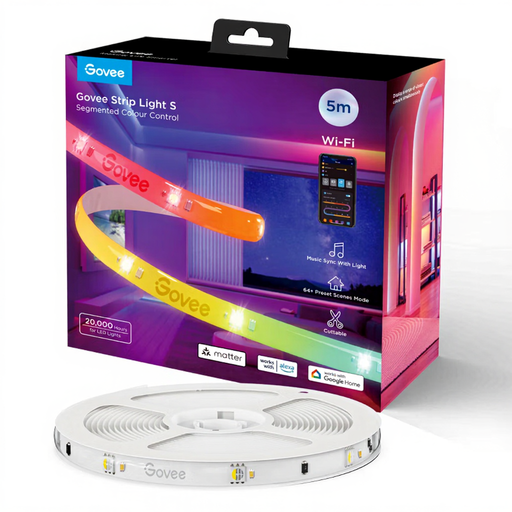
Why This Fits Their Persona: Perfect for users looking for versatile and high-quality ambient lighting that integrates seamlessly into existing smart home systems. The focus here is on customisation and connectivity, not necessarily on screen synchronisation.
This product bypasses the trap of inaccurate camera synchronisation by focusing on other strengths. It offers superior RGBIC light quality and future-proof connectivity for general mood lighting.
Matter Support: Ensures universal compatibility with Apple Home, Google Home, and Alexa. DIY Mode: Extensive customisation options via the Govee Home App, including music synchronisation.
We have compiled a complete, up-to-date list of products that fully meet these strict selection criteria and safety standards.
Yes, indirect lighting behind the television, also known as "bias lighting," increases the average ambient light in the room. This reduces the harsh contrast between the bright screen and the dark wall behind it. The human eye has to work less to adjust to the different brightness levels, which can lead to less fatigue during long film or gaming sessions. A neutral white light is often recommended for this purpose.
The accuracy depends on several factors: the quality of the camera, its positioning, and the processing algorithm. Modern systems like the Govee H6099 use fisheye lenses to capture a wider area of the screen. Careful calibration via the companion app is crucial for assigning colours correctly. Disruptive ambient light in the room can also affect colour detection; the best results are achieved in a darkened room.
This is not recommended. The kits are tailored to specific size ranges to ensure even illumination right to the corners of the screen. If a strip that is too short is attached to a larger TV, the corners will remain dark, which ruins the immersive effect. Always check the manufacturer's recommended TV size to avoid a patchy result.