
Lieferung heute & morgen

Qualitätsgarantie

Willkommens-Angebote freischalten: KOSTENLOSE Lieferung | Bis zu 80 % RABATT | Kostenlose 30-Tage-JoyPlus-Testphase
App herunterladen
A dynamic TV backlight that adapts to the colours on your screen can significantly deepen your viewing and gaming experience. Many people are therefore looking for an affordable way to retrofit Ambilight functionality. The market offers numerous solutions, but not all of them deliver on their promises. Before you make a decision, it's crucial to understand the most common pitfalls that can lead to disappointment and unnecessary expense.
As a Joybuy Product Recommendation Officer, I see it as my duty to filter market information and provide you with practical guidance. This guide will show you what to look for to find a suitable and functional smart TV lighting system for your home cinema or gaming room.
To avoid these problems, you should check three core aspects before buying. These will largely determine the quality and functionality of your new TV backlighting.
The way the system captures the screen's colours is the most important factor for an immersive experience.
For most users, especially in gaming and home cinema, a high-quality camera-based TV lighting system is the most practical and cost-effective solution.
As mentioned earlier, this is a non-negotiable point.
Ensure the chosen kit is designed for your TV's size. The strips should cover the back of the device as completely as possible without overhanging. Good app control (e.g., via the Govee Home App) is also important for adjusting calibration, brightness, and saturation to your liking. For convenient daily use, compatibility with voice assistants like Amazon Alexa or Google Assistant is a major advantage, making the lighting a fully-fledged part of your smart home.
Based on the criteria above, we have identified several products that represent a considered choice for different user profiles and budgets.
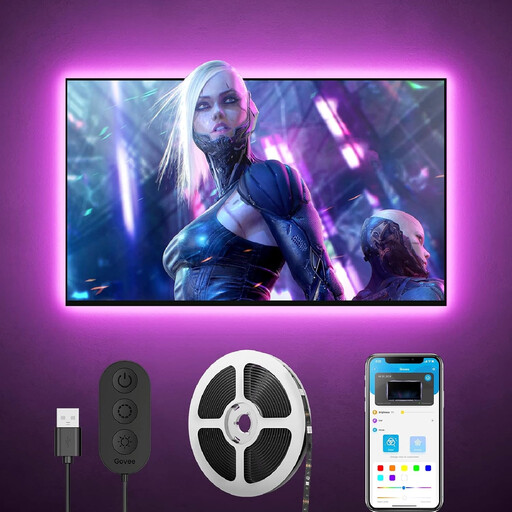
Why This Fits Their Persona: Ideal for users looking for simple and affordable ambient lighting. This kit offers static or music-controlled lighting without the complexity and cost of a camera system. It's a great starting point for experiencing the effect of backlighting.
This system doesn't promise screen-syncing colour reproduction, thus avoiding the trap of inaccurate synchronisation. It offers clearly defined features, like the music mode via an integrated microphone, making it an honest, basic solution.
Very low entry price; App control via Wi-Fi or Bluetooth; Music sync mode for parties or listening to music.
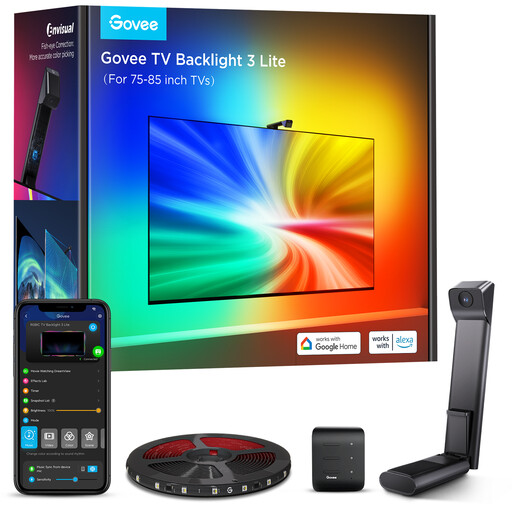
Why This Fits Their Persona: Perfect for owners of large TVs seeking an immersive movie experience. This system is specifically designed for screen sizes from 75 to 85 inches and focuses on accurate colour reproduction as a key home cinema accessory.
It directly solves the two main problems: The fisheye camera ensures precise colour detection, while the RGBICW technology (with an additional warm white chip) provides subtle colour gradients and better white reproduction.
Optimised for very large screens; Accurate colour detection via camera; Full smart home integration (App, Alexa, Google Assistant).
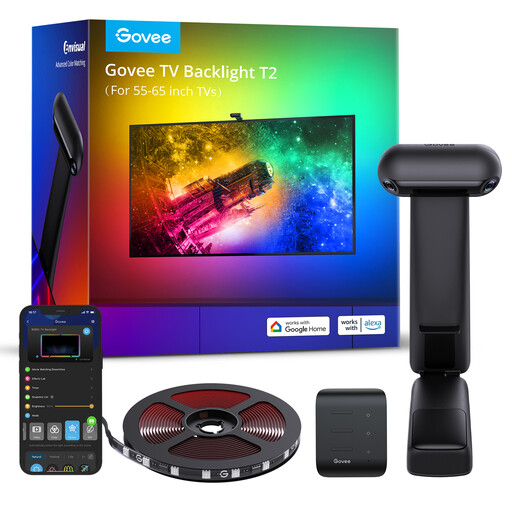
Why This Fits Their Persona: For gamers and tech enthusiasts who demand the highest precision for their gaming room lighting. The dual-camera design captures colours even more accurately and quickly, which is particularly advantageous during fast-paced scenes in video games.
This system maximises the precision of colour detection by using two cameras. This minimises errors that can occur with single-camera systems due to reflections or awkward viewing angles. RGBIC technology is, of course, a given here.
Increased colour accuracy due to the dual-camera setup; Especially responsive for gaming; Comprehensive customisation options in the Govee Home App.
We have compiled a complete, up-to-date list of products that fully meet these strict selection criteria and safety standards.
1. How much distance is needed between the TV backlight and the wall? For optimal and soft light distribution, a distance of 10 to 20 centimetres between the back of the TV and the wall is generally recommended. If the distance is too small, the light will appear too concentrated; if it's too large, the effect will lose its intensity.
2. Does LED backlighting shorten my TV's lifespan? No. Modern LED strips are powered externally and generate very little heat, which does not affect the TV's internal components. The installation has no impact on the lifespan or function of your device.
3. Does a camera-based TV lighting system work in a bright room? Camera-based systems work best in darkened rooms. Strong ambient light or direct reflections on the screen (e.g., from a window) can impair the camera's ability to detect colours accurately. For the best results, the room should be slightly dimmed during use.