
Lieferung heute & morgen

Qualitätsgarantie

Willkommens-Angebote freischalten: KOSTENLOSE Lieferung | Bis zu 80 % RABATT | Kostenlose 30-Tage-JoyPlus-Testphase
App herunterladen
Dynamic TV backlighting can fundamentally transform your viewing and gaming experience. It visually extends the screen, reduces eye strain in dark rooms, and creates an immersive atmosphere. However, the market is filled with products whose marketing promises often don't align with reality. Many buyers invest in systems that disappoint due to inaccurate colour reproduction, complicated installation, or poor smart features.
As your Joybuy Product Recommendation Officer, I'm here to help you navigate these pitfalls. This guide focuses on the crucial technical features that distinguish good from subpar TV lighting and shows you what to look for before you buy.
Before we get to the recommendations, it's important to understand the three most common issues that can lead to a bad buy:
To make an informed decision, you should focus on three technical specifications. These are the primary determinants of the quality and functionality of your future smart TV lighting.
The difference between these two technologies is fundamental to the lighting experience.
The precise synchronisation of the light colours with the on-screen content is the core feature of immersive TV backlighting. There are two primary approaches to retrofit an effect similar to the well-known Ambilight.
Modern indirect lighting for your TV should integrate seamlessly into your home. Pay attention to the following points:
Based on the criteria above, we have identified a few products that are suitable for different needs and budgets.
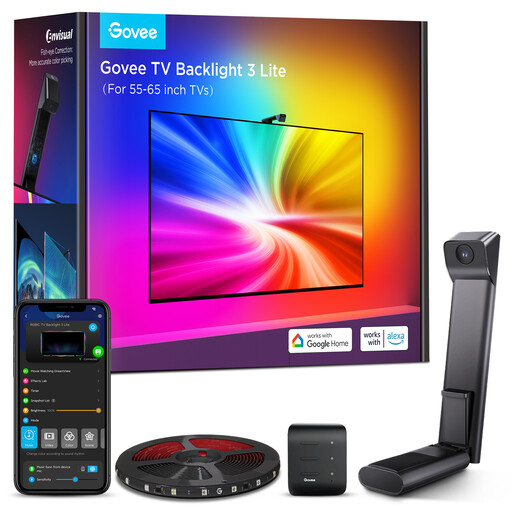
Why This Fits Their Persona: Ideal for users seeking an immersive experience similar to the Ambilight effect. The combination of a camera and RGBICW technology ensures precise and vibrant colour synchronisation that takes movie nights to a new level.
Thanks to its camera technology, it avoids the pitfall of inaccurate colour matching. The colours are scanned directly from the screen instead of reacting to ambient noise.
RGBICW Technology: Allows for smooth colour gradients and a dedicated warm white LED. Full Smart Home Integration: Compatible with Alexa and Google Assistant.
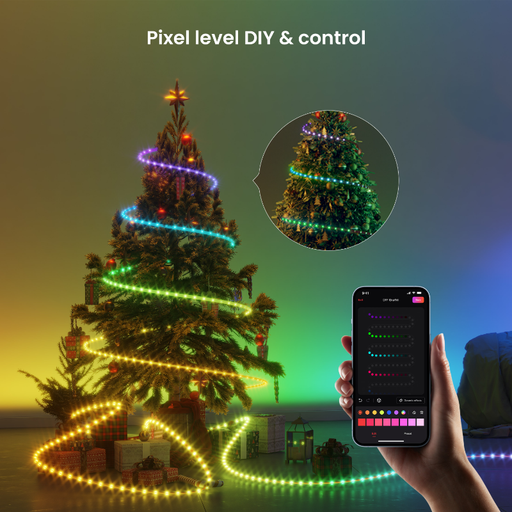
Why This Fits Their Persona: Perfect for designing a complete gaming room lighting setup. This flexible strip can be installed not only behind the TV but also on desks or walls to create a comprehensive, dynamic atmosphere.
It bypasses the limitations of outdated RGB technology. The RGBIC functionality enables complex, multi-colour effects that are essential for a reactive gaming setup and go far beyond simple, single-colour lighting.
High Customisability: Ideal for DIY projects and creative lighting installations. Gaming Integration: Syncs with popular gaming platforms for an immersive experience.
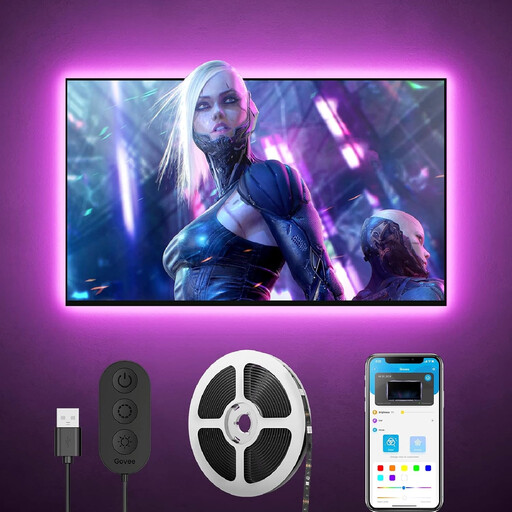
Why This Fits Their Persona: A solid and budget-friendly solution for users who want simple but effective indirect lighting to enhance the atmosphere and reduce eye strain, without needing complex screen synchronisation.
This system avoids the pitfall of poor control. It offers reliable app control via Wi-Fi/Bluetooth and a music mode with a built-in microphone, which represents great functionality at this price point.
Easy Installation: The 3-metre kit is suitable for common TV sizes (46-60 inches) and is easy to attach. Good Value for Money: Offers app control and various scene modes at an attractive price.
We have compiled a complete, up-to-date list of products that fully meet these strict selection criteria and all relevant safety regulations.
RGB LED strips can only display a single colour across their entire length at one time. RGBIC strips, on the other hand, have integrated chips (IC = Independent Control) that allow individual segments of the strip to be controlled independently. This enables the display of dynamic, multi-colour effects and flowing colour gradients, which is crucial for immersive TV backlighting.
The accuracy depends on the quality of the camera and its software. Modern systems, like the Govee TV Backlight 3 Lite, use a fisheye camera to capture a wide area of the screen. After a brief calibration via the app, the colour matching is typically very accurate and responds quickly to on-screen changes. The technology is mature and offers the most reliable method to retrofit the Ambilight effect regardless of the TV brand.
Technically, you can attach any self-adhesive LED strip to the back of your TV. However, to get dynamic lighting that syncs with the picture, you need a complete system that includes either a camera or special software for image analysis. A simple RGB strip without a control unit can only serve as static, single-colour indirect lighting.