
Lieferung heute & morgen

Qualitätsgarantie
App herunterladen
Kategorien
Choosing a TV stand is a decision driven by functional needs and spatial constraints. This piece of furniture not only provides a base for your television but also influences the room's layout and overall aesthetic. The key selection criteria are its dimensions, material quality, and the storage solutions it offers.
A systematic approach to selection ensures that your chosen TV unit meets both practical and aesthetic requirements.
The size of the TV stand should be in appropriate proportion to your television's screen size and the dimensions of the room.
The choice of material directly impacts the furniture's durability, maintenance, and style.
A well-designed storage concept is crucial for maintaining an uncluttered look in your living room.
Based on the criteria above, we present two models that represent different design approaches and functional priorities.
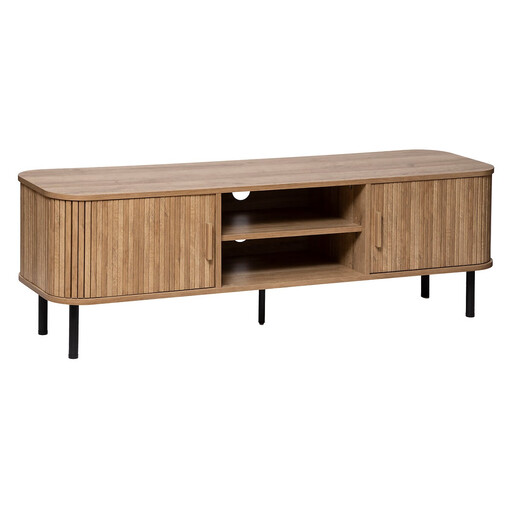
Why we're featuring this product: The Colva TV unit combines a warm wood-effect finish with a robust steel frame, embodying a balanced industrial style. Its MDF and particle board construction provides a solid foundation, while the two sliding doors offer a flexible, space-saving storage solution. With a width of 140 cm, it is suitable for common TV sizes up to 55 or 60 inches.
Pros:
Who it's for: This model is perfect for users seeking a functional living room sideboard with a natural yet industrial aesthetic. It fits well in interiors that feature a mix of wood and metal elements.
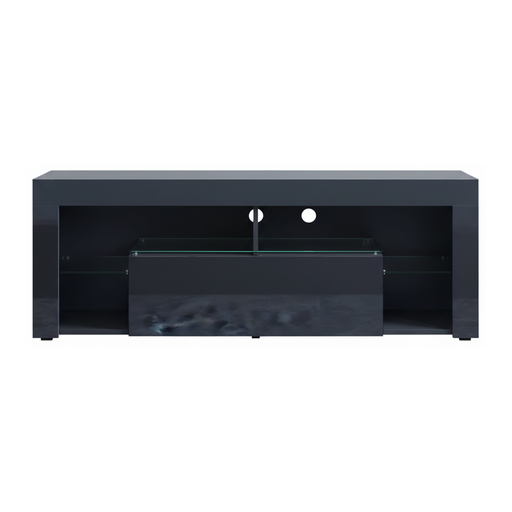
Why we're featuring this product: The SONNI lowboard is designed for a thoroughly modern and minimalist aesthetic. Its black high-gloss finish, handleless design, and integrated LED lighting with 12 adjustable colours make it a true centrepiece. The downward-opening flap door and glass shelf provide structured storage for media devices.
Pros:
Who it's for: This lowboard TV stand is aimed at users who prefer a clean, contemporary design and value technological features like ambient lighting. It integrates seamlessly into modern and minimalist living rooms.
If the featured models don't perfectly match your specific storage or design needs, a broader selection of furniture may offer suitable alternatives. In particular, if more closed storage is required, it may be worthwhile to explore the living room cabinets with doors category. There you will find various configurations that go beyond the function of a simple TV unit.
1. How high should a TV stand be? The optimal height for a TV stand depends on the seating height of your sofa or armchairs. The centre of the TV screen should be at eye level when you are seated. For most seating furniture, this height is between 90 and 110 cm from the floor. A lowboard TV stand with a height of 40 to 55 cm will typically position the television correctly.
2. What is the difference between a lowboard TV stand and a sideboard? A lowboard TV stand is specifically designed as a base for televisions and is therefore typically lower (under 60 cm). It often features open compartments for media devices and cable management solutions. A sideboard is generally taller (70 to 100 cm) and serves as a general storage unit in the living or dining room, often with a combination of doors and drawers.
3. How do you maintain a high-gloss finish on a TV unit? High-gloss surfaces should be cleaned exclusively with a soft, lint-free cloth (e.g., microfibre) and, if necessary, plain water. Harsh cleaners, abrasive agents, or hard sponges must be strictly avoided, as they can scratch the surface. Fingerprints can be removed by buffing with a dry cloth.