
Lieferung heute & morgen

Qualitätsgarantie

Willkommens-Angebote freischalten: KOSTENLOSE Lieferung | Bis zu 80 % RABATT | Kostenlose 30-Tage-JoyPlus-Testphase
App herunterladen
A TV cabinet should support your television securely, keep your devices neatly organised and blend in with your living room. In practice, however, buying mistakes are often caused by striking designs, unclear measurements or insufficient attention to cable management. So when choosing a TV lowboard or TV unit, you should look beyond the appearance of the front.
The screen size alone says little about how wide a television actually is. Depending on the bezel and stand, a 65-inch model may require different amounts of space. The television also needs a little clearance on either side so that the furniture does not look cramped.
You should therefore measure:
A lowboard for a television should ideally be wider than the TV itself. For larger screens, models around 160 to 180 cm wide offer more scope for styling and more surface space.
Closed doors keep dust and clutter out of sight. However, fully enclosed compartments can be problematic for games consoles, receivers or streaming devices if heat cannot escape sufficiently. Look for open compartments, cut-outs at the back or enough space around the devices.
A TV cabinet with doors is suitable for accessories, books and devices that are only used occasionally. A TV cabinet with drawers is practical for remote controls, cables and smaller items. For electronics, open compartments or cable openings are often more practical.
Embossed designs, gold-coloured feet or a wood effect influence the appearance, but they say nothing about load capacity, stability or the quality of the assembly. You should therefore check the stated materials, product weight, maximum load and instructions for securing the unit to the wall.
With MDF or chipboard furniture, properly fitted connectors are particularly important. The unit should stand on a level surface. For taller TV furniture or homes with children, additional anti-tip protection may be advisable.
Compare the external dimensions with the space available. The depth should accommodate not only the television, but also its connections and other devices. Also check whether the maximum load is sufficient for the television, soundbar and decorative items. A stated load capacity of 50 or 54 kg is more meaningful than a vague advertising claim such as “particularly sturdy”.
The height affects your viewing angle. A low TV lowboard creates a discreet look in modern living spaces. A taller TV cabinet may be more practical in a bedroom or where the seating position is raised.
Before buying, consider what you actually need to store:
A modern TV unit with several types of storage can be used more flexibly. The internal dimensions of the compartments are important here, not just the cabinet’s overall width.
Cable openings at the back make it easier to connect the television, sockets and source devices. Check whether the openings are large enough for the plugs and positioned where your connections are located.
Many TV units are supplied for self-assembly. Check whether any additional tools are required and whether assembly by two people is recommended. Once assembled, all screws should be tight, the doors should be properly aligned and the drawers should run smoothly without excessive resistance.
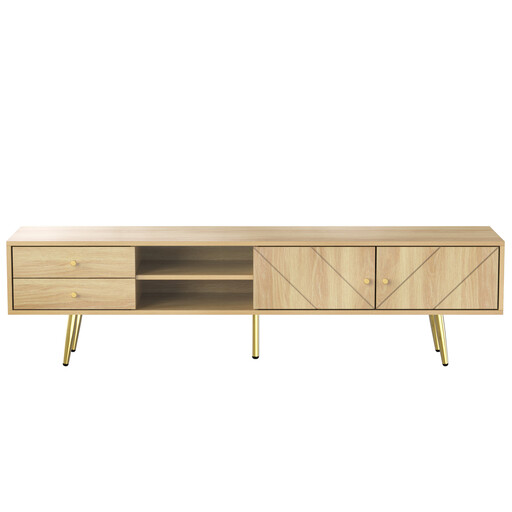
Why this product suits this profile: Measuring 160 × 36 × 42 cm, this TV unit offers a manageable footprint and several types of storage for typical living-room essentials.
The combination of two drawers, two doors and two open compartments ensures you get practical storage space rather than decorative fronts alone.
Stated maximum load capacity of 50 kg; MDF and chipboard construction; open compartments for easier access to devices.

Why this product suits this profile: Measuring 120 × 39 × 48 cm, this beige TV unit is aimed at buyers looking for a compact solution with functional fittings.
Two cable management openings at the back address a common problem with enclosed TV cabinets. Soft-close hinges and improved drawer runners are clearly specified features.
Cable openings at the back; soft-close door hinges; improved drawer runners.
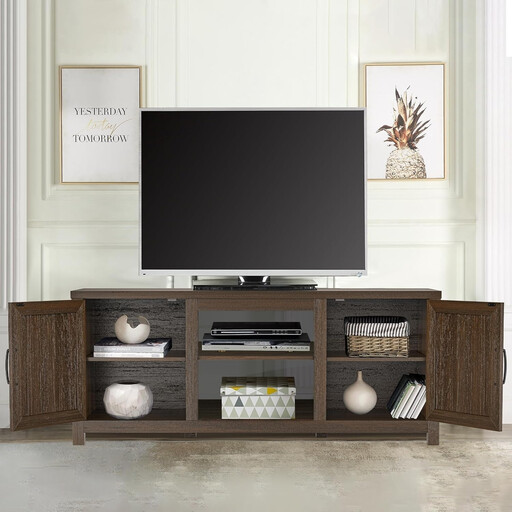
Why this product suits this profile: According to the product details, this 147.3 cm-wide TV unit is designed for televisions up to 65 inches and combines two enclosed doors with two open compartments.
The stated TV size recommendation makes it easier to narrow down your options. Open compartments reduce the need to operate electronic devices in fully enclosed spaces.
Two open compartments and two doors; adjustable shelves; stated maximum load capacity of 54 kg.
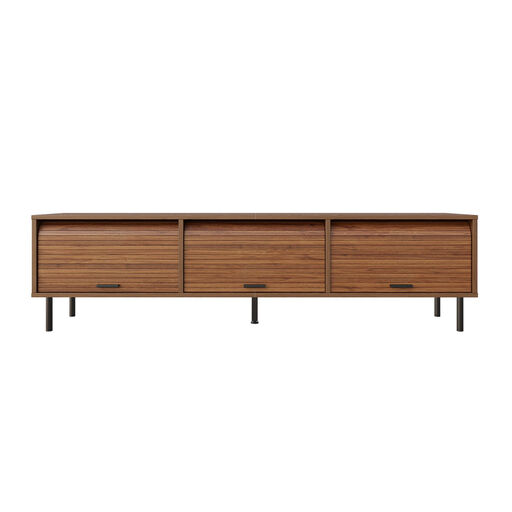
Why this product suits this profile: The 180 cm width and three sliding doors are ideal for spacious media walls with a distinctive wood effect.
Sliding doors do not need extra opening space in front of the unit. This is practical in narrow passageways or when positioning the cabinet close to a wall.
180 cm width; three sliding doors; walnut effect for a retro-inspired interior.
We have put together a complete, regularly updated list of products that fully meet these strict selection criteria and the safety regulations applicable in the EU.
Before buying a TV cabinet, compare the following points:
A TV cabinet should be at least as wide as the television. For a balanced appearance, it is advisable to leave a little extra space on both sides. For a large television, TV lowboards between 160 and 180 cm wide are often a sensible choice, provided the room can accommodate these dimensions.
Open compartments provide easier access and help ventilate receivers, consoles and streaming devices. Doors protect against dust and conceal accessories. For many living-room TV units, a combination of open compartments and enclosed areas offers a practical compromise.
Its service life depends on the material, assembly, load and care. MDF and chipboard furniture should not be overloaded or exposed to moisture for extended periods. Placing the unit on a level surface, tightening all connectors correctly and using anti-tip protection where necessary can help ensure long-lasting usability.