
Lieferung heute & morgen

Qualitätsgarantie

Willkommens-Angebote freischalten: KOSTENLOSE Lieferung | Bis zu 80 % RABATT | Kostenlose 30-Tage-JoyPlus-Testphase
App herunterladen
A TV cabinet should support your television securely, keep cables organised and complement your living style. In practice, however, unsuitable purchases are often caused not by the design, but by incorrect dimensions, misjudged storage space or unclear weight limits. It is therefore worth comparing the width, depth, material, compartments and safety features carefully before you buy.
The screen diagonal alone says little about whether a TV unit will look and fit right. What matters is the actual width of the television, including its stand, as well as additional space for speakers, a receiver or decorations.
A 150 cm TV cabinet, for example, is suitable for many medium-sized living areas. If you have an especially wide television or several additional devices, a 170 cm TV cabinet or 180 cm TV cabinet may look more balanced and prove more practical. You should also leave a few centimetres of clearance on either side between the wall and adjoining furniture.
A TV unit with open compartments gives you quick access to games consoles, receivers or books. At the same time, devices, cables and dust remain on show. By contrast, closed sections with doors are suitable for accessories, remote controls and items you do not want permanently visible.
A TV unit with doors is therefore not automatically more practical than an open model. The right combination depends on how many devices you need to connect and whether good ventilation is required.
A TV cabinet must support not only the television, but potentially a soundbar or decorative items too. Look for separate specifications showing the maximum load for the top surface and for each individual compartment.
Anti-tip protection is also advisable for taller furniture or homes with children. The unit should stand on a level, non-slip surface and be secured according to the assembly instructions. A TV base cabinet is not designed for sitting, climbing or placing particularly heavy objects on it.
First measure the available wall space and take sockets, radiators and walkways into account. TV units are often approximately 35 to 40 cm deep. If you have a deep receiver or games console, check that there is enough room behind the front panel and for the cables.
Height also affects viewing comfort. For a comfortable viewing angle, the centre of the screen should be roughly at eye level from your usual seating position. A low modern lowboard has a discreet appearance, while a taller TV cabinet can provide additional storage space.
A wooden TV cabinet may be made from solid wood, engineered wood or veneered or foil-wrapped panels. These materials differ in weight, appearance, care requirements and price. Engineered wood such as chipboard or fibreboard is identified accordingly in the product specifications and should be protected from moisture.
Easy-care surfaces are practical for everyday use. Aggressive cleaning products can damage coatings or rattan surfaces. A soft, slightly damp cloth is usually sufficient; delicate natural materials should be cleaned dry in accordance with the manufacturer’s instructions.
Check the number and arrangement of the compartments. A TV unit with storage may combine closed cupboards, drawers and open compartments. Openings at the back are important for Wi-Fi routers and consoles. Built-in cable management makes installation easier, but does not replace adequate ventilation.
Also check the direction in which the doors open and the internal dimensions. A compartment may look spacious from the outside but be restricted inside by back panels or shelves.
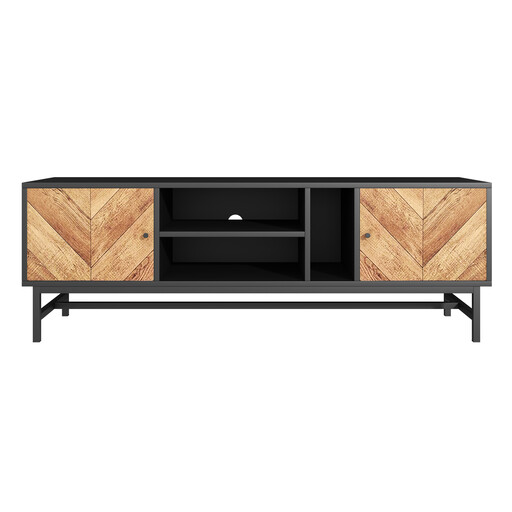
Why this product suits the profile: At 150 cm wide, with a combination of closed and open sections, it is suitable for compact to medium-sized living areas.
The product specifications state dimensions of 150 × 38 × 55 cm, a maximum load of 50 kg, two closed cupboards and several open compartments.
Black-and-wood contrast, iron legs and clearly divided storage surfaces.
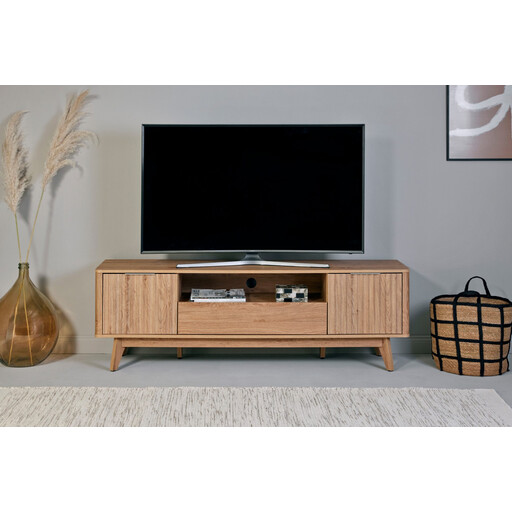
Why this product suits the profile: This 170 cm model combines a wide top surface with closed compartments, an open compartment and a drawer.
The specifications list six legs, a cable hole, two closed compartments, one open compartment and a drawer. Anti-tip protection should be fitted.
169.5 cm width, 39.8 cm depth, 54.4 cm height and cable routing at the back.
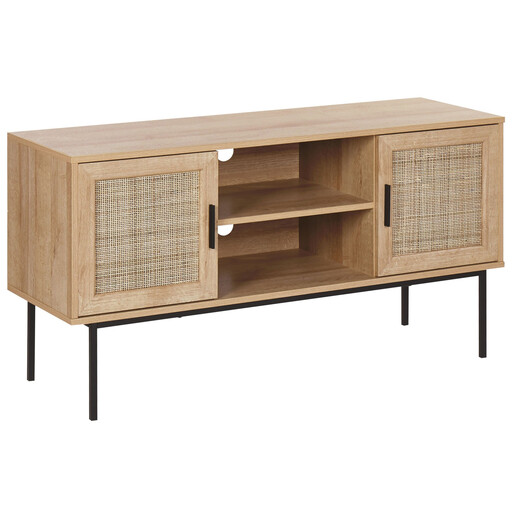
Why this product suits the profile: The light wood look, rattan doors and black metal legs add a natural accent to living rooms, bedrooms or home offices.
The product data gives dimensions of 120 × 39 × 63 cm, two doors, two storage surfaces, cable routing and a maximum top-surface load of 30 kg.
Two rattan doors, two open sections and a coated metal frame.
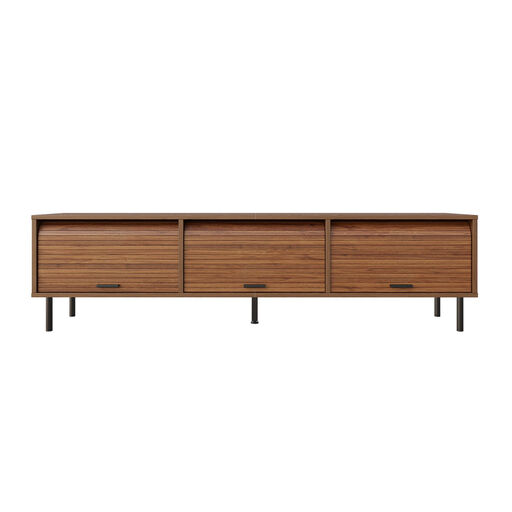
Why this product suits the profile: Its 180 cm width and three sliding doors appeal to users looking for a generous front with an understated retro look.
The three sliding doors can provide enclosed storage for small items and cable accessories that would otherwise be left on show. Check the internal dimensions and weight limits before buying.
180 cm width, walnut effect and three retro-style sliding doors.
We have put together a complete, regularly updated list of products that fully meet these strict selection criteria and the safety regulations applicable in the EU.
Measure the television’s actual width and allow some additional space at the sides. For many living areas, 150 to 180 cm are practical guidelines. The available wall space, the TV stand and the additional devices you want to use remain the key considerations.
Place the unit on a level, stable surface and follow the assembly instructions. For taller models, use the anti-tip protection supplied. Never exceed the stated maximum load, either on the top surface or in individual compartments.
Open compartments provide easier access and can support ventilation. Doors create a tidier appearance, but must leave sufficient clearance around devices and cables. Before choosing a particular TV unit, check the internal dimensions, openings in the back panel and the heat generated by your devices.