A Mini-LED TV could be a good choice for daytime screenings, provided the specific model can handle both reflections from windows and the brightness of standard SDR videos. An OLED is also an option if its anti-reflection treatment suits the conditions where you plan to use it. With either screen type, check the seating positions, screen size and playback of your own video files.
Who is this selection for?
Daytime presenters
If you often show project videos during the day, check whether the tall windows are reflected on the screen and how the specific model handles reflections. RTINGS recommends paying particular attention to anti-reflection performance in bright rooms with large windows.
Organisers with their own video files
If you want to play recordings from a mobile phone, computer or USB storage device, check that the playback methods and codecs supported by the specific model are compatible with your files. Sony notes that content using unsupported codecs cannot be played.
Groups with multiple viewing positions
For a group, actual viewing distances and seats off to the side matter just as much as screen size. The Verbraucherzentrale lists lighting conditions and viewing angles at the intended location as factors when choosing the right screen size.
What should you look for when buying?
Mini-LED and LCD TVs
A good fit if:You regularly show videos in bright daylight and the specific model offers good anti-reflection performance and sufficient SDR brightness.
Consider:Mini-LED does not guarantee protection from direct reflections of windows, so check reflections and viewing angles on the specific TV. RTINGS often identifies Mini-LED models as a suitable option for bright rooms.
OLED TVs
A good fit if:You also value contrast and a range of seating positions, and the specific model’s anti-reflection treatment suits the position of your windows.
Consider:OLED is not inherently unsuitable for daylight; the coating and reflection handling vary from model to model.
Entry-level LED and LCD TVs
A good fit if:Reflections from windows can be managed by choosing a suitable position, and you’re considering a simpler TV.
Consider:The terms LED and 4K alone don’t tell you how clearly standard videos will be visible in daylight.
Check anti-reflection performance and SDR brightness separately: according to RTINGS, high brightness does not automatically eliminate reflections from windows.
| Consideration |
What to check before buying |
Who it matters most to |
| Visibility in daylight |
Position of the windows in relation to the screen; model-specific tests for direct reflections and SDR brightness. |
When I’m showing videos during the day with tall windows nearby, I want to avoid reflections so that details in the garden footage remain visible. This is likely to be the top priority for around 36% of consumers in this situation. |
| Playing your own video files |
Check the file system and video and audio codecs against a sample recording; confirm USB, HDMI or supported streaming options. |
If I want my own recordings to play reliably with sound when we watch together, I’ll check file compatibility in advance. This is likely to be the main concern for around 29% of consumers in this situation. |
| Screen size for the group |
Measure viewing distances, seats off to the side and the available floor or wall space. |
With several viewing positions, I want to choose a screen size that lets everyone see the footage from where they’re sitting. Group viewing is likely to be the top priority for around 21% of consumers. |
| Purchase and running costs |
Compare the energy label and product information sheet for the same model; check delivery and installation services. |
When weighing up the purchase price and regular electricity use together, I want to compare the figures for the specific model. This is likely to be the main concern for around 14% of consumers in this situation. |
The Verbraucherzentrale points out that larger screens and more extensive features generally mean higher electricity consumption. The EU energy label and EPREL provide information on individual models to help you compare them.
Common buying mistakes
-
Focusing only on the advertised peak brightness
An HDR peak brightness figure doesn’t show how bright standard SDR videos will look or how strongly windows will be reflected on the screen.
For the room you plan to use, check the anti-reflection treatment and compare model-specific SDR brightness measurements separately.
-
Assuming USB guarantees video compatibility
A USB port alone doesn’t confirm that the TV supports the file system and video and audio codecs used by your recording.
Compare a sample file of your own with the model specifications and check the playback method you plan to use.
If the built-in player doesn’t support a file, you may need to use a different connection or a compatible media player.
-
Assuming similarly named models are identical
A similar series name doesn’t confirm that the model number or features are the same. For example, Sony K-65XR90 and K-65XR95M2 should not be treated as the same model.
Check the full model name against the product information sheet before comparing features.
Brands to consider
TCL
The C7K range includes a QD-Mini-LED option; the specific model can be assessed for a bright viewing room.
- TCL states that the C7K range offers up to 1008 dimming zones, “HDR 2600 nits” and 144 Hz.
- These manufacturer specifications are not independent SDR brightness measurements or reflection tests for the room you plan to use. (TCL Germany)
LG
The OLED55G68LW is a specific OLED model for buyers who also consider contrast.
- LG lists “Reflection Free Premium” and an integrated wall mount for this model.
- These specifications don’t automatically apply to other LG TVs. If windows face the screen, how well the anti-reflection treatment works in your room remains important. (LG Germany)
Samsung
The Neo QLED range includes Mini-LED models in several sizes, giving you different options to compare.
- Samsung describes Mini-LED as a technology used in its Neo QLED range.
- Anti-reflection performance and brightness are not specified consistently across all models, so check the individual model number. (Samsung Germany)
Sony
For the K-65XR90, Sony provides information on features including connections and USB video playback.
- For this specific model, Sony lists X-Anti Reflection, USB playback codecs, HDMI and AirPlay.
- Dimensions, weight and features need to suit your planned setup; information for the K-65XR90 does not automatically apply to the differently named BRAVIA 9 II. (Sony Germany)
Joybuy products
This selection includes Mini-LED and LCD TVs in various sizes. Depending on your viewing room, compare anti-reflection specifications, playback options and the dimensions of the specific model.
 No image available
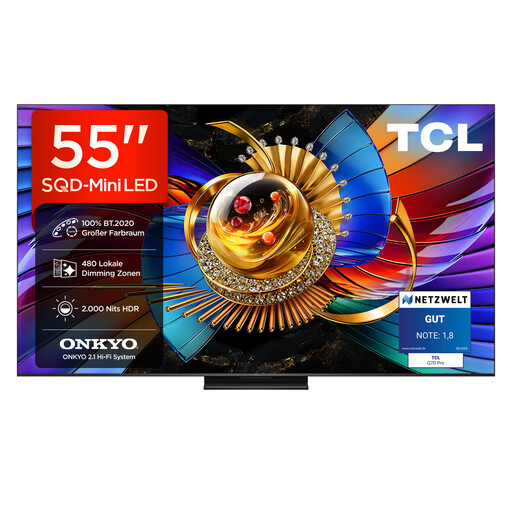
TCL 55Q7D PRO 55-inch 4K SQD Mini-LED TV
Could be worth considering for a bright room; the product’s “Anti-Reflection” specification is not a substitute for an independent reflection test.
480 dimming zones; HDR peak brightness of up to 2,000 nits according to the product specifications, not an SDR measurement; four HDMI ports.
Joybuy
 No image available
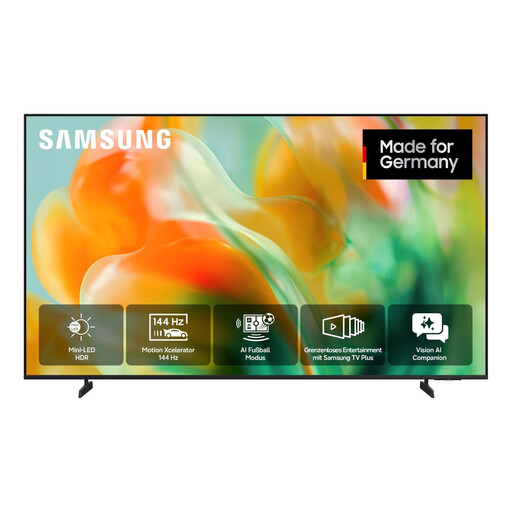
Samsung GU65M80H 65-inch Mini-LED 4K Smart TV
The 65-inch screen is one size option for group viewing; check that it suits your viewing distances and available space.
Mini-LED, 4K and 144 Hz are listed for this model.
Joybuy
 No image available
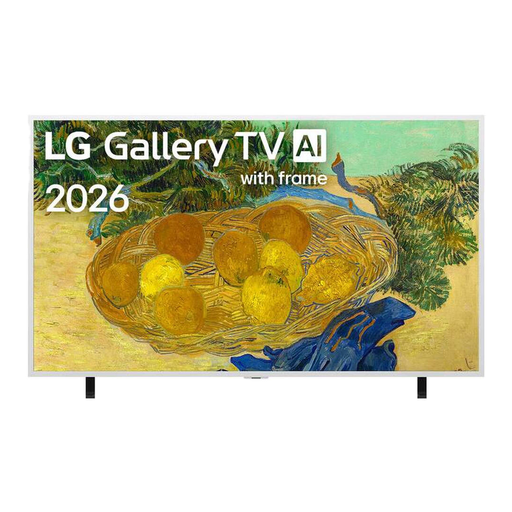
LG 65LX7B6LA 65-inch LX7 Gallery TV
The product description presents this Mini-LED model as suitable for bright living rooms; this is a product claim, not an independent performance test.
4K, Mini-LED, α7 Gen9 AI Processor, Google Cast and Apple AirPlay are listed. For wall mounting, the product description specifies a suitable bracket and professional installation.
Joybuy
 No image available
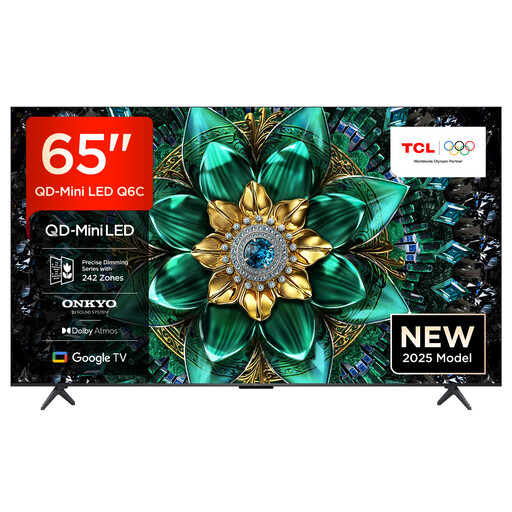
TCL 65Q6C 65-inch QLED Mini-LED TV
The product description lists a matte HVA panel and a wide viewing angle; check whether these features suit the position of your windows and seating.
4K, USB and four HDMI ports are listed. The description also mentions Google Cast, AirPlay and Miracast.
Joybuy
 No image available
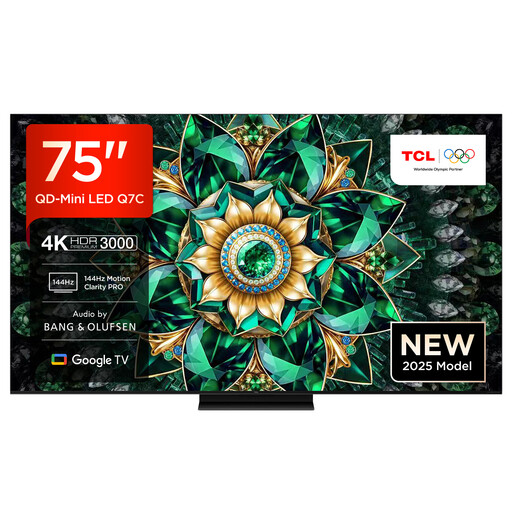
TCL 75Q7C 75-inch QLED Mini-LED TV
The 75-inch screen is an option for a larger group; check the space required and viewing angles beforehand.
4K, 144 Hz, HDMI 2.1 and AirPlay 2 are listed. The product description gives a width of 166,6 cm with the stand and a weight of 26,54 kg.
Joybuy
Frequently asked questions
Is a USB port enough to play our allotment garden videos?
No, a USB port alone doesn’t confirm that your files are compatible. Check the file system and video and audio codecs used by your recording against the specifications for the specific model. Sony notes that content using unsupported codecs cannot be played.
How do we choose the right screen size and position?
Measure the viewing distances and available floor or wall space, and take seats off to the side into account too. Check whether the tall windows are reflected on the screen at the planned location; screen size, lighting and viewing angle all go together. For wall mounting, the dimensions and weight of the specific model matter.
How do we compare the TVs’ electricity consumption?
Compare the energy information for the specific models using the EU energy label or EPREL. Your personal electricity costs will also depend on how long you use the TV and your electricity tariff.
What rights do you have when buying from a business seller?
Under the EU consumer rules outlined by Your Europe, faulty goods are covered by a legal guarantee of at least two years from receipt; this is separate from a voluntary manufacturer’s warranty. For online purchases, you generally have a 14-day right to cancel.


