If tall windows are reflected in the screen, check the anti-reflection treatment and brightness separately: greater brightness alone won’t prevent direct reflections. Mini LED/LCD with suitable anti-reflection treatment may be a sensible choice if you can’t easily control the light from your windows. OLED is still an option if you can manage the daylight and also watch TV in dimmer conditions. Compare reception options, the right screen size and energy consumption, too.
Who should consider these options?
Viewers sitting opposite tall windows
If you watch gardening programmes during the day and see bright areas reflected on the screen, check the anti-reflection treatment and how clearly you can see the picture where you plan to put the TV. RTINGS highlights the importance of anti-reflection treatment when dealing with glare.
Viewers in changing light conditions
If you watch TV in daylight and in the evening, compare how the specific model looks in both conditions rather than choosing based on OLED or Mini LED alone.
Viewers with different reception options
If you want to watch live channels or catch-up services, check the programmes you want, the reception options available to you and any internet features you’ll need before buying. The Verbraucherzentrale recommends considering both your current and future reception options.
What should you look for when buying?
| Concern |
What to check when buying |
Who is it most relevant to? |
| Window reflections |
Consider the windows, seating position and screen placement; check how the exact model handles reflections in similar daylight. |
If tall windows are reflected directly in the screen, I want to be able to make out programme details despite the bright areas. This is a key concern for around 42 % of consumers who are primarily concerned about reflections. |
| Picture quality in changing light |
Watch bright and dark scenes on the specific model in comparable room lighting; don’t treat manufacturers’ claims as equivalent to independent measurements. |
If you watch during the day and in the evening, consider how the picture looks in both situations. Around 25 % of consumers say changing light is their main concern. |
| Programme reception |
Check the channels and catch-up services you want against the cable, satellite, aerial or internet reception options available to you. |
If a particular live channel or catch-up service matters to me, I want to know in advance which reception option I’ll need. Reception is the main concern for around 17 % of consumers. |
| Size and energy consumption |
Measure your viewing distance and available space; compare the energy consumption and EU energy label of the specific TVs you’re considering. |
If you want a screen that’s the right size without going unnecessarily large, remember to consider running costs, too. Around 16 % of consumers prioritise screen size and running costs. |
Common buying mistakes
-
Assuming a high advertised brightness means fewer window reflections
A direct reflection can still be distracting, even when the picture looks bright enough. Brightness and anti-reflection treatment address different parts of the problem.
Check both separately, taking into account the position of your windows, your seating position and the time of day you usually watch.
-
Choosing based on display technology alone
OLED or Mini LED alone doesn’t tell you how clearly you’ll be able to see a specific TV in a bright room with a window.
Compare models in similar room lighting and distinguish manufacturers’ claims from independent tests.
-
Choosing a larger screen without considering space and energy use
Your screen should suit your viewing distance and available space. The Umweltbundesamt points out that energy consumption increases with screen size.
Measure up before buying and compare the energy consumption figures and EU energy labels of the TVs you’re considering.
-
Taking your preferred reception option for granted
A TV on its own won’t necessarily give you access to the live channel or catch-up service you want. The reception option and, where necessary, internet access are key.
Check the programmes you want, the connections available and any subscriptions you’ll need before choosing a TV.
Comparing the leading brands
Samsung
The German QN90F is a Mini LED/LCD option whose anti-reflection treatment is worth checking for daytime viewing.
- Samsung describes the anti-reflection treatment on the 75-inch GQ75QN90FATXZG as “Glare Free”.
- The manufacturer’s claim doesn’t guarantee that tall windows will be invisible in your room. High refresh rates for gaming aren’t a priority when choosing a TV for gardening programmes.
Sony
The BRAVIA 9 II range is one option to compare for bright rooms; the K65XR95M2PB model is listed for Germany.
- RTINGS rates the tested BRAVIA 9 II’s handling of window glare positively.
- There’s no evidence that the German product variant is identical to the tested TV. So don’t assume the test result applies to the K65XR95M2PB without checking.
LG
The OLED65G58LW is an OLED alternative if you can limit daylight and also watch TV in dimmer conditions.
- For this model, LG lists OLED, Pixel Dimming and automatic brightness adjustment.
- These specifications don’t provide independent measurements of how well it handles reflections from tall windows.
TCL
The German 65C8K offers a QD Mini LED option to compare for daytime viewing.
- For this model, TCL lists precise dimming with up to 3.840 zones and “HDR 4500 nits”.
- These manufacturer’s claims shouldn’t be taken as equivalent to measured brightness during typical TV programmes. Without proof that they’re the same model, the 65Q8C isn’t a variant of the 65C8K.
Hisense
The 65U8Q, listed in Germany, adds a Mini LED TV with VIDAA Smart OS to the comparison.
- Hisense lists Mini LED PRO and 4K resolution.
- Check the reception features and how the specific TV handles reflections against your needs; advertised picture performance doesn’t replace this check.
Joybuy products
The TVs below differ in screen size and display type, among other things. Before choosing, check that their handling of reflections, reception options and placement suit your daylight viewing setup.
 No image available
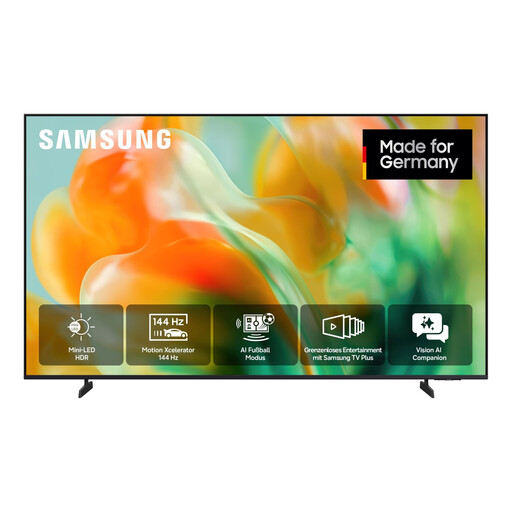
Samsung GU55M80H M80H Mini LED 4K Smart TV, 55 inches/138 cm
Could be suitable for watching gardening programmes via live TV or streaming; check that the reception options and apps you need are available for your household.
Mini LED; UHD 4K; 55 inches/138 cm.
View at Joybuy
 No image available
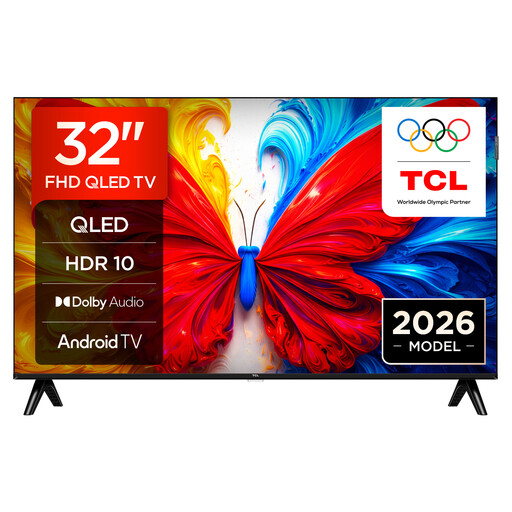
32S5L QLED TV, 32 inches, Full HD, Android TV
The compact screen size could suit a smaller space; check that it’s right for your viewing distance and the screen area you want.
QLED; 32 inches; Full HD; Android TV; 60 Hz.
View at Joybuy
 No image available
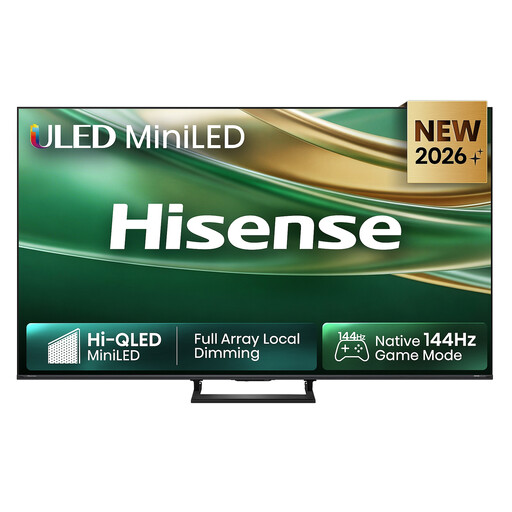
Hisense 55E8S 4K UHD QLED Mini LED Smart TV, 55 inches
Could be worth considering for watching gardening programmes in changing light; assess reflections where you plan to put it.
QLED with Mini LED; 4K UHD; 55 inches; 144 Hz; HomeOS U9.
View at Joybuy
 No image available
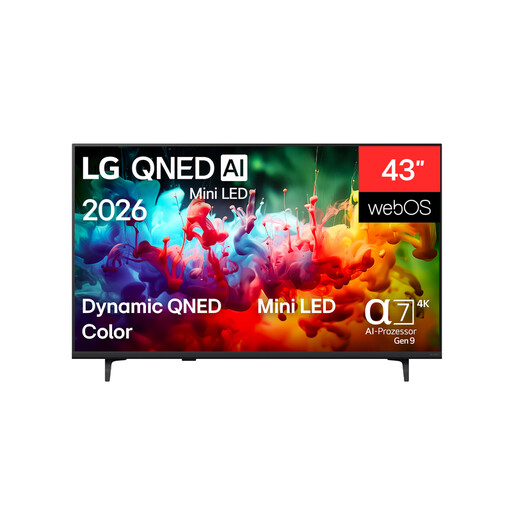
LG 43QNED72B6B 4K Smart TV with Mini LED, 43 inches
The 43-inch version could suit a more compact setup; check that the screen size matches your viewing distance.
4K; Mini LED; 43 inches; HDR; AI Brightness Control; 51 kWh/year.
Do not place the TV in direct sunlight.
View at Joybuy
Frequently asked questions
Can I put a bright TV directly opposite tall windows?
Brightness and anti-reflection treatment should be assessed separately: high brightness alone won’t prevent visible reflections. Check the planned position in typical daylight.
What do I need to access catch-up services or interactive TV?
First, check how you’ll receive the programmes you want. For HbbTV services, the Verbraucherzentrale says you’ll need an internet connection. Check whether a particular catch-up service is available on the specific TV you’re considering.
How can I keep track of energy and reception costs?
Compare the energy consumption and EU energy labels of specific TVs, and check any costs associated with your reception option. Since 1 July 2024, landlords have no longer been allowed to include monthly charges for a TV or broadband connection agreed in a tenancy contract in service charges. The Bundesnetzagentur explains that you may need to take out your own contract.
Will buying a new TV mean paying an additional TV licence fee?
The broadcasting contribution is generally charged per household, not according to the number of TVs. The Beitragsservice lists exceptions depending on your living and household circumstances, so check whether your home is already registered and which rules apply to you.


