Daytime viewers
If you watch nature documentaries with the curtains open, you’ll want to make out the landscapes without windows or lamps distracting you on screen.


If you watch nature documentaries during the day, start by looking at the screen’s reflection handling and how it performs in ambient light. A single peak HDR brightness figure won’t tell you enough. RTINGS suggests that Mini LED models are often a good choice for bright rooms; an OLED with proven anti-reflection properties may also be worth considering if dark scenes matter to you. You can then compare specific models by checking viewing distance, TV reception options, and SDR and HDR energy consumption.
If you watch nature documentaries with the curtains open, you’ll want to make out the landscapes without windows or lamps distracting you on screen.
If you switch between bright daylight and nature films in the evening, you’ll also care about dark areas of the picture, colour and how the image looks from different seats.
If you’re weighing up screen size and everyday practicality, you’ll want to consider energy use as well as the purchase price.
A good fit if: Your living room gets plenty of ambient light and you want to see bright landscape scenes clearly during the day.
The trade-off: Brightness alone tells you little about glare, so check the reflection handling of the specific model.
A good fit if: Dark scenes in the evening matter as well as daytime viewing, and the specific model has suitable reflection handling.
The trade-off: How well a TV performs in daylight depends on the model and the reflections in your room, so OLED shouldn’t be ruled out automatically.
A good fit if: Keeping the purchase price down is your priority and windows or lamps aren’t directly opposite the screen.
The trade-off: The terms LED and QLED don’t guarantee a particular level of anti-reflection performance or contrast, so compare the specific model.
For nature documentaries in a bright room, it’s worth assessing glare, picture performance and running costs separately rather than basing your decision on a single figure.
| What matters when buying | What to check | Who is it important to? |
|---|---|---|
| Glare and daylight | Window and lamp positions, as well as reflection handling and bright-room tests for the specific model. | If I watch with the curtains open during the day, I want to see the landscapes without distracting reflections on screen. That’s why around 36% of consumers put daylight visibility and reflection handling first. |
| Contrast and picture detail | Compare tests of bright and dark scenes; don’t confuse peak HDR brightness with anti-reflection performance. | If dark forest or underwater scenes matter to me, I look at contrast and colour as well as bright landscapes. Around 29% of consumers prioritise picture detail and contrast. |
| Screen size and seating | Measure the viewing distance and the space available for a stand or wall mount; consider seats to the side as well. | If several people watch from different seats, I want to choose a screen size and viewing distance that suit the room. Around 14% of consumers put screen size and seating first. |
| Purchase price and electricity | Compare the final price and the specific model’s energy label; consider SDR and HDR energy consumption separately. | If I need to weigh up the cost of buying the TV and its future energy use, I want to check both before deciding. Around 14% of consumers prioritise purchase price and energy consumption. |
| TV reception and content | Check the apps and content you want, as well as internet, cable, satellite or aerial reception. | If I want to watch nature documentaries on catch-up services or live TV, I check which reception options are available where I live. Around 7% of consumers put easy access to content and reception first. |
The German Consumer Advice Centre recommends factoring in your usual viewing distance when choosing a screen size. The EU energy label lists energy consumption separately for SDR and HDR content. To compare picture quality, you should also consult tests of the specific model’s reflection handling and performance in ambient light.
A high peak HDR brightness figure alone doesn’t tell you how much your screen will reflect windows or lamps.
Compare the positions of windows and lamps with reflection-handling and bright-room tests for the specific model.
RTINGS’ technology comparison describes common differences between Mini LED in bright ambient light and OLED in the dark. However, the features of individual models can make this simple rule of thumb less reliable.
Compare specific TVs under the lighting conditions in which you plan to watch, and check their reflection handling.
The Q7D Pro range includes a Mini LED option for shoppers who watch TV during the day.
The OLED evo G6 is an OLED option for shoppers weighing up dark scenes and daytime viewing.
The GQ65S99HATXZG model variant is an OLED option with a feature described as “Glare Free”.
Sony describes the BRAVIA 9 II as a TV with RGB LED backlighting.
The OLED 65OLED810/12 is an OLED option for shoppers who also value Ambilight when watching nature films.
The models below represent the Mini LED LCD option. If your room gets plenty of ambient light, you should also check the reflection handling of the TV you’re considering.
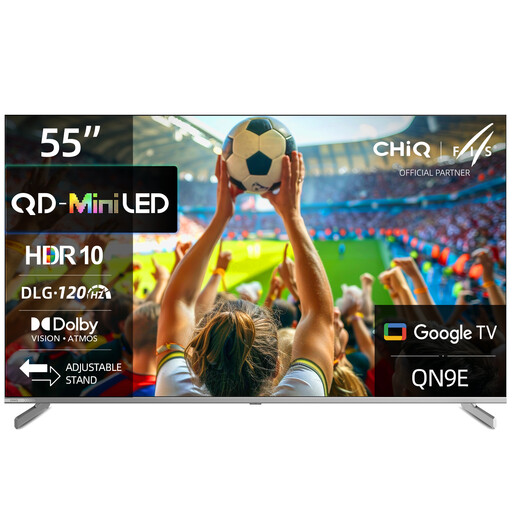 No image available
The 55-inch version is a Mini LED option if you’re looking for a smaller screen than the larger models also featured here.
The product name lists 4K, MEMC, Local Dimming, DLG 120Hz, Dolby Vision and Dolby Atmos. AirPlay and built-in Chromecast are also mentioned.
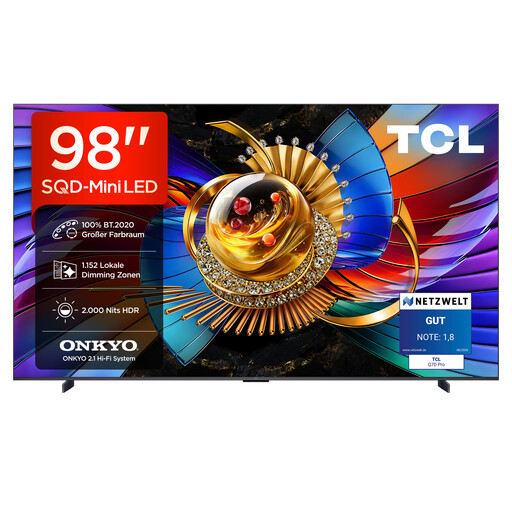 No image available
The 98-inch version could suit a room with enough space for a very large screen and the floor or wall space it needs.
The product name lists up to 1,152 Local Dimming zones, up to 2,000 nits HDR, Anti-Reflection and 144 Hz. Dolby Vision IQ, Dolby Atmos and Google TV are also listed. These peak figures are no substitute for testing reflections in your own room.
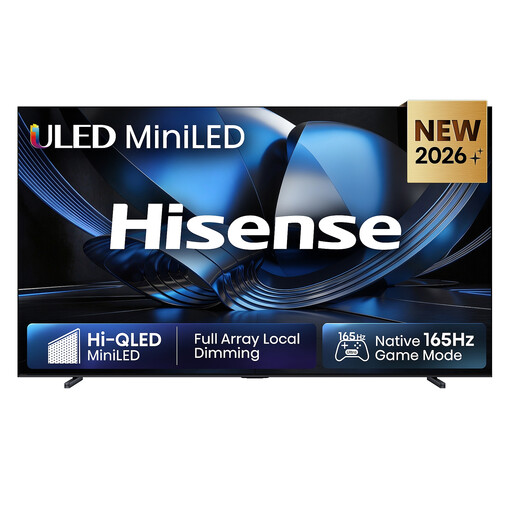 No image available
The 100-inch version is a Mini LED option for a living room with enough space.
The product name lists ULED, Mini LED, 4K, 165Hz, Dolby Atmos and VIDAA Smart OS. Check that the screen size suits your viewing distance and available space.
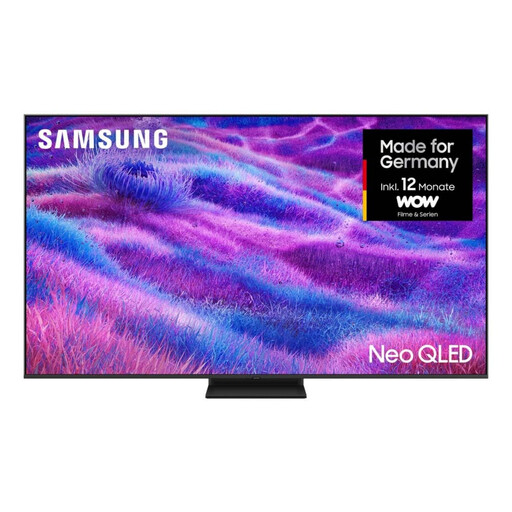 No image available
The 85-inch version is a Mini LED option for shoppers with room for a large screen in their living room.
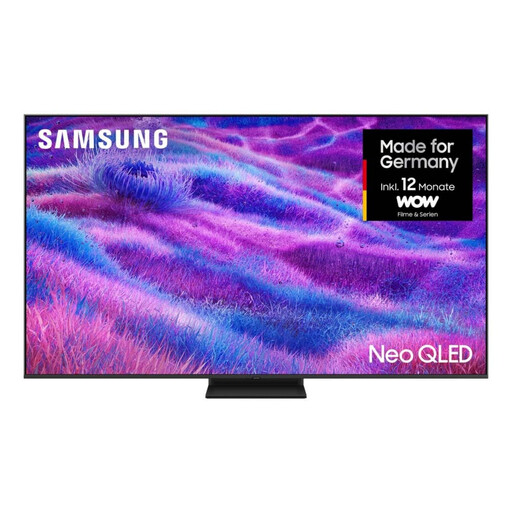
The product name lists Mini LED, Quantum Matrix Technology Core, 4K Upscaling and Dolby Atmos. The product description also lists 4K resolution, 120 Hz and HDR10+; its energy efficiency class is F.
 No image available
The 75-inch version has a smaller screen than the 85-inch QN80F model also featured here.
The product name lists Mini LED, Quantum Matrix Technology Core, 4K Upscaling and Dolby Atmos. The product description lists 4K resolution and 120 Hz. Check the energy label for the energy consumption of the exact model.
No, not on its own. Check for direct and indirect reflections as well as tests of picture performance in ambient light. Peak HDR brightness alone doesn’t tell you how clearly you’ll be able to see the content you usually watch.
Measure your usual viewing distance and the space available. For the specific model, also check the stand, wall mount and installation instructions. The manufacturer lists an integrated wall mount for the LG OLED55G68LW variant, but you shouldn’t assume this applies to other variants.
Compare SDR and HDR energy consumption on the EU energy label, and check for any delivery, installation and TV reception costs. In Germany, the broadcasting contribution is generally 18.36 euros per month per household, not per TV purchased; exemptions depend on your living arrangements and circumstances.
No, not necessarily. Germany’s Federal Network Agency lists DVB-T2 via an aerial, IPTV or internet, and satellite as reception alternatives. For catch-up services and Smart TV offerings, you should also check your internet connection and whether the apps you want are available.
No. The German Consumer Advice Centre distinguishes between your statutory rights against the seller and a voluntary warranty. If your TV develops a fault, check your rights with the seller as well as the terms of any advertised warranty.