
Lieferung heute & morgen

Qualitätsgarantie

Willkommens-Angebote freischalten: KOSTENLOSE Lieferung | Bis zu 80 % RABATT | Kostenlose 30-Tage-JoyPlus-Testphase
App herunterladen
A TV stand is the functional foundation for modern home entertainment electronics. Selecting the right model depends on objective criteria such as the dimensions of your television, the required load capacity, and specific storage needs. The quality of the materials and additional features, like integrated lighting systems, are also crucial factors that determine the furniture's durability and practical utility.
The decision for a TV unit should be based on an analysis of technical specifications. The following parameters are relevant for making an informed choice.
The dimensions of the lowboard must be matched to the size of the television. As a general rule of thumb, the stand should be at least 10 cm wider than the TV on each side to ensure visual balance and stability. For a sideboard for a 65-inch TV (approx. 145 cm wide), a lowboard with a width of at least 160 cm is therefore recommended.
The maximum load capacity, specified in kilograms (kg), is a critical specification. It must safely support the weight of the television as well as all other devices (gaming consoles, soundbars, receivers). Information on load capacity can be found in the manufacturer's product data sheets.
The most commonly used materials for TV furniture are engineered woods like MDF (Medium-Density Fibreboard) and melamine-faced chipboard (MFC). These materials offer high dimensional stability and allow for a wide range of surface finishes.
A TV stand with storage is essential for a tidy, organised look. The storage configuration should meet individual needs:
A TV cabinet with LED lighting can significantly enhance the room's atmosphere. There are various systems available:
Based on an analysis of product specifications and functional features, we present three models here.
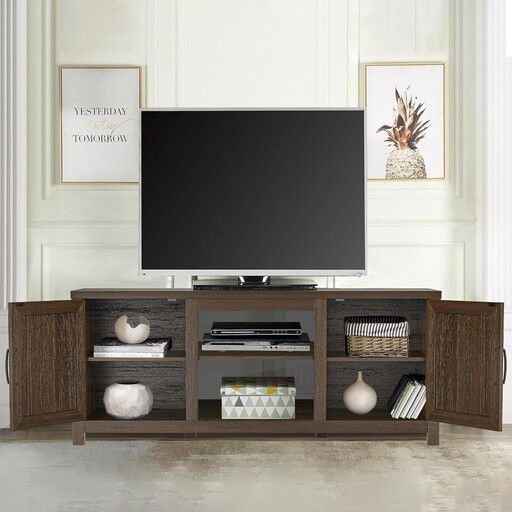
Analysis & Specifications This model combines a classic aesthetic with functional storage. Made from engineered wood (MDF), its 147.3 cm width provides a suitable base for TVs up to 65 inches. The maximum load capacity is 54 kg. The storage solution includes two open shelves and two closed compartments behind barn-style doors.
Pros:
Best for: Users seeking a combination of traditional design and practical storage for media devices and accessories.
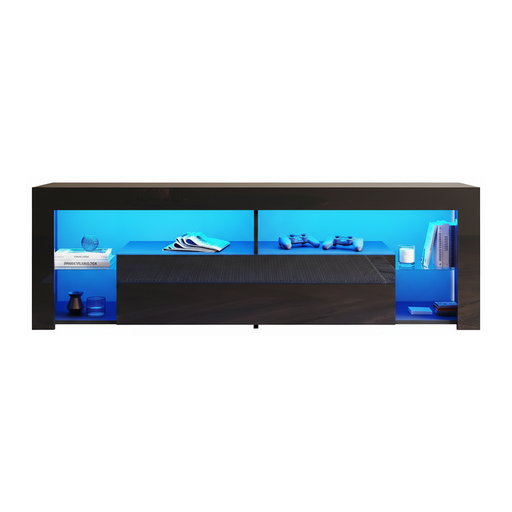
Analysis & Specifications This 160 cm lowboard is designed for a modern aesthetic. The black TV unit is made of melamine-faced chipboard (MFC) and MDF with a high-gloss front. It is designed for TVs up to 65 inches. A special feature is the integrated LED lighting, which can be set to 16 different colours. The storage is divided into one drawer and open glass shelves.
Pros:
Best for: Design-conscious buyers who want a minimalist and modern ambiance with atmospheric lighting for their living room.
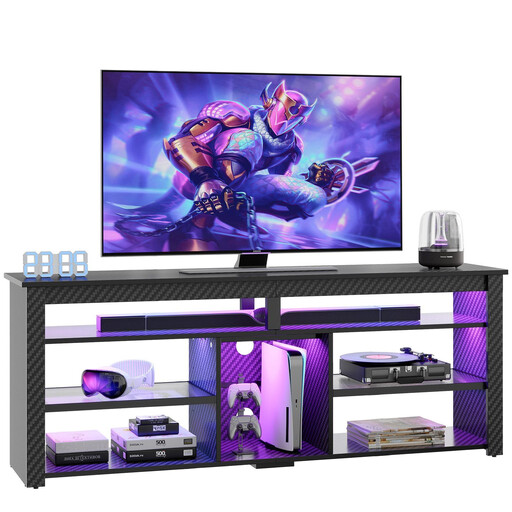
Analysis & Specifications This model is specifically designed as a gaming TV stand and is suitable for TVs up to 70 inches. It is made from P2 particle board and acrylic shelves. The maximum load capacity of the top surface is 80 kg. The standout feature is the dynamic RGB lighting system with 16 million colours and 366 modes. With six compartments, adjustable shelves, and dedicated cutouts for consoles and soundbars, it offers a highly functional solution for gamers.
Pros:
Best for: Gamers and tech enthusiasts who need a robust, functional, and atmospherically customisable hub for their entertainment setup.
The products featured represent a selection that covers specific design and functionality requirements. For a more comprehensive overview of different designs, materials, and sizes, you can find more models in our TV Furniture & Shelves category.
1. What width should a TV stand be for a 65-inch TV? A 65-inch TV has a screen diagonal of approx. 165 cm and a device width of about 145 cm. To ensure visual stability and leave space on the sides for decoration or speakers, the lowboard should be at least 160 cm wide. A greater width of 180 cm or more can further enhance the proportions.
2. What is the advantage of a TV stand with storage? A TV stand with integrated storage helps to maintain order in the living area. Closed compartments and drawers conceal accessories like controllers, cables, and DVDs. Open shelves provide space for media devices that need good air circulation and must be accessible via remote control. A well-thought-out storage concept contributes significantly to a clutter-free appearance.
3. Does a TV cabinet with LED lighting require a separate power connection? Yes, the LED lighting is typically powered by a supplied adapter that plugs into a standard wall socket. Most systems use a USB connection or a flat Euro plug that can be discreetly placed behind the unit.