
Lieferung heute & morgen

Qualitätsgarantie

Willkommens-Angebote freischalten: KOSTENLOSE Lieferung | Bis zu 80 % RABATT | Kostenlose 30-Tage-JoyPlus-Testphase
App herunterladen
A new TV lowboard can change the look of an entire room. But the selection is vast, and not every piece that looks good at first glance is a worthwhile long-term investment. Many buyers only realise after a few months that the material is sagging, the surface is prone to scratches, or the design is impractical for daily use. This guide will help you avoid common pitfalls and make an informed decision.
As your Joybuy Product Recommendation Officer, I filter the relevant information for you, so you can find a product that meets your needs both aesthetically and functionally.
Before we dive into the important features, let's look at the most common issues that lead to dissatisfaction. If you know what they are, you can actively avoid them.
To avoid a bad purchase, focus on three objective parameters. These will help you separate the wheat from the chaff and find a durable and practical TV unit.
The choice of material has a direct impact on stability and longevity.
Regardless of the material, the maximum load capacity (in kg) is an essential specification. Check the weight of your television and all devices that will be placed on or in the unit, and plan for a safety margin.
The right size is crucial for harmony and function.
For smaller rooms or a minimalist look, a wall-mounted TV board can be an excellent solution. This type of TV wall mount creates a floating look and makes cleaning the floor easier.
Consider what you need to store.
Here are some models tailored to different needs and interior styles.
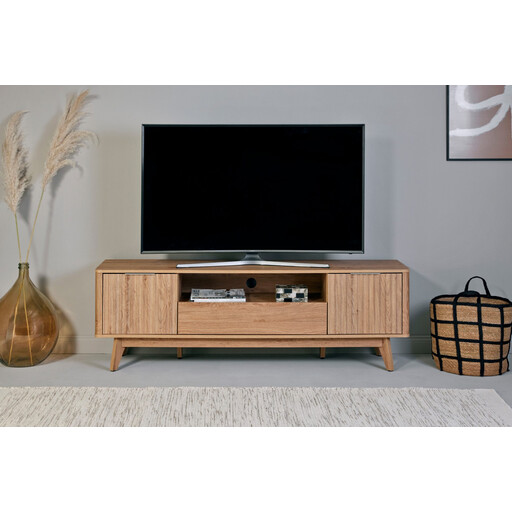
Why This Fits Their Persona: Ideal for users who need a combination of open and closed storage. At 170 cm wide, it offers ample space for large TVs and various media devices without looking cluttered.
Directly addresses the cable management problem with an integrated cable pass-through in the back panel. The sturdy engineered wood construction prevents sagging.
Versatile layout with a drawer, doors, and an open compartment. The dimensions are clearly specified, which simplifies planning.
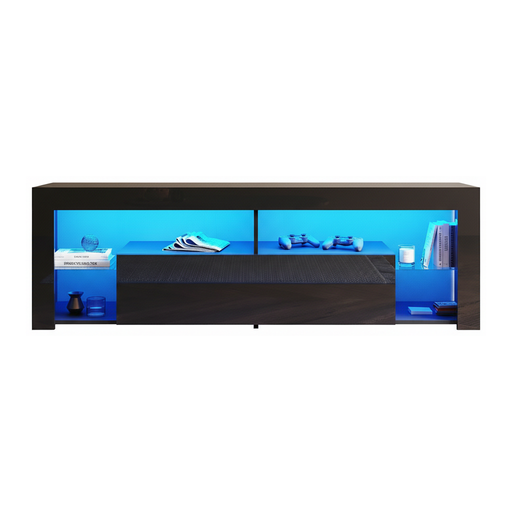
Why This Fits Their Persona: Perfect for fans of a modern, clean look. The black high-gloss finish and integrated, colour-adjustable LED lighting make this lowboard a real eye-catcher in the living room.
The clear dimensions (160 cm width) allow for precise matching with the TV size and room, avoiding the mistake of incorrect proportions. The material specification (MFC, MDF) provides insight into its construction.
Integrated LED lighting with 16 colour options to create atmosphere. The combination of a drawer and open glass shelves offers both concealed and decorative storage.

Why This Fits Their Persona: An ideal solution for anyone looking to save floor space and achieve a clean, floating look. The white, handleless design blends seamlessly into modern and minimalist interiors.
Solves the problem of bulky furniture in smaller rooms. As a wall-mounted TV board, it uses wall space efficiently and avoids visually overwhelming the room. The installation requires care, which encourages the user to ensure a stable mounting.
Space-saving, floating design that simplifies floor cleaning. The closed front ensures a very calm and uncluttered aesthetic.
Discover our curated selection of TV furniture that covers various styles and functional requirements.
The optimal height depends on your seating height. As a guideline, the centre of the TV screen should be at eye level when you are sitting on your sofa. For most seating arrangements, this corresponds to a lowboard height of about 40 to 55 cm. Measure your individual eye level while seated to determine the right height for your setup.
For a stable and aesthetically pleasing presentation, the TV cabinet should always be wider than the television. A good rule of thumb is an overhang of at least 10 to 15 cm on each side. For example, a board with a width of 150 to 180 cm is suitable for a 55-inch TV (approx. 123 cm wide).
A TV lowboard is typically a long, low cabinet-style piece of furniture that offers closed or open storage and has a closed, box-like shape. A TV rack or TV stand is often a more open, lighter structure primarily designed to hold the television and key devices. Racks often have a more technical look and are designed for functionality and air circulation.