
Lieferung heute & morgen

Qualitätsgarantie

Willkommens-Angebote freischalten: KOSTENLOSE Lieferung | Bis zu 80 % RABATT | Kostenlose 30-Tage-JoyPlus-Testphase
App herunterladen
A TV lowboard should support your television securely, keep cables tidy and provide space for devices, remote controls and accessories. In practice, however, poor purchases are often caused not by the design, but by unsuitable dimensions, unclear load limits or storage that is difficult to access. Checking a few technical details before buying can significantly narrow down your options.
The screen size alone does not determine how wide a TV cabinet should be. The television’s stand, the position of the speakers and the available wall space are also important. A 150 cm TV lowboard may be suitable for many medium-sized televisions. For particularly wide screens, however, the furniture should extend well beyond the stand or be designed with wall mounting in mind.
Measure the following in advance:
A lowboard with doors and compartments may look spacious in product photos, yet games consoles, receivers or Blu-ray players may not fit inside later. Check the internal dimensions carefully and look for open sections for devices that require remote-control access or generate heat.
Closed doors protect against dust and make cables less noticeable. Open niches, on the other hand, make devices easier to operate and ventilate. Adjustable shelves are useful when storing devices of different heights.
The maximum load of the top panel is not automatically the same as the load capacity of individual compartments. For example, the Beliani PASCO is specified as supporting 30 kg on the top panel and 5 kg per compartment. These limits should not be exceeded. The TV furniture must also stand on a level, non-slip surface. For taller models or households with children, suitable wall-mounted anti-tip protection is advisable.
A TV stand measuring between 120 and 150 cm wide is often suitable for compact living rooms or bedrooms. Larger models from around 170 cm provide more space for a soundbar, decorations and additional equipment. The Jahnke WAVE TV 170 measures approximately 169.5 × 39.8 × 54.4 cm and offers a comparatively generous width for large televisions.
The depth should suit both the room and the connections. TV furniture that is too shallow can make cable management difficult, while very deep models may restrict walkways in smaller rooms. Height affects your viewing angle: before buying, sit on your sofa and check whether the centre of the screen can be positioned comfortably.
Many wooden TV units are made from MDF, chipboard or other wood-based materials. When used correctly, these materials can be sturdy, but they are sensitive to standing moisture and harsh cleaning products. A textured wood finish, rattan front or 3D surface mainly affects the appearance and the amount of care required.
Look out for:
A modern lowboard with a cable opening at the back makes it easier to connect your television, console and sound system. Before buying, you should also establish whether the furniture needs to be assembled yourself. Illustrated instructions and labelled parts can simplify assembly. For larger TV cabinets, assembly by two adults is often advisable.
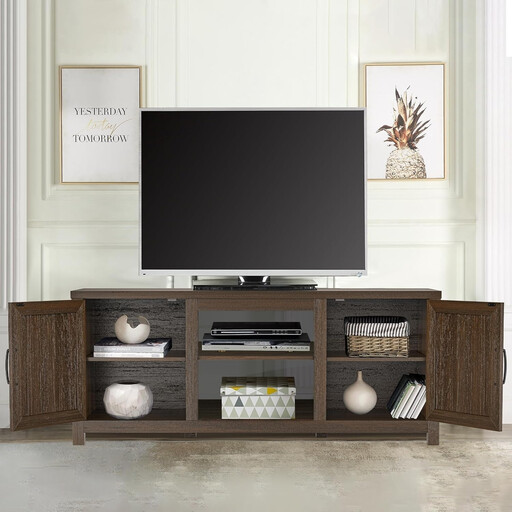
Why this product suits this profile: This 147.3 cm-wide TV unit has two open compartments and two closed doors. According to the product details, it is suitable for televisions up to 65 inches and works well in living rooms or bedrooms.
The stated TV size and maximum load of 54 kg provide clear guidance. The adjustable shelves help accommodate devices of different sizes.
MDF wood-based material, two open sections, two doors and step-by-step assembly instructions with labelled parts.
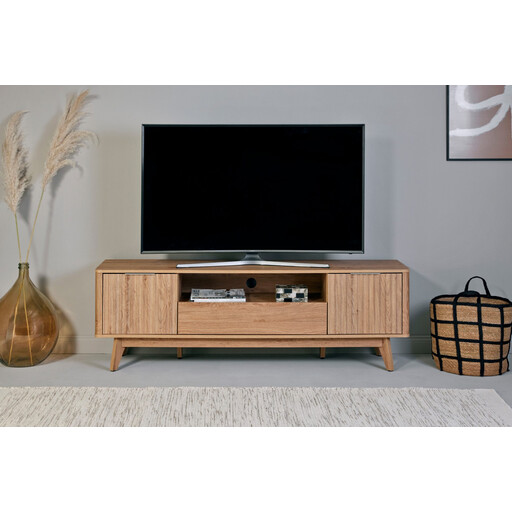
Why this product suits this profile: This 169.5 cm-wide TV unit features two closed sections, an open compartment and a drawer. The rounded corners, six legs and cable opening at the back are designed to create an organised media area.
The internal dimensions of the compartments and the cable opening are specified. This allows you to check in advance whether a receiver or sound equipment will fit.
Wood-based material carcass, metal handles, 12.5 cm floor clearance, plus assembly instructions and fixing materials included.
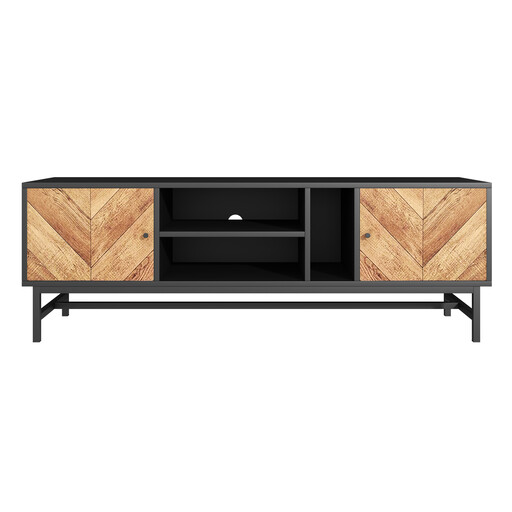
Why this product suits this profile: This 150 cm TV lowboard combines two closed cupboards with horizontal and vertical compartments. With a maximum load of 50 kg, it is suitable for a versatile media and storage area.
The 50 kg load limit and dimensions of 150 × 38 × 55 cm are clearly stated. This makes it easy to check in advance whether it is suitable for your television and accessories.
Chipboard carcass, iron legs with crossbar, two cupboards and a combination of open and closed storage areas.
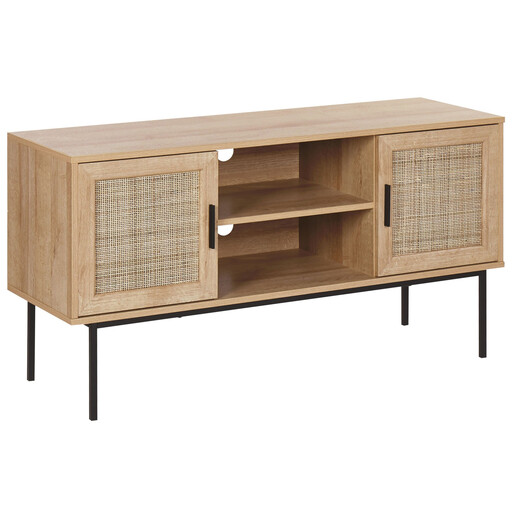
Why this product suits this profile: The rattan fronts, black metal legs and 120 cm width suit living rooms with Boho, retro or Scandinavian influences and limited floor space.
The load capacities for the top panel and compartments are stated separately. The TV unit also features practical cable management and clear care instructions for the wood-based material and rattan.
Two doors, two storage shelves, powder-coated metal legs and a stated assembly time of approximately 45 to 60 minutes.
We have put together a complete, regularly updated list of products that fully meet these strict selection criteria and the safety regulations applicable in the EU.
The furniture should cover at least the television’s footprint. Extra width on both sides creates visual balance and additional surface space. For large televisions, models from around 170 cm may be suitable, provided the room size and wall width allow for them.
The ideal height depends on your seating position, screen size and personal viewing angle. TV furniture is often between approximately 45 and 65 cm high. The key point is that, when seated, you should not have to look significantly upwards or downwards at the screen for extended periods.
Its lifespan depends on the material, load, assembly and care. Avoid overloading the unit, leaving it in standing moisture or moving it while the television is on top. Carefully retighten the screws after assembly and use the specified anti-tip protection for taller furniture.