Film nights with a wide seating area
You want costumes and stage colours to look true to life, even from the seats at the sides.


When several seats are positioned well to the side, the horizontal viewing angle of the specific TV should be a key factor in your choice. OLED is an obvious starting point, but an LCD with the right panel or viewing-angle technology is another option. For musical films, clear vocals, your planned audio setup and reflections in your own room matter too – a Dolby Atmos logo alone doesn’t tell you how singing and dialogue will sound.
You want costumes and stage colours to look true to life, even from the seats at the sides.
You pay attention to singing and dialogue, and are weighing up whether the TV speakers are enough or a suitable sound system would be worthwhile.
You also watch during the day, so you need to consider viewing angles, reflections and how the picture looks in your room together.
Assess seating angles, sound, room lighting and ongoing costs separately – one feature alone won’t answer every question.
A good fit if: side seats and dark film scenes matter; check the viewing angle and reflections on the specific model.
Trade-off: Burn-in remains a consideration if you mainly display static content; tests under extreme static loads don’t predict performance with changing musical films.
A good fit if: you’re looking for an LCD and wide viewing angles matter more than deep blacks in a darkened room.
Trade-off: IPS typically offers wider viewing angles, but lower native contrast than VA; RTINGS.com describes these differences between LCD panel types.
A good fit if: you mainly watch in a bright room or from seats near the centre, where contrast is a priority.
Trade-off: VA typically has a narrower viewing angle; the Mini-LED label alone doesn’t guarantee it’s suitable for side seats.
| Priority | What to check when buying | Who is it important to? |
|---|---|---|
| Picture from side seats | Try the seats at the sides and check for colour loss, changes in brightness and how dark scenes look on the specific model. | If I sit at the side too, I want the colours and picture to look as consistent as possible. Around 36% of consumers say viewing angle is their main priority. |
| Singing, dialogue and film music | Listen to voices and music; if you’re using a soundbar, check the connections, source and ARC/eARC signal path. | If I want singing and dialogue to be clear during my film night, I want to judge the sound for myself. Around 29% of consumers put sound first. |
| Daylight and reflections | Consider the screen’s position and light sources, and check for reflections from your intended seating angle. | If I watch during the day, I want to see how windows or lamps affect the picture from my seats. Around 21% of consumers are mainly concerned with picture quality in a bright room. |
| Energy and additional costs | Compare the EU energy label and EPREL data for the exact model; budget separately for any sound system you want. | If I’m considering the TV and a possible sound system together, I want to factor in energy consumption and any extra equipment I’ll need. Around 14% of consumers say overall costs are their main priority. |
With LCD TVs, the panel type also affects how the picture looks from the side. VA and IPS panels typically differ in viewing angle and contrast.
Check the viewing angle of the exact model from the seats at the sides.
Support for an audio format alone doesn’t tell you how singing and dialogue will sound through the built-in speakers. For external playback, the source and connections need to suit the signal path.
Listen to voices and music, and check the connections and ARC/eARC signal path if you’re using a soundbar.
You may need a compatible sound system for external playback.
Philips OLED910 and MLED910 are different model names; MLED910 is a Mini-LED TV, not an identical replacement for the OLED910.
Compare the full model number and key features rather than relying on similar digits.
The German product information for the OLED65C56LB lists OLED, Dolby Vision, Dolby Atmos and Clear Voice Pro. This model may suit a wide seating area if you want built-in voice-enhancement features.
The German product information for the BRAVIA 8 II lists OLED, Dolby audio formats and eARC. This is worth considering if you’re looking at picture quality and your planned external audio setup together.
According to the German product information, the 65OLED810/12 combines OLED with Ambilight, Dolby Vision and Dolby Atmos. It’s an option if you specifically want the lighting effect.
The German product information for the TV-65Z95BEG lists OLED and an integrated 360° Soundscape Pro system. It may be worth a closer look if you want as much sound as possible to come from the TV itself.
The German product information for the S90H lists OLED and Glare-Free technology. This could be a useful starting point if distracting light is an issue in your room.
This selection features OLED and Mini-LED TVs for watching films from side seats. Check the viewing angle, sound and lighting conditions for each specific model.
 No image available
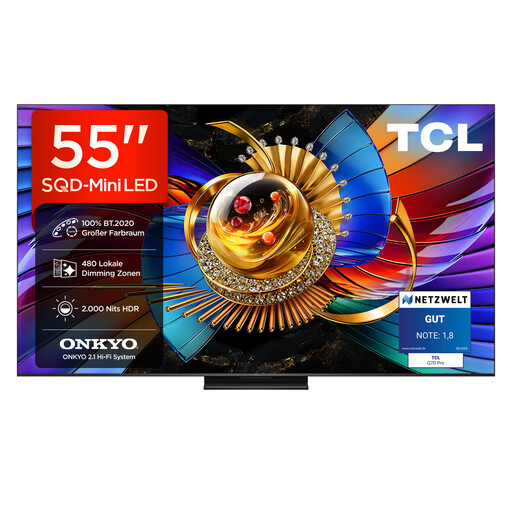
Worth considering if you’re looking at an LCD model for side seats; the product description lists a wide viewing angle and a 2.1 audio system with subwoofer.
Listed in the product name: 480 Local Dimming Zones, 2,000 Nits HDR, Anti-Reflection, 144 Hz, Dolby Vision IQ and Dolby Atmos.
 No image available
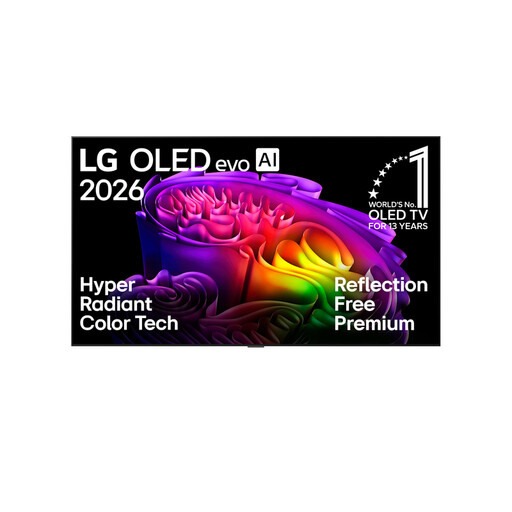
For watching films on an OLED display; the product description lists a 4.2-channel speaker system with Clear Voice Pro.
Listed in the product name: 4K, Dolby Vision, Dolby Atmos and webOS 26. According to the product description, this configuration is designed for wall mounting; a tabletop stand isn’t included.
 No image available
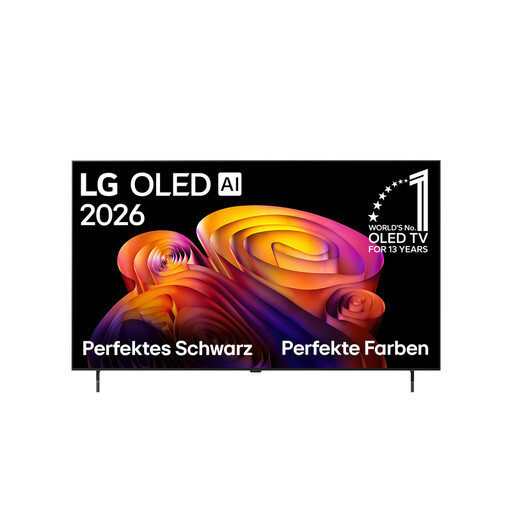
For watching films on an OLED display; according to the product description, HDMI eARC is worth checking if you plan to connect an external sound system.
Listed in the product name: 4K, 144 Hz, Dolby Vision and Dolby Atmos. The description also lists Filmmaker Mode and HDMI eARC.
 No image available
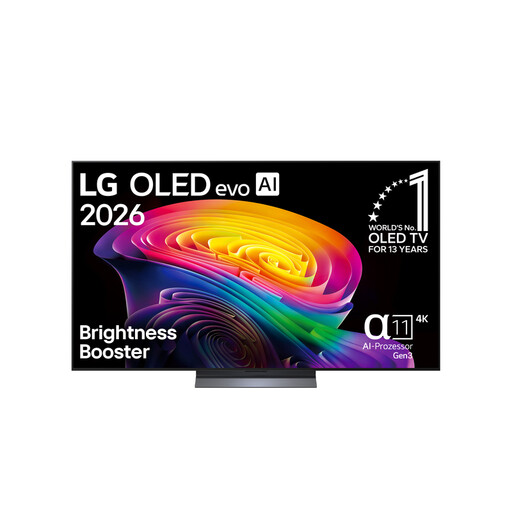
For watching films on an OLED display; the product description lists HDMI eARC and an optical audio output for connecting an external audio setup.
Listed in the product name: 4K, OLED evo, Dolby Vision and Dolby Atmos. The product description also lists Filmmaker Mode and an included stand configuration.
 No image available
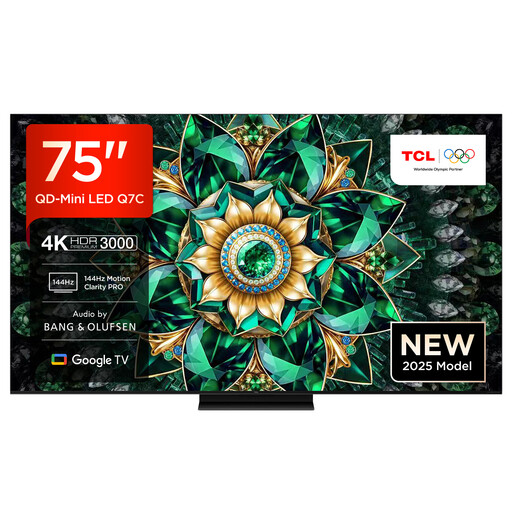
Worth considering if you’re looking at an LCD model for a wide seating area; the product description lists a wide viewing angle and a Bang & Olufsen sound system for the 75-inch model.
Listed in the product name: 4K HDR, Dolby Vision IQ, Dolby Atmos and 144 Hz VRR. The description lists a 6.2.2 sound system.
No, an IPS LCD can also offer a wide viewing angle. IPS typically has lower native contrast than VA, so decide based on the seats at the sides and the specific model.
No, the format alone doesn’t tell you how singing and dialogue will sound. For Atmos playback, the content, playback device and, if needed, soundbar and signal path all need to work together. If possible, listen to the voices for yourself.
Check the labelled HDMI-ARC or eARC ports on both devices and the source’s audio settings. Dolby describes HDMI pass-through as a possible solution when the devices involved support it.
On the OLED TVs described by LG, pixel cleaning can run while the TV is switched off. Follow the instructions for your specific model rather than assuming this information from LG applies to every brand.
For TVs covered by EU rules, the energy label shows consumption for SDR and HDR; you can check further model data through EPREL. If the product is faulty, your statutory rights are against the seller. A guarantee is a voluntary offer and is separate from those rights.